Networking Skills: What These Are and Why They Matter


Networking skills are the abilities that help you build, maintain, and strengthen professional relationships. They include clear communication, active listening, confidence, follow-up, and the ability to create genuine connections with people in your field.
Today, we explain why these abilities matter and highlight the most important ones to develop, from starting conversations to maintaining long-term professional connections. We also teach you how to improve them, use them in the workplace, and present them effectively.
- Networking skills help you build and maintain professional relationships that can lead to job opportunities, promotions, referrals, partnerships, and business growth.
- Active listening, clear communication, emotional intelligence, confidence, and consistent follow-up are among the most important skills in this category.
- Effective networking focuses on creating genuine, mutually beneficial relationships rather than collecting contacts or asking people for immediate favors.
- You can improve these abilities by reconnecting with existing contacts, attending industry events, strengthening your LinkedIn presence, and reflecting on each interaction.
- Maintaining your network even when you are not actively job hunting helps you stay visible and creates opportunities that can benefit your career over time.
What Are Networking Skills?
Networking skills are the interpersonal skills that help you form, grow, and maintain meaningful business relationships. They're what allows you to walk into a room full of strangers and leave with several genuine connections or to send a cold LinkedIn message and actually get a response.
These fall firmly in the soft skills for career growth, but don’t let this label fool you; the career impact of strong networking skills is anything but soft. They influence who gets the job offer, who gets tapped for a stretch project, and who a founder calls when they need a co-founder.
Over time, these relationships create social capital, or the resources, knowledge, support, and opportunities available through your personal and professional connections.
One common misconception is that these abilities are only relevant in sales or business development roles. They're not; your ability to build relationships shapes your career trajectory at every stage and in any field, from landing your first role and getting promoted to building a client base of your own.
Additionally, research suggests that even weak ties, including acquaintances and friends of friends, can expose you to job opportunities and information that may not circulate within your immediate network. This means that the better your ability to reach them and build a relationship with them, the better your chances of landing a job.
Why Are Networking Skills Important for Your Career?

Networking skills are important for your career because they give you access to opportunities that don’t appear on job boards, which is the majority of real career movement.
Here's the breakdown across three areas:
- Job searching. Research states that between 50% and 80% of jobs are filled through networking before they're ever publicly posted. This is the so-called hidden job market, and it's where most hiring actually happens.
- Career growth. Promotions and high-visibility opportunities don't always go to the most technically qualified person. They often go to the person who is visible, has built trust with decision-makers, is seen as a connector, and who people enjoy working with. Therefore, internal networking matters as much as external.
- Business and entrepreneurship. Referrals, partnerships, and client relationships run on the quality of your network. Soft skills remain in high demand across industries, and relationship-building is increasingly separating professionals who plateau from those who continue to advance.
Additionally, if you're making a career change, networking skills become even more critical because your resume alone won't tell the full story of your transferable value.
Top 8 Networking Skills to Have in 2026
Some professional networking skills are foundational and a must-have of any business relationship. Others, meanwhile, are there to differentiate people who network professionally and effectively from those who just show up at events and hand out business cards.
Here are the eight abilities worth focusing on:
#1. Active Listening
Active listening means paying full attention to the person speaking, genuinely processing what they're saying, and responding in a way that shows you heard them. And while it sounds simple, it's surprisingly rare.
In business networking contexts, this matters more than almost any other skill. People can tell when you're half-present or busy checking your phone and already planning your next sentence. But when you listen well, they feel valued, and you earn their trust faster.
Put your phone away completely, make natural eye contact, and ask follow-up questions that reference something they actually said.
#2. Effective Communication Skills
In networking, communication covers three channels:
- Verbal (how you speak), which should be clear and confident without being rehearsed-sounding
- Written (how you follow up; includes emails, LinkedIn messages, notes), which should be concise, warm, and specific
- Non-verbal (your body language, energy, whether you're approachable), which should signal that you're engaged and open, without scanning the room for someone more interesting
Prepare a 30-second professional introduction before any networking event or interview. Know who you are, what you do, and what you're looking for, and say it naturally, without sounding like a robot.
#3. Emotional Intelligence (EQ)
Emotional intelligence is the ability to recognize, understand, and manage your own emotions and pick up on and respond to the emotions of others. It's what helps you read a room, notice when someone seems uncomfortable, or recognize when you're coming across as too aggressive.
Among the most sought-after soft skills by employers, high EQ is especially critical in networking because professional relationships are still human relationships. People connect with individuals who seem real, aware, and genuinely interested in them.
Train your EQ by implementing mindfulness practices, asking for honest feedback, and simply paying attention to how interactions land.
#4. Relationship Building
There's a version of networking that's transactional and that revolves around collecting contacts, distributing business cards, and moving on. That version doesn't work, as real networking is about cultivating genuine relationships over time, which looks a lot less glamorous and a lot more like staying in touch and showing up consistently.
Follow up within 24–48 hours of meeting someone, reference them by name, and mention something specific from your conversation so they know it wasn't just a mass outreach.
#5. Confidence and Assertiveness
Many people avoid networking entirely because it feels uncomfortable and almost self-promotional in a way that doesn't sit right. That's exactly a reframe worth making; networking shouldn’t be about asking for favors or pushing yourself on people, but about offering value, exchanging ideas, and building mutually beneficial connections.
Before each networking event, set one small, specific goal. Something like "I'm going to have three genuine conversations today." Achievable goals like this one can calm the anxiety and give you a sense of direction.
#6. Follow-Up Skills
Most networking opportunities die in the follow-up gap, or rather, the lack of one, which is a huge miss.
A good follow-up is:
- Timely (within 24 hours is ideal)
- Personalized (reference something from your actual conversation)
- Low-pressure (you're not asking for anything, just solidifying the connection)
In LinkedIn networking specifically, it comes in the form of a connection request with a short note. Something like: "Really enjoyed talking about [topic] at [event] and would love to stay in touch."
#7. Public Speaking and Presentation
Networking doesn't always happen one-on-one. Industry panels, conferences, webinars, team presentations… these are all networking contexts, whether you think of them that way or not. When you speak well in a group setting, people approach you afterward, and that's a different dynamic entirely.
Even informal public speaking and presentation skills count, including asking a smart question at a seminar, pitching a project idea to your team, introducing yourself at a professional meetup.
Volunteer to present at team meetings, or offer to introduce a speaker at an industry event; each of these small exposures lowers the anxiety threshold.
#8. Digital Networking Skills
Much of professional networking now happens online, and the rules are a bit different. You can't rely on charm and eye contact, so your LinkedIn profile, your written communication, and the consistency of your digital presence do the heavy lifting.
To show your digital networking skills, you should develop:
- Complete, keyword-rich LinkedIn profile
- Consistent value-add engagement (commenting thoughtfully on posts, sharing relevant content)
- Personalized outreach, without generic messages that typically get ignored
How to Improve Networking Skills
Here are some networking tips for job seekers on how to improve these skills systematically:

#1. Start With Your Existing Network
Most people dramatically underestimate who they already know. Former classmates, past colleagues, professors, and people you used to work with could be your shortcut to a job offer.
Do a "network audit" by writing down 20 people you haven't spoken to in over a year. Then reach out to them, but don’t ask for anything; just try to genuinely reconnect. "Hey, I was thinking about you. How are things going at [company]?" is enough; you'll be surprised how many doors open from a simple, authentic check-in.
#2. Attend Industry Events (In-Person and Virtual)
Conferences, meetups, webinars, and alumni events are all structured opportunities to meet people in your field who you'd never otherwise encounter.
Don't dismiss virtual events, either; hybrid networking is the norm now, and a good virtual conference can yield real connections if you engage rather than just lurk. Before any event, identify two or three people you'd specifically like to meet (speakers, panelists, attendees whose work you admire) and go in with that intention.
#3. Optimize Your LinkedIn Profile
A strong LinkedIn profile works for you around the clock. When you engage consistently by posting, commenting, and sharing relevant perspectives, you stay visible to your network in a low-pressure way. And when recruiters search for people with your skills, a complete, keyword-rich profile is what puts you in front of them.
#4. Practice, Then Reflect
Networking is a skill, which means it improves with repetition and self-awareness. Treat every social interaction (even casual ones) as a chance to practice listening with intention, asking good questions, and making people feel heard.
After networking events, take five minutes to reflect. What felt natural? What felt awkward? Did you talk too much about yourself? Did you forget to follow up on something that seemed important? Adjust, then go again.
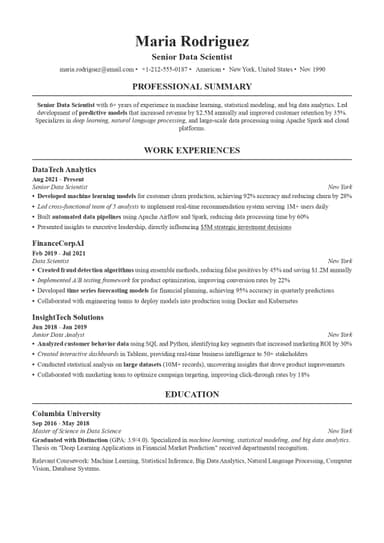
Have Your Resume Ready for Networking at All Times
Once you make connections and meet the people who might be interested in working with you, you should make sure to polish your resume or craft a new one, as submitting it is usually the next step. And since writing it from scratch might be stressful, we suggest you give our platform, ResumeBuilder.so, a try.
Thanks to our user-friendly interface and professional resume templates, you can generate a full document ready for sending. We take care of everything, starting from formatting and design to emphasizing your strengths and qualifications in the best possible way throughout all sections.
Final Thoughts
Networking skills are among the most valuable career assets you can develop, and they genuinely compound over time. A contact you made at a conference some years ago might be the hiring manager at your dream company today, and the relationships you build now are the opportunities you'll have access to later.
So, stay curious, offer support when you can, and maintain your connections even when you are not actively looking for a job. Building relationships with consistency and genuine interest can create a professional network that supports your growth throughout every stage of your career.
Networking Skills FAQ

Jordan Lee is your guide to navigating the rapidly changing job market in the age of AI and automation. He dives into how AI is reshaping hiring, the skills of the future, and what job seekers need to do now to stay relevant. If you’re curious about how technology is transforming careers and want to future-proof your job, Jordan’s insights are a must-follow.