15 Most Important and Sought-After Remote Job Skills Employers Look For

Remote job skills are the abilities that help professionals stay productive, organized, and connected while working outside a traditional office. People who work in such circumstances need to manage their time, communicate clearly, solve problems independently, and stay focused without constant supervision.
Our guide breaks down the 15 remote job skills that matter most right now. You’ll learn what each one is, why employers care about it, and how to present them on your resume so that they get noticed. We cover both the soft skills that keep distributed teams functioning and the hard technical skills that ATS systems scan for.
- Remote job skills include both soft skills, such as self-discipline, accountability, and written communication, and hard skills, such as cloud platform literacy, project management, and cybersecurity awareness.
- Employers want remote candidates who can work independently, communicate clearly, solve problems without constant supervision, and keep their progress visible across distributed teams.
- Collaboration in such conditions depends heavily on digital tools, including Slack, Microsoft Teams, Zoom, Asana, Trello, Jira, Google Workspace, Notion, and Confluence.
- Emerging skills like AI tool proficiency, digital project documentation, and cross-cultural communication can help candidates stand out as remote work continues to evolve.
- The best way to show these abilities on a resume is to mention them in the summary, skills section, work experience bullets, and certifications, using specific tools and measurable results wherever possible.
What Are Remote Job Skills?
Remote job skills are those that allow a professional to work effectively outside a traditional office environment, without in-person supervision, physical proximity to teammates, or real-time access to a manager down the hall. They fall into two main categories: hard skills (tools, platforms, and technical knowledge) and soft skills (communication, self-management, and accountability).
The distinction matters because generic workplace skills and remote job skills aren't the same thing. For instance, "communication" is a generic skill, and most job seekers list it. Yet, "asynchronous written communication" represents a specific work-from-home skill, because it signals you can keep a project moving when your colleagues are offline. That specificity is what employers and ATS systems are actually looking for.
The stakes are real, too. Many remote work listings now explicitly call out digital and behavioral skills beyond the role's core technical requirements. That means two candidates with identical work histories can get very different outcomes, as one may land the interview because they showed remote competency, and the other may not because they left it implied.
6 Essential Soft Skills for Remote Workers
Soft skills are what keep remote teams running when the daily rhythms of an office aren't there to hold things together. They're also harder to teach than technical abilities, which is exactly why employers screen for them so deliberately.
#1. Self-Discipline at Home and Time Management
What it is: The ability to structure your own day, prioritize tasks, and hit deadlines without a manager actively tracking your progress.
Why it matters: Solid time management for remote workers can significantly boost productivity.
How to develop it: Try time-blocking your calendar and assigning specific windows to focused work, meetings, and admin. Remote-friendly tools like Todoist, Notion, or even Google Calendar's "Focus Time" feature can help you protect deep work hours. The goal is to build consistent habits that don't fall apart when no one's watching.
Managed a fully remote project pipeline of 25+ weekly tasks, consistently meeting 98% of deadlines without direct supervision.
#2. Written/Digital Communication Skills
What it is: Clear, concise, professional writing across every channel you use, including emails, Slack messages, project briefs, async status updates, etc.
Why it matters: In a remote environment, words do the heavy lifting that body language and tone usually handle in person. Poor writing causes confusion and slows entire teams down while people seek clarification. The best remote communicators write as if the reader has zero context, because sometimes they do.
How to develop it: Practice writing structured updates using a consistent format (context → progress → blockers → next steps). Tools like Grammarly can catch surface errors, but the real skill is clarity of thinking. Read your messages before sending and ask: could someone act on this without follow-up?
Edited internal announcements and team updates for clarity, helping improve engagement with company-wide communications by 16%.
#3. Accountability and Reliability
What it is: Consistently delivering on what you've committed to without reminders, follow-ups, or someone checking whether you've started.
Why it matters: Gallup notes that accountability depends on clear expectations, regular feedback, and effective performance conversations, all of which are closely tied to employee engagement and retention. Remote managers can't casually check in the way they would in an office, so they rely on people who make their progress visible and their commitments trackable.
How to develop it: Over-communicate by sending status updates before anyone has to ask, documenting your work in shared spaces, and using task boards to keep your progress visible to the team.
Took full ownership of assigned support queue, resolving 45+ tickets per day while maintaining a 94% customer satisfaction score.
#4. Problem-Solving and Critical Thinking
What it is: Analyzing situations independently and making good decisions without waiting for someone to walk over and troubleshoot with you.
Why it matters: The World Economic Forum’s 2025 Future of Jobs Report ranks problem-solving, along with analytical thinking, creative thinking, and decision-making, as critical in a technology-driven workplace. Remote workers face this reality daily; issues come up when your manager is asleep in another time zone, and waiting isn't always an option.
How to develop it: Practice structured decision-making frameworks, even simple ones like writing down "what I know, what I need to know, what I'll try first." Documenting how you've resolved past challenges also sharpens your pattern recognition over time.
Identified workflow bottlenecks in a distributed team’s approval process, reducing average turnaround time by 26%.
#5. Adaptability and Continuous Learning
What it is: Willingness and genuine ability to pick up new tools, workflows, and approaches quickly as the remote work landscape keeps shifting.
Why it matters: Remote roles change fast, and the stack your team uses today might look different in six months. Employers value people who don't need hand-holding every time something new gets adopted, and they can usually tell the difference between someone who says they're adaptable and someone who shows it through their learning history.
How to develop it: Commit to 30 minutes of skill-building daily; LinkedIn Learning, Coursera, and YouTube have solid free and paid resources across most industries. Additionally, track new tools in your field and try them before you need them.
Completed 20+ hours of LinkedIn Learning training in data analysis, applying new reporting methods that reduced manual tracking time by 18%.
#6. Remote Team Collaboration Across Time Zones
What it is: The ability to coordinate effectively with teammates who may be hours ahead or behind you. This includes managing handoffs, meetings, and shared deliverables without everyone needing to be online simultaneously.
Why it matters: Remote team collaboration skills across distributed teams are becoming a baseline expectation rather than a differentiator, at least for anyone competing for those roles.
How to develop it: Learn async workflows, such as recorded video updates, living documents in Notion or Confluence, and deliberately flexible communication norms. Practice cultural sensitivity too, as what reads as direct in one culture can land as rude in another.
Collaborated with designers, developers, and content teams across multiple time zones to launch 15+ projects on schedule.
Top 6 Hard Skills for Remote Work
Hard skills for remote jobs are the technical tools and platforms that keep distributed teams connected, organized, and productive. They're also highly searchable, since ATS systems scan resumes for exact tool names, so how you list these matters as much as whether you have them.
#7. Proficiency With Remote Collaboration Tools
What it is: Hands-on experience with the platforms remote teams actually use day-to-day, be it for communication, project tracking, and document collaboration.
Why it matters: Mentioning that you’re "good with technology" isn't enough, as employers want to see the specific platforms you know.
Tools to know:
- Communication: Slack, Microsoft Teams, Zoom, Google Meet
- Project management: Asana, Trello, Jira, Monday.com
- Documentation: Google Workspace, Notion, Confluence
Used Jira and Confluence to document technical requirements, track issue resolution, and support smoother collaboration between remote product teams.
#8. Cloud Platform Literacy
What it is: Comfort working in cloud-based environments, which involves storing, sharing, and collaborating on files securely from anywhere, across platforms like Google Drive, Dropbox, Microsoft 365, and (at a basic level) AWS or Azure.
Why it matters: As companies shift to remote-first operations, cloud competency becomes a must. Being able to navigate shared drives, version-control documents, and access resources securely from your home network becomes expected in any remote role.
How to develop it: Use Google Workspace or Microsoft 365 in your personal or freelance projects. Free introductory certifications from AWS (Cloud Practitioner) or Google (Cloud Digital Leader) are genuinely worth the few hours they take.
Supported secure remote file sharing across Google Drive and Dropbox, maintaining 100% compliance with internal access guidelines.
#9. Project Management
What it is: The ability to plan, track, and deliver work using structured methods—breaking projects into phases, setting milestones, managing dependencies, and keeping remote stakeholders aligned.
Why it matters: LinkedIn's 2024 data ranked project management among the top five most in-demand skills for that year. Additionally, PMI’s 2025/14th edition report found PMP-certified respondents earned 17% higher median salaries across 21 countries and 24% higher in the U.S. Needless to say, this is a gap that reflects genuine market demand.
How to develop it: Pursue the Google Project Management Certificate (free on Coursera, takes a few months) or explore Agile/Scrum basics through Atlassian's free resources. The PMP is worth it if you're going deeper.
Managed 12+ remote projects from planning to delivery, maintaining 96% on-time completion across two quarters.
#10. Data Literacy and Basic Analytics
What it is: The ability to read, interpret, and act on data, be it pulling a report from a dashboard, building a spreadsheet model, or summarizing performance metrics for a stakeholder update.
Why it matters: Remote managers can't walk over and ask for a verbal summary; they depend on written data updates. Workers who can surface clear, accurate insights from raw data make their managers' lives meaningfully easier, and that gets noticed.
How to develop it: Build Excel or Google Sheets proficiency first; most roles don't need SQL, but many do. Free resources like Mode Analytics or W3Schools SQL tutorials are solid starting points if you want to go further.
Built weekly performance reports in Google Sheets, helping managers track 12+ KPIs and identify workflow issues faster.
#11. Cybersecurity Awareness
What it is: A working understanding of safe remote work practices. This includes using VPNs, enabling two-factor authentication, avoiding public Wi-Fi for sensitive work, and following secure file-sharing protocols.
Why it matters: Many cybersecurity professionals now work remotely, and remote access creates more entry points for attacks. More importantly, most security breaches don't come from sophisticated hacking, but from employees making avoidable mistakes, so all remote workers are expected to know the basics.
How to develop it: Google's free Cybersecurity Certificate on Coursera covers the fundamentals well, and Microsoft Learn also has solid free modules. Beyond courses, just reading your company's actual security policies (and following them) puts you ahead of most.
Managed sensitive client documents through secure cloud storage permissions, reducing unauthorized access risks across 200+ shared files.
#12. Asynchronous Communication Tools
What it is: Proficiency with tools that let teams communicate without everyone being online at the same time.
Why it matters: Async communication is the backbone of distributed teams across time zones. Teams that communicate asynchronously well can operate around the clock without burning anyone out on back-to-back meetings.
How to develop it: Start using Loom for walkthroughs or updates you'd normally deliver in a meeting. Also, maintain living documents in Notion or Confluence instead of firing off one-off messages; the discipline of writing clearly enough that no follow-up is needed is itself the skill.
Recorded async walkthroughs for new workflow changes, reducing onboarding questions by 30% across the remote team.
3 Emerging Remote Job Skills Worth Knowing
The remote work landscape keeps moving. These skills aren't yet standard requirements in most listings, but they're climbing fast, and getting ahead of them now gives you a real edge over candidates who'll start playing catch-up in a year or two.
#13. AI Tool Proficiency
With thousands of LinkedIn job listings naming AI tools in 2026, comfort with tools like ChatGPT, Microsoft Copilot, or AI-powered project management platforms is becoming a baseline expectation in many roles.
As someone familiar with these programs, you should know which tools exist, how to use them effectively in your specific workflow, and how to evaluate their outputs critically.
Used AI-assisted research tools to gather topic insights, outline content briefs, and reduce first-draft preparation time by 25%.
#14. Digital Project Documentation
Remote teams run on written records, so decisions made in a 20-minute Zoom call evaporate unless someone writes them down somewhere searchable. The ability to document processes, decisions, and project updates in clear, organized formats (wikis, SOPs, runbooks, decision logs, etc.) is increasingly valued, especially at growing companies where institutional knowledge needs to survive turnover.
Built a searchable internal wiki with 40+ process pages, reducing repeated team questions by 32%.
#15. Cross-Cultural Communication
Since remote teams become more globally distributed, navigating cultural differences in communication styles, decision-making norms, and working rhythms makes a genuine difference. What reads as confident directness in one context can land as abrasiveness in another, so awareness of this and the ability to adjust keep collaboration smooth across borders.
Supported a globally distributed team of 20+ employees by creating clear written updates that reduced cross-cultural miscommunication during project handoffs.
How to Put Remote Job Skills on Your Resume
You can put remote job skills on your resume by highlighting them in four key places:
#1. Resume Summary
Use your resume summary to flag remote-ready skills upfront before a recruiter reads a single bullet point. If you have specific working rights, preferred time zone availability, or overlap hours that matter for the role, mention them here.
Remote-capable professional with experience supporting distributed teams through clear written communication, reliable task ownership, and strong digital tool proficiency. Skilled in managing priorities independently, documenting workflows, coordinating async updates, and maintaining shared project visibility across platforms such as Slack, Zoom, Google Workspace, Notion, and Trello. Available for remote roles with overlap across [insert preferred time zone or working hours].
#2. Skills Section
Your resume skills section is where ATS systems look first when scanning your document. You should separate hard skills (tool names) from soft skills (behavioral), and use specific language:
Some ATS keywords for remote jobs to include in it would be "distributed team," "virtual collaboration," "self-motivated," "remote-first environment," "asynchronous workflows", etc.
- Instead of: "Communication"
- Write: "Asynchronous written communication" and "Slack / Microsoft Teams proficiency"
#3. Work Experience Bullets
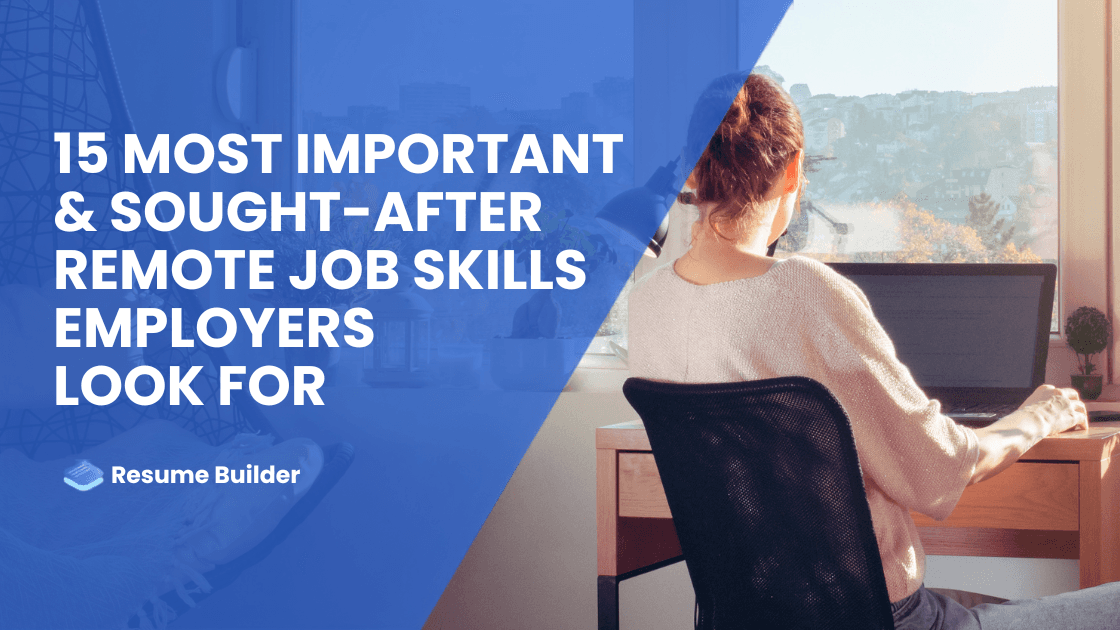
As you have already seen in our examples, you can mention the in-demand skills you possess in work experience bullets, too, while quantifying the remote achievements you made thanks to them:
- "Managed a team of 6 across 3 time zones, increasing sprint velocity by 18%"
- "Delivered client updates via Loom and reduced weekly meeting volume by 30%"
- "Maintained a fully documented project wiki accessed by 12 remote team members"
This might sometimes seem like a difficult task, as you may not be sure how to choose words for this part. Luckily, ResumeBuilder.so can come to your rescue and help you craft a full resume, including a perfectly written work history section that emphasizes your best remote and other skills. It will suffice to choose a template based on the field you work in, and we’ll fill it out with your details within minutes.
#4. Certifications and Education
Remote-relevant certifications that are worth listing explicitly include:
- Google Project Management Certificate
- AWS Cloud Practitioner
- HubSpot Remote Work Certification
- Google Cybersecurity Certificate, etc.
If you have them, even from self-directed learning, they belong on your resume.
Final Thoughts
Skills to put on a resume for remote jobs represent a structural shift in how professional work gets done. Employers have adjusted their hiring filters to match, and the candidates who land the best remote roles are the ones who've thought about their remote skills deliberately, without just assuming they transfer automatically.
The good news is that every skill on this list is learnable. Self-discipline, async communication, cloud literacy, project documentation… none of them require special talent, but they do require intention, a bit of practice, and knowing how to make them visible on a job application. Do it properly, and you’ll be heading to your interview in no time!
Remote Job Skills FAQ

Jordan Lee is your guide to navigating the rapidly changing job market in the age of AI and automation. He dives into how AI is reshaping hiring, the skills of the future, and what job seekers need to do now to stay relevant. If you’re curious about how technology is transforming careers and want to future-proof your job, Jordan’s insights are a must-follow.