100+ Best Skills for Resume: Full Guide With Examples for 2026

In today's job market, the right skills for a resume aren't just nice to have—they're the difference between landing interviews and watching applications disappear into the void. However, most people either list every ability they've ever had, or they play it so safe that their resume blends into the background noise.
With this guide, you'll learn exactly which skills employers actually care about, how to present them effectively, and—maybe most importantly—when to leave certain skills off entirely. Let’s begin!
- Skills are one of the most important things on your resume and can significantly impact your chances of landing an interview.
- You need both hard skills, which are technical, job-specific abilities, and soft skills, which are interpersonal and transferable across industries, to succeed.
- The best resumes include a strategic mix of both hard and soft skills tailored to the job description.
- Skills should be demonstrated through your professional summary and work experience, not just listed in a dedicated skills section.
- Different industries and career levels require different skill combinations and presentation approaches.
What Are Skills for Resumes?
Skills for a resume are the abilities, competencies, and knowledge that make you qualified for a job. They're not just things you're naturally good at—they're capabilities you've developed through education, work experience, training, or sometimes just by throwing yourself into challenges and figuring stuff out along the way.
First, these skills matter for applicant tracking systems (ATS)—software that scans your resume for specific keywords before any human sees it. Once you pass ATS, there are the actual recruiters and hiring managers who will spend about 7 seconds deciding whether you're worth a closer look.
However, skills aren't one-size-fits-all. The same person might have dozens of relevant skills and qualifications, but which ones you highlight depends entirely on what job you're chasing.
3 Types of Skills for Resumes
As already emphasized, when writing a resume, including the right skills makes a significant difference. Skills generally fall into three main categories:
Hard skills are the measurable, technical abilities you can prove you have. These skills are quantifiable and often acquired through education or training, such as:
- Computer programming (Python, Java, JavaScript, C++)
- Software proficiency (Microsoft Office, Adobe Creative Suite, Salesforce)
- Data analysis tools (SQL, Tableau, Excel, Google Analytics)
- Industry-specific equipment
- Foreign language proficiency
- Technical writing
On the other hand, soft skills are the interpersonal qualities that determine how you work. While harder to measure than hard skills, they're equally valued by employers. Furthermore, while hard skills might get you through the ATS and into the interview room, soft skills often determine whether you actually get hired.
Employers want someone who can do the job and fit into their culture without causing friction. Here’s a quick list of key soft skills for a resume:
- Communication (written and verbal)
- Leadership and team management
- Problem-solving and critical thinking
- Adaptability
- Time management
- Emotional intelligence
- Conflict resolution
Transferable skills are universally valuable abilities that apply across industries. These can be both hard and soft skills, such as:
- Clear communication
- Training and mentoring
- Project management
- Analytical thinking
- Training and mentoring
- Quality assurance
All of these are particularly valuable when you're changing careers or entering a new field. You might not have direct experience in the new industry, but if you can demonstrate strong transferable skills, you're showing employers you have the foundation to learn quickly and contribute from day one.
How to Choose the Right Skills for Your Resume: A Step-by-Step Guide
Choosing the right skills for your resume isn't about listing everything you know. The most effective approach involves analyzing what employers need, honestly assessing what you offer, and presenting the intersection of both in a compelling way that demonstrates your fit for the role.
Before we dive in, it’s important to say that balance matters. Aim for roughly 60/40 or 50/50 split between hard and soft skills, adjusted based on the role. Technical positions can skew toward hard skills, while management roles might emphasize soft skills more. The job description guides this balance.
That said, here's a quick step-by-step guide on choosing the key skills for your resume:
Step 1: Analyze the Job Description
Job postings reveal exactly what employers want. Skills requirements appear in "Requirements" sections or phrases like "must be proficient in" or "experience with." Skills mentioned multiple times or early in the description signal top priorities.
Look for both explicit and implicit requirements. A posting might not say "communication skills," but phrases like "present findings to senior leadership" make it clearly essential.
Step 2: Match Your Skills to the Role
Create a master list of every skill you possess, then pull the subset that aligns with each specific role. Focus on the 10-15 most important skills for this particular job. Relevance beats volume.
However, be honest and don't claim expertise you lack. If you're learning a skill, frame it honestly: "Working knowledge of Python" or "Currently developing expertise in..."
Step 3: Consider Your Career Level
Different career levels require different approaches. Here’s a quick overview table:
| Career Stage | What to Emphasize | Key Point |
|---|---|---|
Entry-level | Emphasize skills gained through education, internships, volunteer roles, and part-time work. Highlight academic projects, relevant coursework, and student organization leadership to show potential. | Transferable skills + evidence of learning capacity |
Mid-career | Showcase proven expertise with advanced technical skills, project leadership, industry-specific accomplishments, and measurable process improvements. | Demonstrated impact + specialization |
Senior-level | Prioritize strategic capabilities such as organizational leadership, long-term planning, P&L accountability, change management, and industry thought leadership. | Strategic results + executive influence |
Best Skills to Put on Your Resume: 100+ Examples
As previously mentioned, when selecting the right skills to put on your resume, you need to think about your industry, role, and career goals. Here’s a quick list of top 20 hard and soft skills employers look for in resumes:
- Data Analysis and Interpretation
- Project Management
- Software Proficiency
- Programming Languages (Python, Java, SQL)
- Digital Marketing
- Cloud Computing
- Cybersecurity Fundamentals
- Graphic Design
- Video Editing
- Database Management
- Foreign Language Fluency
- Financial Analysis
- Statistical Analysis
- Technical Writing
- CRM Software (Salesforce, HubSpot)
- CAD Software
- Content Management Systems (CMS)
- Social Media Management
- Machine Learning Basics
- Mobile App Development
- SEO and Keyword Research
- Web Development (HTML, CSS, JavaScript)
- Data Visualization (Tableau, Power BI)
- UX/UI Design Principles
- Marketing Analytics
- Email Marketing Tools
- API Integration
- Automation Tools
- Quality Assurance Testing
- Business Intelligence Tools
- E-commerce Platforms
- Accounting Software
- Market Research
- Technical Troubleshooting
- IT Systems Administration
- Communication
- Leadership
- Teamwork
- Problem-Solving
- Adaptability
- Time Management
- Attention to Detail
- Work Ethic
- Creativity
- Emotional Intelligence
- Decision-Making
- Conflict Resolution
- Active Listening
- Customer Service
- Negotiation
- Stress Management
- Cultural Awareness
- Mentoring
- Strategic Thinking
- Initiative
- Accountability
- Collaboration
- Resilience
- Empathy
- Persuasion
- Reliability
- Professionalism
- Open-Mindedness
- Self-Motivation
- Patience
- Confidence
- Integrity
- Positive Attitude
- Flexibility
- Emotional Resilience
- Written Communication
- Verbal Communication
- Analytical Thinking
- Critical Thinking
- Research Skills
- Organizational Skills
- Planning and Prioritization
- Multitasking
- Stakeholder Management
- Training and Onboarding
- Documentation
- Process Improvement
- Change Management
- Problem Identification
- Cross-Functional Collaboration
- Client Relationship Management
- Coaching
- Reporting
- Risk Assessment
- Quality Control
- Performance Evaluation
- Knowledge Transfer
- Task Delegation
- Feedback Delivery
- Workflow Optimization
- Compliance Awareness
- Goal Setting
- Budget Awareness
- Presentation Skills
- Meeting Facilitation
- Data Interpretation
- Business Acumen
- Decision Support
- Continuous Learning
- Adaptation to New Technologies
Where to Include Skills on Your Resume
Here’s where to include skills on your resume for maximum impact:
Professional Summary
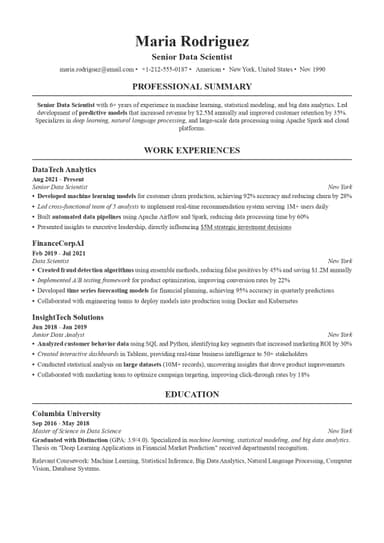
Your resume summary offers prime real estate for 2-3 key skills that define your professional identity. This 3-4 line section sits at the very top of your resume, immediately below your header, making it the first thing employers read. The key is weaving skills naturally into achievement-focused language rather than simply listing them.
That said, let’s see how this looks in practice for different resume examples:
Strategic operations leader with proven expertise in process optimization and team development, delivering 30% efficiency improvements across three manufacturing facilities. Skilled in Lean Six Sigma methodologies and cross-functional team leadership.
Results-driven digital marketing manager with expertise in SEO strategy, content marketing, and conversion rate optimization. Increased organic traffic by 150% and generated $2M in revenue through integrated campaigns.
Full-stack developer specializing in React, Node.js, and cloud architecture, with a track record of building scalable applications serving 500K+ users. Passionate about clean code and agile development practices.
Detail-oriented finance graduate with strong analytical skills in financial modeling and data visualization using Excel and Tableau. Completed internship managing $200K portfolio with 12% returns.
Skills Section
Most resumes include a standalone skills section positioned after your summary and before work experience. This ensures ATS systems and reviewers see your qualifications immediately.
To format this section, you can use different methodologies. Here’s a quick table to help you decide on the best approach:
| Format | What to Do | Best Use Case |
|---|---|---|
Simple List | Present 8–12 skills as bullet points or comma-separated text. It’s space-efficient and easy to scan. | Technical roles or resumes with tight space constraints. |
Categorized Format | Group skills into themes, such as Technical, Software, Languages, or Leadership. | Diverse skill sets that benefit from organization and clarity. |
Skills with Proficiency | Indicate expertise levels (e.g., Beginner–Expert) or visual bars; requires honest self-assessment. | When demonstrating depth matters and employers expect proficiency clarity. |
Combined Format | Highlight 5–7 key skills, while reinforcing others in experience bullets. | Senior professionals with extensive competencies needing strategic emphasis. |
Work Experience Section
While the skills section says what you can do, your work experience proves it. This is where skills transform from claims into credible achievements backed by context, results, and real-world application.
Let’s examine the following examples, so you see the actual difference between weak and strong bullet point entries:
- Managed social media strategy across 5 platforms, leveraging analytics tools and A/B testing to increase engagement by 240% and grow follower base from 12K to 85K in 18 months.
- Developed Python-based predictive models using scikit-learn and pandas, reducing customer churn by 22% and saving $1.3M annually through targeted retention campaigns.
- Facilitated weekly Agile sprint planning sessions and daily standups for a 12-person development team, improving on-time delivery rate from 67% to 94% over two quarters.
Weak Example
- Responsible for managing social media accounts.
- Used Python for data analysis.
- Led team meetings.
5 Common Mistakes to Avoid When Listing Skills on Your Resume
Listing skills might seem simple, but many unintentionally weaken their resumes. Here are five common mistakes and how to avoid them:
- Listing irrelevant skills. Including outdated or unrelated skills distracts from your core strengths and creates confusion. Every skill should directly support the role you’re targeting. Remove anything unrelated to qualifications in the job posting. A concise, relevant list sends a focused message and builds credibility, helping employers quickly see your value.
- Being too vague. Skill listings like “communication” or “computer skills” lack clarity and impact. Instead, specify context and level: “Client communication for medication counseling” or “Advanced Excel: pivot tables, VLOOKUP, macros.” The clearer the skill, the easier it is for employers to evaluate your fit.
- Exaggerating skills. Overstating abilities can lead to embarrassment during interviews or failure on the job. Avoid rating yourself as “expert” unless you truly are. Provide realistic proficiency levels and back them up through achievements or measurable results.
- Ignoring ATS optimization. Applicant tracking systems scan skills sections for job-specific keywords. If core skills aren’t phrased the way employers list them, your resume may be filtered out. Review postings and incorporate exact terminology naturally. ATS-friendly formatting increases visibility and ensures your skills don’t get overlooked.
- Not updating skills. Many resumes list outdated job capabilities that no longer reflect growth. Your skills must evolve with your experience, training, and industry trends. Regularly refresh this section to replace old tools or practices with current, in-demand abilities.
Create Your Resume Effortlessly With ResumeBuilder.so
ResumeBuildler.so's AI-powered resume builder offers pre-formatted templates optimized for ATS, skills suggestions based on your job title, real-time content recommendations, and one-click customization for different applications.
Browse our gallery of resume templates and examples to see how successful candidates present their skills, and use our cover letter builder to tell the story of how you'll apply your skills.
Final Thoughts
Skills for a resume are actually a strategic combination of relevant technical abilities and interpersonal qualities, properly formatted, tailored to each job, and demonstrated through concrete achievements.
The process takes effort—analyzing job descriptions, assessing your capabilities, choosing relevant skills, and crafting bullet points that prove results. However, this effort pays off through interviews you wouldn't otherwise get.
Remember that skills develop over time. Stay curious, keep learning, and regularly update your resume to reflect your growing capabilities. The investment in skill development and effective presentation creates compounding returns throughout your career.
Skills for Resume FAQs

Max Harper is the resume guru who actually makes job searching easier. With years of experience as a hiring manager, Max knows what makes a resume stand out in a pile of 200+ applications. From breaking down ATS myths to helping you craft bullet points that pop, Max shares easy-to-digest, no-BS resume advice.