11+ Time Management Skills to Include on Your Resume in 2026

Time management skills aren't some innate talent you either have or don't. It's a collection of learnable skills that, once mastered, transform how you work and how others perceive your capabilities. Candidates who demonstrate strong time management abilities stand out immediately because poor time management doesn't just create stress. It torpedoes your productivity and damages your professional reputation.
In this guide, we break down everything you need to know: what time management skills really are, why they matter, which specific one to develop, and how to showcase them on your resume to land more interviews.
- Time management skills are essential soft skills that every employer values, regardless of industry or role level.
- Core time management abilities include prioritization, planning, delegation, goal-setting, and focus—each contributing to overall effectiveness
- Strong time management directly improves productivity, reduces stress, and accelerates career advancement.
- These skills are developable through proven techniques, consistent practice, and the right tools.
- Showcasing time management properly on your resume increases interview chances.
- Specific examples with measurable results make these abilities credible and compelling to hiring managers.
What Are Time Management Skills?
Time management skills are soft skills that enable you to use your time effectively and efficiently to accomplish tasks, meet deadlines, and achieve goals in both professional and personal contexts. Essentially, these abilities involve making conscious decisions about how to allocate your most limited resource—time.
They differ from general organizational skills, though they overlap. Organization focuses on arranging physical and digital systems, while time management centers specifically on how you sequence and execute work within time constraints.
Here’s a quick comparison between time management vs. organizational skills:
| Time Management Skills | Organizational Skills |
|---|---|
Focus on how you plan, prioritize, and use time efficiently | Focus on arranging physical, digital, or workflow systems |
Help you meet deadlines, manage workloads, and achieve goals | Help you keep information, tools, and tasks structured |
Involve scheduling, prioritizing, and task execution | Involve categorizing, filing, and maintaining order |
About managing limited time effectively | About creating systems that support productivity |
Why Time Management Skills Matter for Your Career
There are several reasons why time management skills matter for your career. Let’s examine each one in more detail.
Professional benefits
Strong time management creates immediate improvements in your daily work life. You'll produce higher quality output because you're not constantly chasing deadlines. That extra buffer time lets you review, refine, and polish your work before submission.
Better work-life balance naturally follows. When you manage time effectively, you finish work during work hours. Also, your reputation among colleagues and supervisors improves dramatically—people notice who they can count on and who delivers consistently.
Impact on Career
Employers prioritize candidates with strong time management abilities because they know these skills predict overall job performance better than many technical abilities. According to research, professionals who effectively manage their time experience less workplace stress, which consequently results in better performance.
Also, effective time management enables you to take on leadership responsibilities before you officially have a leadership title. When you consistently deliver and have capacity to spare, you naturally become someone others turn to for guidance.
12 Essential Time Management Skills to Include on Your Resume
Time management encompasses multiple interconnected abilities working together. Here are the most valuable skills to develop and highlight when writing your resume.
#1. Prioritization
Prioritization means determining which tasks deserve your attention first based on importance, urgency, and impact. The Eisenhower Matrix provides a proven framework:
- Urgent and important (do immediately)
- Important but not urgent (schedule)
- Urgent but not important (delegate)
- Neither (eliminate)
Identifying high-value tasks requires understanding your role's core objectives and your organization's priorities. Here’s how you can show this on your resume:
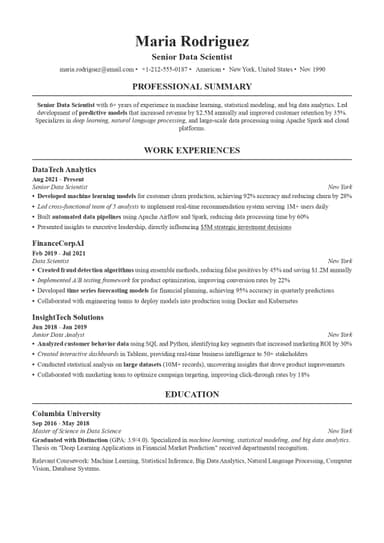
- Prioritized client deliverables using urgency-impact assessment methodology, ensuring 100% on-time delivery for high-value accounts while managing 50+ monthly requests.
#2. Planning and Goal Setting
Strategic planning involves defining long-term objectives and the path to achieve them. On the other hand, tactical planning focuses on specific actions and timelines. The SMART goals framework (specific, measurable, achievable, relevant, time-bound) transforms vague intentions into actionable plans.
Here’s how to effectively demonstrate planning and goal setting skills on your resume:
- Developed comprehensive project plans with clear milestones and dependencies, resulting in 25% reduction in project completion time across 15+ concurrent initiatives.
#3. Organization
Organization creates the infrastructure that makes time management possible. Physical organization means maintaining a functional workspace where needed items are immediately accessible. Digital organization involves structured file naming conventions, organized email folders, and centralized documentation.
To emphasize these skills on your resume, you can use the following example as inspiration:
- Implemented comprehensive digital filing system using standardized taxonomy, reducing document retrieval time by 40% across a 10-person team.
#4. Scheduling
Effective scheduling means intentionally blocking time for important work rather than letting your calendar fill randomly. The time-blocking method works particularly well—instead of maintaining a running task list and working reactively, you assign each task a specific time slot.
Buffer time between commitments prevents schedule collapse when anything runs long. Meeting management significantly impacts time utilization—decline meetings without clear agendas and batch meetings into specific days to preserve focused work time.
Here’s how you can point this out on your resume:
- Managed executive calendar with 50+ weekly appointments, optimizing schedule for peak productivity by time-blocking deep work sessions and batching similar meetings.
#5. Delegation
Delegation multiplies your effectiveness by distributing work appropriately across team members. Effective delegation means clearly communicating expectations, providing necessary context and resources, establishing checkpoints without micromanaging, and giving authority along with responsibility.
Here’s a quick list of when to delegate:
- Routine tasks that others can perform
- Tasks that develop others' skills
- Work that doesn't require your specific expertise
- Assignments that would overload your capacity
Now let’s see how to phrase this on your resume:
- Delegated routine operational tasks to three junior staff members with clear SOPs, freeing 15 hours weekly for strategic initiatives while developing team capabilities.
#6. Focus and Concentration
Focus is the ability to maintain sustained attention on important work despite distractions. Minimizing distractions starts with environmental management, such as:
- Silencing notifications
- Closing unnecessary browser tabs
- Using noise-canceling headphones
- Communicating boundaries around focused work time
Deep work principles distinguish between cognitively demanding tasks requiring full concentration and routine tasks performable while distracted. Single-tasking produces better results faster than multitasking, which is actually rapid task-switching that incurs cognitive overhead.
Here’s a results-focused example you can use on a resume:
- Implemented focused work blocks using time-boxing methodology, increasing project output by 30% while maintaining 98% quality standards across deliverables.
#7. Stress Management
Time management and stress management are deeply interconnected. Techniques for handling pressure include:
- Breaking overwhelming projects into smaller pieces
- Maintaining perspective on what truly matters
- Using stress-reduction practices during intense periods
To prevent burnout in the workplace, set boundaries around work hours, protect time for renewal activities, and recognize that sustainable productivity beats short-term intensity followed by collapse.
Here’s how you can demonstrate your stress management skills on resume:
- Maintained 95% on-time delivery rate during peak season by implementing stress-reduction protocols and contingency planning, while managing 20+ concurrent high-priority projects.
#8. Decision Making
Having strong decision-making skills keeps work moving forward. Combat overthinking by setting decision deadlines, using decision-making frameworks, and accepting that perfect information rarely exists. For example, establish criteria for which meeting requests to accept, which tasks to prioritize, or which emails require immediate response.
Also, well-developed problem-solving skills support faster, more effective decision-making under pressure. That said, let’s see how you can showcase this on your resume:
- Streamlined approval process by implementing evidence-based decision criteria and delegation framework, reducing project delays by 35% and increasing team autonomy.
#9. Adaptability and Flexibility
Adaptability means adjusting effectively when priorities shift or emergencies arise. Build buffer time into schedules, maintain contingency plans for critical projects, and develop mental flexibility to pivot without becoming flustered. Maintaining productivity during disruptions comes from protecting your most important work even when circumstances change.
Here’s how to demonstrate this on a resume:
- Successfully managed 40% increase in project scope mid-initiative by rapidly re-prioritizing deliverables and reallocating resources, completing ahead of revised deadline.
#10. Communication
Clear, efficient communication prevents time waste from misunderstandings and unnecessary back-and-forth. Provide complete information in initial messages, use the right communication channel for each purpose, and batch communications rather than interrupting work constantly.
Setting boundaries and expectations means communicating your availability and response time expectations. Regular, proactive updates reduce interruptions from people checking on progress.
Now, let’s see a good example you can include on a resume:
- Implemented structured communication protocols including daily stand-ups and weekly stakeholder updates, reducing coordination meetings by 50% while improving project transparency.
#11. Self-Discipline
Self-discipline is the foundation underlying all other time management skills. Overcoming procrastination requires understanding its causes—task overwhelm (break it down), perfectionism (commit to "good enough" for first drafts), or fear of failure (reframe as learning opportunities).
Building consistent routines removes decision-making from daily execution. When certain tasks happen at set times, you don't waste energy deciding whether to do them. That said, here’s a well-phrase example for a resume:
- Established disciplined morning routine including planning sessions and deep work blocks, increasing early-day productivity by 45% and establishing consistent delivery patterns.
#12. Continuous Improvement
Regular review sessions assess what's working and what isn't. Simple time tracking reveals where time actually goes, identifies patterns in productivity variation, and quantifies improvement over time. Learning from mistakes means analyzing time management failures without self-judgment. Each analysis improves future planning.
Now, let’s see how you can emphasise this on your resume:
- Implemented quarterly time audit and optimization process, identifying efficiency opportunities that cumulatively saved 8 hours weekly and improved project completion rate by 22%.
How to Develop Strong Time Management Skills
Developing strong time management skills requires a structured approach.Consider the following steps:
- Assess your current abilities honestly. Track how you spend time for one week without changing behaviors—this baseline reveals improvement opportunities.
- Choose one or two skills to focus on initially. Practice new techniques consistently for at least three weeks before evaluating effectiveness. Time management strategies feel awkward initially because they're unfamiliar, not because they don't work.
- Use tools to support your efforts. Digital calendars with blocking capabilities reinforce time-blocking practices. Project management tools make delegation and tracking easier. Choose tools that serve your strategy rather than collecting apps that create more management overhead.
- Leverage professional development opportunities. Many organizations offer time management training or productivity workshops that accelerate development beyond self-directed improvement.
Top Time Management Techniques to Boost Your Daily Productivity
Effective time management starts with choosing a method that matches your work style. Whether you need help staying focused, organizing your schedule, or prioritizing competing tasks, these proven techniques offer simple frameworks you can start using immediately.
Here’s how different time management techniques compare so you can pick the best fit:
| Technique | Best For | How It Works | Time Investment | Difficulty Level |
|---|---|---|---|---|
Maintaining focus during long tasks | 25-minute work intervals followed by 5-minute breaks | Low | Easy | |
Time Blocking | Managing multiple projects | Assign specific calendar blocks to different work categories | Medium | Medium |
Eisenhower Matrix | Prioritizing competing tasks | Sort tasks into urgent/important quadrants to determine priority | Low | Easy |
Time Management Tools and Resources
Time management is fundamentally about skills and techniques. However, the right tools amplify your abilities, such as:
- Digital calendars. Google Calendar, Outlook Calendar, and Apple Calendar provide the foundation for time-blocking. Use color-coding for different work types and share calendars with team members for coordination.
- Task management tools. Todoist, Things, Microsoft To Do, and Asana help capture, organize, and prioritize tasks. Choose based on complexity needs—simple lists for individual work, project management tools for team coordination.
- Time-tracking tools. RescueTime, Toggl, and Clockify reveal how time is actually spent versus how you think it's spent. Even short tracking periods provide valuable insights for optimization.
- Focus tools. Freedom, Cold Turkey, and Forest block distracting websites during focused work periods. Noise-canceling headphones or background sound apps help maintain concentration.
- Note-taking and organization tools. Notion, Evernote, and OneNote centralize information, reducing time lost to searching. Use tagging systems and consistent organization for easy retrieval.
How to Showcase Time Management Skills on Your Resume
Showcasing your time management skills on a resume is all about presentation. Developing them matters little for job search if employers can't see evidence of those abilities. Here’s how to do it properly:
Strategic Placement
Include "Time Management" or specific related skills like "Prioritization" or "Project Planning" in your skills section. This ensures your resume passes applicant tracking system scans. However, listing skills alone proves nothing. The real power comes from demonstrating these abilities through your work experience.
Writing Achievement-Focused Bullet Points
Transform generic task descriptions into achievement-focused bullet points:
- Managed 12 concurrent projects across 3 departments, delivering all initiatives on schedule through systematic prioritization and weekly milestone tracking
Weak
- Responsible for managing multiple projects
Quantifying Time Management Impact
Numbers make time management claims credible. Include metrics such as:
- Percentage improvements in delivery time
- Number of projects handled simultaneously
- Reduction in missed deadlines
- Time saved through process improvements
- Increase in productivity
Highlight Your Skills Easily With ResumeBuilder.so
ResumeBuilder.so provides professionally designed resume templates optimized for both ATS systems and human readers, ensuring your time management competencies stand out immediately.
Our intuitive builder helps you craft achievement-focused bullet points with AI-powered suggestions and industry-specific language. No design skills needed—simply input your experience and watch it transform into compelling content that demonstrates your prioritization, planning, and productivity abilities.
If you need inspiration, browse our collection of resume examples. Each example includes quantified achievements and strategic skill placement that you can adapt to your own experience.
Final Thoughts
The professionals who invest in strengthening time management skills report higher job satisfaction, reduced stress, and accelerated career advancement. These aren't innate talents—they're learnable abilities that improve with practice.
Start by honestly assessing your current capabilities and identifying which specific skills need development. Implement proven techniques consistently for at least three weeks before evaluating effectiveness. As you develop these abilities, showcase them effectively through achievements on your resume.
Time Management Skills FAQs

Daniel Carter is the salary negotiation coach you wish you had before accepting that lowball job offer. With years of HR experience, he knows all the employer tactics—and how to counter them. His posts break down negotiation strategies, industry salary trends, and scripts you can actually use in real conversations.