Exit Interview: Questions, Answers & How to Prepare

An exit interview is a meeting between an employee who is leaving a company and a representative from the employer, usually someone from HR or management. It gives both sides a chance to discuss the employee’s experience, reasons for leaving, and overall thoughts on the workplace.
Employers use exit interviews to spot patterns, improve retention, and understand what may be pushing staff to move on. Meanwhile, for employees, it is an opportunity to give honest feedback, raise concerns, and leave on a professional note.
In this article, you will learn what the purpose of an exit interview is and what you can be asked during the process. You will also find out how to answer exit interview questions and how honest you should be in order to leave your job professionally.
- An exit interview is a structured conversation between a departing employee and HR or management that helps employers understand why people leave.
- Companies use exit interviews to identify turnover patterns, uncover workplace issues employees may not raise while still employed, and gather insights they can use to improve retention, culture, and compensation.
- The best way to handle exit interview questions is to be honest but diplomatic, focusing on constructive, actionable feedback instead of personal attacks, emotional venting, or unnecessary details about your next job.
- Prepare in advance by reviewing your experience, writing out frustrations privately, and turning them into a few calm talking points.
- Exit interviews are usually voluntary and not fully confidential, so it is smart to treat your answers as part of the formal offboarding process and say only what you would be comfortable having repeated later.
What Is an Exit Interview?
An exit interview is a structured conversation between a departing employee and a representative from HR conducted during the employee's final days at a company. It sounds formal, but in practice, it's usually a straightforward 30- to 60-minute conversation that happens once the employee sends their resignation letter or hands their two weeks’ notice.
For the company, it's a rare chance to hear honest feedback from someone who no longer has anything to lose by speaking up. For an employee, it's an opportunity to leave on their own terms, shape how they're remembered, and keep the professional relationship intact.
These interviews can happen in a few different formats, e.g., as:
- In-person sit-down
- Video call
- Phone conversation
- Anonymous online survey
Exit interviews are almost always voluntary; there's no legal obligation to participate in most employment situations, though your contract might specify otherwise. That said, skipping it entirely without explanation isn't a great look either.
They are typically run by someone from HR who isn’t your direct manager, which is actually intentional. Companies want unfiltered feedback, and most people won't give that to someone they still see every day. Larger organizations sometimes bring in third-party firms to conduct them, which tends to yield more candid responses.
Why Do Companies Conduct Exit Interviews?
Companies conduct exit interviews to understand why employees leave and to gather honest feedback they can use to improve workplace environment, culture, management, and retention. Yet, the motivations go deeper than just filling out a report, so they also want to:
- Identify patterns in employee turnover. Companies take exit interviews seriously in part because turnover is expensive. SHRM reports that the average cost per hire is nearly $4,700, and the broader cost of replacing an employee can be far higher once lost productivity, onboarding, and training are factored in.
- Surface issues that current employees won't raise. It's uncomfortable to criticize a manager when you still depend on them for your next performance review. Departing employees have much more freedom to speak plainly, which is exactly why companies listen carefully to what they say.
- Stay competitive on compensation and benefits. When someone leaves for a better offer, the exit interview is often where companies find out what the market is actually paying. It's informal competitive intelligence, and smarter organizations use it to benchmark their own packages.
- Keep the door open. This one surprises people, but it matters since many new hires are actually returning employees, sometimes called "boomerang hires." Companies that handle offboarding well are more likely to benefit from this, so burning the bridge hurts them more than you might think.
Knowing what the company is actually trying to learn helps you craft smarter answers. This way, you're participating in a feedback system that has real downstream effects on the people who stay.
7 Common Exit Interview Questions for Employees (and How to Answer Them)
Here are the most common exit interview questions, along with practical, professional answers you can adapt to your situation:
You can answer this by focusing on new opportunities rather than negative experiences in your current role. This is the most universal exit interview question, and employers are asking it for a specific reason: because they want to know if the reason is something they could have controlled.
This doesn't mean you have to be vague or evasive. It means framing your answer around career growth rather than personal frustrations. Something like "I found a role that better aligns with my long-term career goals" is honest and forward-looking without throwing anyone under the bus.
Avoid mentioning your new salary or naming the competitor you're joining if you're not comfortable with that information spreading. Also, resist the temptation to name individual managers, even if they're a significant part of why you're leaving.
This question should be answered constructively; you should talk about systemic improvements rather than personal grievances. This is genuinely where the most useful feedback comes from.
Think about the things that were structurally broken, not just personally frustrating, such as growth opportunities that stalled, compensation that didn't keep pace with the market, or flexibility that never materialized after years of promises.
A useful technique here is the "sandwich" approach. In other words, you should start with something you valued, raise a constructive concern, and then close on a note of goodwill. It keeps the conversation balanced and professional, even when the feedback is pointed.
The answer to this should be recalling specific people, projects, or experiences that genuinely made a positive impact on your career. Employers ask this question because they want to understand what they should protect and replicate in their culture.
This is also a chance to leave people feeling good. Naming a colleague who mentored you, a project that challenged you in the right ways, or a skill you built that you're proud of is a meaningful thing to do, and it will reflect well on you.
Describing the company culture should rely on observable behaviors, team dynamics, and the overall work environment rather than sweeping judgments.
Here, it’s important to stay factual and specific; you can use the following framework: "The culture was [observation]. I think [specific area] could be strengthened by [suggestion]." It's much harder to dismiss feedback that's structured this way.
You can answer this question honestly while being diplomatic. Talk about structures rather than individuals; if recognition was genuinely lacking, say so, but frame it as a gap in systems rather than a personal failure of any one person.
For example: "I appreciated the direct feedback from my immediate team. I think a more formal recognition program, company-wide, could do a lot for morale across departments." This is honest, it's constructive, and it doesn't put anyone on the spot.
This is a perfect opportunity to tactfully frame your recommendation in terms of fit and career goals rather than a blanket yes or no. Almost no company is universally good or bad, so nuanced answers tend to be more credible anyway.
"It would depend on what someone is looking for. For someone who thrives in a structured, process-driven environment, it's a solid place to grow." That's an honest answer that still leaves the door open. However, avoid a flat "no", even if that's where you land privately; it closes conversations and rarely leads anywhere productive.
And finally, you can use this question to leave on a positive note. Offer one final, constructive suggestion or express genuine gratitude; this is often the last question, which means it shapes the last impression you'll leave in the room.
Close with warmth and thank the interviewer, expressing goodwill toward the team. If there's one more piece of feedback you want to leave, this is the place, but keep it brief and constructive.
Exit Interview Do's and Don'ts
How you behave during the interview matters just as much as what you say. Here are the key rules to follow and the mistakes that are worth avoiding:
- Prepare your talking points in advance
- Be honest about the reason for leaving, but frame everything constructively
- Stay professional, even under difficult circumstances
- Bring a notepad and take notes
- Ask how your feedback will be used
Don’t
- Badmouth specific individuals or managers
- Disclose your new salary or the name of your new employer if you're not comfortable
- Vent every grievance; instead, pick feedback that's actionable
- Assume everything is confidential (it may not be)
- Skip the interview entirely without a polite, professional explanation
Additionally, don’t forget that you're allowed to ask questions too. Asking how the feedback will be recorded, whether it stays with HR, or whether it will be shared with your manager, is completely reasonable. Knowing the answer helps you calibrate how candid to be.
How to Prepare for an Exit Interview
You can prepare for an exit interview by reviewing your tenure, writing out your frustrations privately first, then crafting calm, constructive talking points you'd be comfortable having read back to you six months from now.
Here are some exit interview tips for preparation that actually work well.
Step 1: Find Out Who's Conducting the Interview
Your level of candor should shift depending on who's in the room. With a neutral third-party consultant, you can be relatively open. Yet, if it’s your direct manager, proceed with more caution, because even well-intentioned managers can react defensively to criticism, and they often have more influence over your reference than HR does.
Step 2: Review Your Time at the Company
Pull up old performance reviews, and scroll back through project notes and emails; you can also revisit the milestones, including the wins and the setbacks. This is about giving yourself a clear picture of what you actually experienced, so your answers are grounded in specifics rather than feelings.
Step 3: Write Out Your Frustrations, Then Set Them Aside
This is a genuinely useful exercise. Write down everything you actually want to say, then close that document and don't bring it to the interview. What this does is drain the emotional charge from the conversation before you walk in. You'll feel like you've already said the hard things, which makes it easier to stay composed when it counts.
Step 4: Prepare 3–4 Constructive Talking Points
These are the polished versions of your frustrations. Take the raw material from Step 3 and convert it into feedback that's specific, actionable, and professional. The test: would you be comfortable if the CEO read this verbatim? If yes, it's ready.
Step 5: Practice Out Loud
Run through your answers with a trusted friend or former colleague. If you know you show frustration physically (tense jaw, flat tone, crossed arms), consider recording yourself on video once. It's uncomfortable, but it works.
How Honest Should You Be in an Exit Interview?

You should be honest in an exit interview, but with strategic diplomacy. What you should do is focus on constructive observations rather than personal criticisms that you can't take back once they're on record.
This is the question most people actually want answered, and the anxiety behind it is real: Will honesty hurt my reference? Could it affect whether I'm ever rehired here?
The realistic answer is that most companies formally separate exit interview data from the reference process. HR typically aggregates feedback rather than sharing individual responses with managers. However, HR networks are smaller than you think, and people talk, especially in concentrated industries.
So, if you wouldn't have said it in a formal performance review, don't say it in an exit interview; use this period to finalize your offboarding process professionally.
What Happens After an Exit Interview?
After an exit interview, HR typically compiles the feedback into internal reports that are reviewed by management to identify trends in employee turnover. Your individual responses are rarely shared verbatim with your direct manager; the data usually flows upward as anonymized themes rather than attributed quotes.
This is actually an argument for being more candid. If your feedback is aggregated with ten other departing employees who said the same thing, it carries weight as a pattern, and it can genuinely change how a team is managed for the people who remain. That matters, especially if you care about the colleagues you're leaving behind.
Once the interview is done, there are a few practical things worth handling promptly. Confirm your final paycheck timeline and any outstanding PTO payout. Also, sort out your benefits transition (COBRA enrollment deadlines are shorter than most people expect), and return any company equipment to get written confirmation that you did.
New Beginnings Are Better With ResumeBuilder.so
Leaving a job (even a difficult one) is a reset, and resets, when handled well, have a way of opening doors that the previous chapter kept closed.
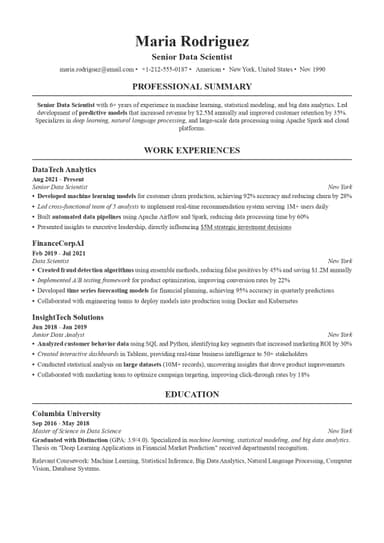
The smartest thing you can do right now is update your resume before the details start to fade. It's surprisingly easy to forget specific metrics, project outcomes, and accomplishments once you've mentally moved on, so you should capture them right away, while everything is still sharp.
ResumeBuilder.so's AI-powered generator can help you create a polished, ATS-optimized resume in minutes so you're ready to apply the moment you walk out the door! Be it the same industry or a shift, you can pick a field-specific resume template, provide a few more details about your career, and we’ll give you a concrete starting point rather than a blank page.
Final Thoughts
Exit interviews don't have to be stressful or adversarial. With a little preparation and a clear sense of what you're trying to accomplish, they're actually a fairly manageable conversation that can reinforce the professional reputation you've spent years building.
The formula isn't complicated: be honest, be constructive, and stay professional. That’s the best way to protect the relationships that matter and leave on terms you'd be comfortable describing to a future employer.
Exit Interview FAQ

Ava Sinclair is the Founder of ResumeBuilder.so and a seasoned expert in HR and recruitment. As the driving force behind ResumeBuilder.so, Ava combines her expertise in recruitment and job-seeking strategies to empower job seekers with intuitive, high-impact resume-building tools.