How to Write a Letter of Interest (+ Examples & Tips)


A letter of interest is a professional document you send to a company to express interest in working there, even when there is no specific job opening advertised.
Unlike a cover letter, which responds to a posted position, this one introduces you to an employer and explains why your background, skills, and goals could make you a strong fit for future opportunities.
Writing one can help you get noticed before a role becomes available, especially if you are targeting a company you genuinely admire. However, it needs to be focused, specific, and valuable to the employer. That said, in this article, we explain what a letter of interest is, when to send one, how to structure it, and provide examples you can use to write your own.
- A letter of interest is a proactive job search document sent to a company, even when there is no specific open role advertised.
- Unlike a cover letter, this one focuses on the company, its direction, and how your skills could fit future opportunities rather than responding to a job description.
- The best letters of interest are specific, researched, and addressed to a real person instead of using a generic greeting or copy-paste format.
- They should include a clear header, a personalized opening, relevant skills, a strong reason for reaching out, and a direct call to action.
- Common mistakes during the writing process include making the letter too long, focusing only on yourself, forgetting to ask for a call or meeting, and failing to follow up after one to two weeks.
What Is a Letter of Interest?
A letter of interest is a document you send to a company to express your desire to work there, even when nothing has been posted yet. It goes by a few names, such as letter of intent, expression of interest, prospecting letter, and statement of interest; these all refer to an unsolicited job application to a company you genuinely want to work for.
With such a letter, you're starting a conversation with a prospective employer without waiting for active job ads. It lets you tap into the hidden job market, which contains a significant slice of roles that are filled through referrals, internal conversations, and networking before they're ever advertised publicly.
You'd typically send one when:
- You genuinely admire a company's mission, culture, or work.
- You've heard through your network that a team may be growing soon.
- You want to explore opportunities in a company even without a specific opening in mind.
Letters of interest also appear outside the traditional job search; graduate school applicants write them to research advisors, and professionals use them when exploring fellowship or consulting opportunities. Yet, for job seekers, the purpose is consistent: get on a hiring manager's radar before the competition shows up.
3 Well-Written Examples of Letters of Interest
Here are three letter of interest examples for different situations: a general job inquiry, an email version, and a career change scenario.
General Letter of Interest (Full-Time Role)

Email Letter of Interest
Subject line: Brendon Gayle – Content Strategy | Interested in Opportunities at Fieldstone Digital
Dear Ms. Hazel,
Fieldstone Digital's content strategy work consistently shows up in my industry reading; your case study on local SEO for small businesses was particularly sharp. I'm a content strategist with seven years of experience, and I'd like to explore whether my background might be useful to your team.
My recent work focused on organic growth: I led a content overhaul that increased qualified traffic by 80% in 18 months. I'm drawn to Fieldstone's approach to community-first marketing and believe I could contribute meaningfully to that direction.
Would you be open to a 15-minute call in the next two weeks? I'd value the conversation regardless of whether there's an immediate opening.
Thank you,
Brendon Gayle
brendon.gayle@email.com | (512) 555-0184 | linkedin.com/in/brendongayle123
Letter of Interest for a Career Change

Letter of Interest vs. Cover Letter: Key Differences
A letter of interest and a cover letter differ mainly in timing and purpose; the former is proactive, while the latter is reactive. Both are professional documents that introduce you to someone at a company, but that's roughly where the similarities end.
Here’s a quick letter of interest vs. cover letter comparison:
| Aspect | Letter of Interest | Cover Letter |
|---|---|---|
Purpose | Proactively introduces you to a company and expresses interest in potential future roles. | Responds directly to a specific job posting and matches your skills to listed requirements. |
Timing | Sent when a company is not actively hiring or hasn’t advertised a role. | Submitted during an active hiring process alongside your application. |
Competition | No direct competition at the time of sending; you’re initiating the conversation. | High competition; you’re one of many candidates applying for the same role. |
Content Focus | Focuses on the company’s mission, goals, and future direction, positioning you as a good long-term fit. | Focuses on the job description, responsibilities, and how your experience meets specific requirements. |
Use of Job Description | No job description to reference; requires a broader, more strategic pitch. | Heavily tailored to a specific job description and keywords. |
Tone | More conversational, exploratory, and relationship-focused. | More formal, structured, and role-specific. |
How to Write a Letter of Interest: 5 Key Sections Explained
When writing a letter of interest, you should include your contact information, a personalized opening, a summary of your key skills, reasons for choosing the company, and a clear call to action. Let’s explore this further:
#1. Contact Information and Header
Your name, mailing address (or city/state if fully remote), the date, the recipient's name, job title, and the company address all go at the top, in the header. If you're sending the letter by email, you can move your contact details to the signature block and skip the formal header, as it looks clunky in such a format.
Brendon Gayle
Austin, TX
brendon.gayle@email.com
(512) 555-0184
March 14, 2025
Maya Hazel
Head of Marketing
Fieldstone Digital
150 Commerce Way, Austin, TX 78701
#2. A Strong Opening Paragraph
A generic start of a letter like "I'm writing to express my interest in working at your company" tells the reader nothing. Instead, you should go with something specific, such as a product of theirs you use, a campaign you admired, or a value that genuinely resonates. Name it, then introduce yourself in the second sentence.
Fieldstone Digital's recent rebrand for the Austin Chamber of Commerce caught my attention immediately. The campaign's balance of data-driven targeting with genuinely local storytelling is exactly the kind of work I want to be part of. I'm a marketing strategist with seven years of experience in content-led growth, and I'm reaching out because I'd love to explore whether there's a fit for someone with my background on your team.
#3. Your Skills and Value Proposition
Choose the strengths most relevant to the company's work and frame them around what you can do for them, not just what you've done before. Also, quantify where possible; hiring managers like to see tangible results and precise numbers.
In my current role at a mid-size SaaS company, I built a content program from the ground up that now drives 65% of inbound leads. Before that, I led brand campaigns for a regional nonprofit, managing a six-figure budget and a team of four.
#4. Your Reason for Reaching Out
Be specific about what draws you to this particular company, department, or type of work. Vague enthusiasm ("I've always admired your company") almost always reads as filler. Specific enthusiasm, on the other hand ("Your recent expansion into sustainability reporting aligns with the ESG work I've focused on for the past three years") looks genuine.
I specialize in bridging creative direction with measurable outcomes, which is something I'd bring to Fieldstone's client work.
#5. A Clear Call to Action
Don't end your letter with "I hope to hear from you", as this puts all the initiative on their side. Instead, ask directly for a brief call or meeting; a step like this is confident, specific, and easy to act on.
You can state your availability in general terms ("I'm available any day next week") and thank them for their time, too. The closing should feel confident; you're not begging for a chance, but proposing a conversation that could be mutually useful.
I'd welcome a brief conversation at your convenience. I'm available any day this week or next and happy to work around your schedule.
Thank you for your time,
3 Extra Tips on Writing a Letter of Interest for a Job
Now, here’s what you can do to make sure your letter of interest bears fruit:
You should go well beyond the "About Us" page when researching a company. Study their recent news coverage, LinkedIn posts, Glassdoor reviews, and any recent product launches or initiatives. The more specific your knowledge of what they're doing right now, the more genuine your letter will sound.
After all, hiring managers can tell the difference between someone who spent 20 minutes on their website and someone who actually cares. Make it obvious which camp you're in.
Never send a letter addressed to "To Whom It May Concern", as this immediately implies that you couldn't be bothered to find a real name. Most of the time, you can identify the right contact (a department head, a talent acquisition lead, or a specific hiring manager) through LinkedIn, the company website, or even a quick call to the main office.
When in doubt, find the most relevant human available and address them directly.
A generic letter is worse than no letter, and every company should receive a version written specifically for them rather than a template with their name swapped in.
Once the content is right, run a spell check, read it aloud to catch awkward phrasing, and ideally have someone else read it cold. If they can tell it was written for a different company, it needs more work.
Letter of Interest Template
You can use this letter of interest template as a starting point for your own; all you should do is fill in the brackets and customize each section before sending. The brackets are placeholders, so don’t leave them unchanged; add your own information here.
5 Common Mistakes to Avoid in a Letter of Interest
Here are five common letter of interest mistakes you should avoid:
- Sending a generic letter. Customization shows that you put some effort into the document, while a copy-paste letter with the company name swapped in signals the opposite, and hiring managers notice immediately.
- Making the document too long. If you're pushing past 400 words, you've stopped being compelling, and you may lose the reader's attention.
- Focusing entirely on yourself. Your letter should spend roughly as much time focusing on them as on focusing on you. Frame your skills and qualifications in terms of what you can do for their team, their goals, and their work, and avoid mentioning just what you've accomplished elsewhere.
- Forgetting a call to action. "I hope to hear from you" is not a call to action. Ask directly for a meeting or call, and specify what you're looking for.
- Not following up. If you haven't heard back within one to two weeks, a short, polite follow-up email is entirely appropriate. Yet, don’t do it more than once; more than that tips into pressure, and it won’t benefit you. If you receive a polite rejection or “no current openings” response, reply graciously and ask if you may reach out again in three to six months. This keeps the relationship open and positions you well for future opportunities.
How ResumeBuilder.so Can Help You Land the Job
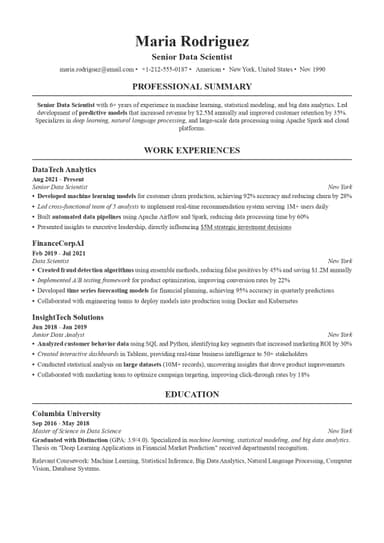
A compelling letter of interest can open some doors, but if there’s a job you can potentially apply for, your resume is what the hiring manager reaches for next. After your letter sparks genuine interest, they'll want to see the full picture, and an ATS-friendly, professionally designed document is what converts that curiosity into an interview.
ResumeBuilder.so offers an easy-to-use generator that will build a resume that matches the company you're reaching out to in your stead. The platform offers professional templates, AI content suggestions, great resume examples you can check out, and customization for any role or industry so that your resume feels as thoughtful and targeted as your letter of interest.
Final Thoughts
A letter of interest works because it reframes the job search entirely. Instead of competing for attention in an open application pool, you're creating your own opportunity by reaching out to a company you actually want to work for, on your own timeline, before anyone else has thought to.
Two things determine whether a letter succeeds: personalization and research. The more clearly your letter reflects that you understand a company, the more seriously it will be taken. The combination of proactive outreach, a sharp letter, and a well-written resume is what separates candidates who wait from candidates who get hired.
Letter of Interest FAQs

Max Harper is the resume guru who actually makes job searching easier. With years of experience as a hiring manager, Max knows what makes a resume stand out in a pile of 200+ applications. From breaking down ATS myths to helping you craft bullet points that pop, Max shares easy-to-digest, no-BS resume advice.