15+ Proven Job Search Tips to Get Hired Faster in 2026

The right job search tip can be the difference between months of silence and a full inbox of interview invites, especially in today’s job market. Applicant Tracking Systems (ATS) now filter out resumes while remote work has widened the candidate pool for every role. Without a structured approach, even strong candidates get lost in the noise.
In this guide, we offer proven job search tips—from crafting an ATS-friendly resume to networking with purpose, preparing for interviews, and staying mentally sharp through a long search. Whether you're just starting out or months into a frustrating hunt, there's something here that'll move the needle.
- It’s best to start with clear goals; define target roles, industries, and companies before sending a single application.
- Your resume must be ATS-optimized and tailored for every role—generic resumes rarely make it through screening software.
- A strong cover letter complements your resume and gives you a real edge when applications look similar.
- Networking is still the most effective job search strategy; many roles are filled before they're ever posted publicly.
- LinkedIn is your most powerful online tool; a complete, keyword-rich profile attracts recruiter attention even when you're not actively applying.
- Interview prep, follow-up consistency, and mental resilience are all part of what separates successful job seekers from the rest.
Top 10 Job Search Tips: Complete List for Successful Job Hunt

With the unemployment rate in the U.S. at 4.4% and 92,000 jobs lost in February 2026, the labor market remains relatively stable but slightly more competitive, especially in sectors experiencing job declines, such as health care, information, and the federal government.
That said, here are the top 10 proven job search tips you should follow to land a job in today’s market.
#1. Set Clear Job Search Goals Before You Start
You can set clear job search goals by defining the roles, industries, companies, and locations you're targeting before sending a single application. Without this clarity, you'll waste time on roles that don't fit and miss the ones that do.
Start by writing down 2–3 specific job titles you want and the non-negotiables:
- Salary range
- Location
- Remote or in-office
- Company size
Next, identify 20–30 employers you'd genuinely want to work for and research the company—their mission, culture, and recent news. Then set weekly activity targets, such as applications submitted, LinkedIn connections made, follow-ups sent. Structure turns a passive search into something you can actually measure and improve.
#2. Build an ATS-Optimized Resume
You can build an ATS-optimized resume by using keywords from the job description, keeping your formatting clean, and avoiding tables, graphics, or unusual fonts that confuse tracking software. According to research, 98% of Fortune 500 companies use ATS to screen applicants, therefore, an optimized resume is more of a requirement than an option.
Now, let’s examine how to write a resume optimized for ATS.
Tailor Your Resume for Every Job
A generic resume rarely passes ATS, so customizing your resume for each posting is a must. Read each job posting carefully. Pull out the skills, tools, and requirements they emphasize.
Then work those exact terms into your resume naturally. This means your resume summary, skills section, and bullet points.
Choose the Right Resume Format
There are three main resume formats:
- Reverse-chronological. It lists your most recent experience first. This is the most ATS-friendly format and the right choice for most job seekers.
- Functional. It groups skills rather than listing jobs chronologically. ATS systems often struggle with this format — use it rarely.
- Combination/hybrid. It blends skills and experience. Works well for career changers.
For most people in most situations, the reverse-chronological resume format is the safest and most effective choice.
Use a Professional, AI-Powered Resume Builder
Writing a strong, ATS-ready resume from scratch takes time, and most people don't do it well. ResumeBuilder.so removes the guesswork. With our resume builder, you can generate a tailored, keyword-optimized resume you can download immediately. No design skills needed.
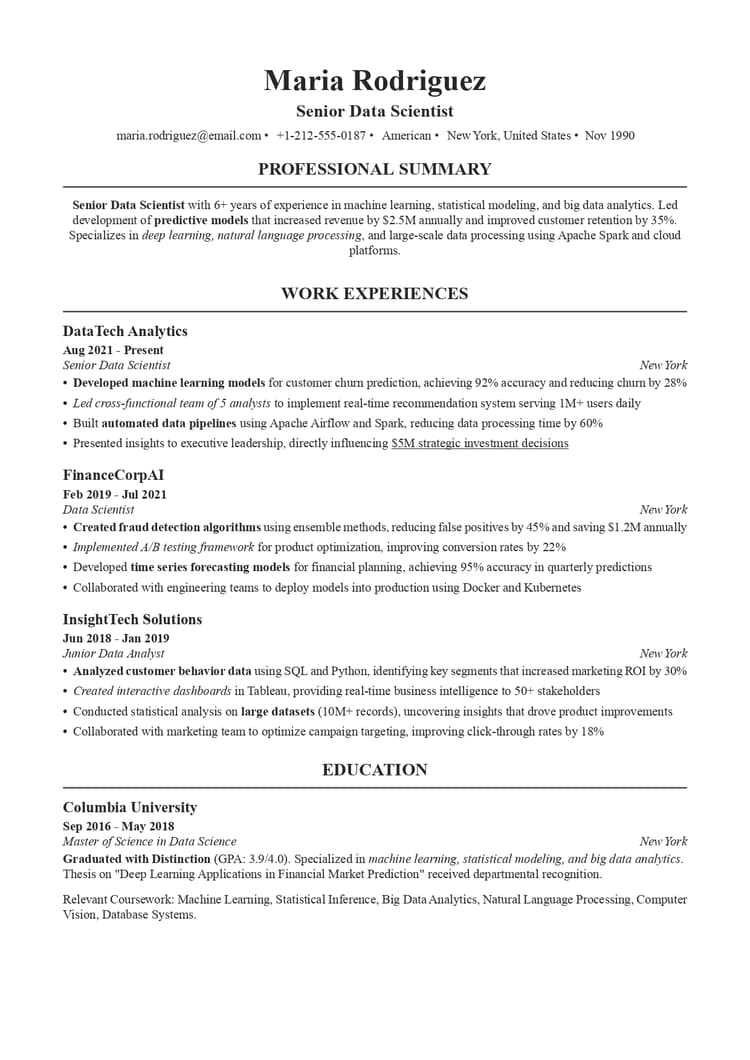
Ready to Build an ATS-Optimized Resume?
Try ResumeBuilder.so's AI-powered resume builder.#3. Write a Tailored Cover Letter for Each Application
You can write a tailored cover letter by addressing the specific company, role, and how your skills directly solve their challenges.
When resumes look similar on paper, a personalized cover letter is what gets a hiring manager to call you first. The structure is simple:
- Open with a specific hook about the company or role
- Spend two to three short paragraphs showing how your work experience maps directly to their needs
- Close with a confident, forward-looking statement

Need a tailored cover letter?
Build one today with ResumeBuilder.so.#4. Leverage LinkedIn and Build Your Online Presence
You can leverage your LinkedIn profile in your job search by keeping it complete, connecting with people at target companies, and engaging with industry content regularly. According to research, 71% of hiring managers screen candidates' social profiles. Therefore, online presence matters as much as what's on your resume.
Here are three LinkedIn tips you can use:
- Start with the basics. A professional headshot, a headline that goes beyond your job title (e.g. "Marketing Manager | B2B SaaS | Content & Demand Gen"), and an About section that tells your professional story in first person goes a long way.
- Turn on "Open to Work". This way, you’re visible to recruiters while keeping things discreet. Then build the habit of connecting with 5–10 new people per week in your target industry and engaging genuinely with content in your feed.
- Use LinkedIn's job search filters aggressively. Filter by "Easy Apply," remote, and "Posted within 24 hours" to catch fresh listings before the rush. A complete, keyword-rich profile can result in recruiters reaching out to you, even when you're not actively applying.
#5. Network Strategically — Online and Offline
You can network strategically by reaching out to your existing contacts first, then expanding through events, LinkedIn, and professional associations. There are several networking tips you can follow, but most importantly:
- Start warm. Go through your contacts—former colleagues, classmates, managers, mentors—and identify who works at or knows people at your target companies. A warm introduction converts exponentially better than a cold application.
- When you reach out, don't ask for a job. Ask for advice or a 20-minute conversation. This takes the pressure off and almost always gets a better response.
For cold outreach, try this 3-sentence template:
Beyond LinkedIn, attend industry webinars, local meetups, and professional association events. The mindset shift that makes networking work: give before you ask. Share relevant articles, make introductions, offer your expertise. People remember that.
#6. Use Multiple Job Search Channels
You can expand your job search by using a mix of general job boards, niche sites, company career pages, staffing agencies, and your professional network. Relying on just one platform means you're missing a large share of available openings.
Here’s a quick overview of job search channels you can use:
| Channel | Best For |
|---|---|
LinkedIn Jobs | Professional roles; networking + applying in one place |
Indeed / Glassdoor | High volume search; salary benchmarking on Glassdoor |
Company Career Pages | Most accurate listings; typically less competition |
Niche Job Boards | Targeted search (Dice for tech, Mediabistro for media) |
Staffing Agencies | Fast placement; access to unadvertised openings |
Professional Associations | Industry-specific listings that most seekers overlook |
Set up job alerts on at least 2–3 platforms so new postings land in your inbox daily. The first 48 hours after a job goes live typically bring the highest application-to-interview conversion rates.
Don't overlook the hidden job market either. Roles get filled through referrals before they're ever posted. This is why networking and targeting company career pages directly are worth your time.
#7. Apply Strategically — Quality Over Quantity
You should apply strategically by focusing on roles where you meet 70%+ of the requirements and tailoring each application, rather than mass-applying. The "spray and pray" approach generates frustration, not interviews.
Job descriptions are often wish lists. If you meet most of the stated requirements, apply. Research consistently shows companies hire candidates who don't check every box when those candidates make a compelling case for their fit.
Aim to apply within 24–48 hours of a posting going live. Early applications get more attention.
#8. Prepare for Interviews Thoroughly
Strong interview prep is what separates candidates who get offers from those who perform well but still lose out. You can prepare by following these interview tips:
- Research the company. Study the company's mission, recent news, key products or services, and culture before every interview. Look up your interviewers on LinkedIn. Knowing their background helps you connect their experience to your story.
- Practice common interview questions. With the "Tell me about yourself" interview question, you have a tight 90-second window to get your career story out there. For behavioral questions ("Tell me about a time when..."), answer using the STAR method. Also, prepare 3–5 thoughtful questions to ask the interviewer.
- Prepare for AI and chatbot screening. A growing number of companies now use AI chatbots or one-way video tools for initial screening. Practice answering common interview questions on camera and out loud. Tools like Yoodli or ChatGPT can simulate screening sessions and give you feedback on your pacing and delivery.
#9. Follow Up After Every Application and Interview
You should follow up on your job application and interview by sending a brief, professional note within 24 - 48 hours. Most candidates skip this step entirely, which is one of the easiest ways to stand out.
After an interview, send a follow-up email within 24 hours. Make it personal; mention something specific from the conversation, whether it's a challenge they described or a topic that got you thinking.
Here’s an interview follow-up email template you can use:
#10. Manage Your Mindset and Stay Consistent
You can manage your job search mindset by setting realistic daily goals, celebrating small wins, and treating rejection as redirection rather than failure. A long search is emotionally taxing and maintaining structure and social support improves resilience during job transitions.
Treat your job search like a job. Dedicate focused hours each day rather than binge-applying on weekends and then going quiet for a week. Consistency beats intensity.
Also, keep in mind that rejection is part of the process. However, each one is data: refine your resume, adjust your messaging, improve your interview answers. Don't quit, instead:
- Set daily goals (e.g., 3 applications, 2 LinkedIn messages, 1 follow-up)
- Take genuine breaks since burnout makes your applications worse
- Seek support from career coaches, mentors, or job seeker communities (Reddit's r/jobs, LinkedIn groups, local meetups)
- Celebrate progress, not just outcomes
6 Bonus Job Search Tips
These bonus job strategies don't take long; they're the kind of details that compound over time.
#1. Update Your Resume Regularly
Don't wait until you need a new job to update your resume. Keep it current after every project, promotion, certification, or skill gained. When an unexpected opportunity appears, you'll be ready. Use a professionally designed resume template to keep your format fresh.
#2. Tailor Your LinkedIn Headline for Search
Most people use their job title as their LinkedIn headline which is fine, but misses an opportunity. Use your title + key skills for resume and industry context (e.g., "Product Manager | SaaS | B2B | Growth") to appear in more recruiter searches. Headline space is valuable real estate.
#3. Get Your References Ready
Line up 2–3 professional references before you need them—a former manager, a colleague, or a client who can speak to your work. Give them a heads-up that you're searching and send them your updated resume. A surprised reference is a weak reference.
#4. Consider Temporary or Contract Roles
Temp and contract roles can provide income, build recent experience, and get you in the door at target companies, sometimes leading directly to full-time offers. And when you do land that permanent role, you'll need to leave your current position professionally.
#5. Set Up Automated Job Alerts on Multiple Platforms
Set up job alerts on at least 2–3 platforms using your target job titles and location filters. New listings get the most applications in the first 24 hours—automated alerts mean you never miss that window.
#6. Know When to Negotiate Your Salary
Salary negotiation isn't optional, it's expected. Research the market rate for your target role before any offer conversation. When an offer comes, express enthusiasm first, then ask if there's flexibility. Most hiring managers expect you to.
Final Thoughts
A successful job search is built on strategy, not volume. The candidates who land roles fastest aren't the ones submitting the most applications; they're the ones who know what they want, present themselves well, and follow up consistently. Your resume is your first impression. Make it count.
Every job seeker's path looks different, but the fundamentals hold across industries, experience levels, and market conditions. Sharpen the basics, and the opportunities follow.
Job Search Tips FAQs

Max Harper is the resume guru who actually makes job searching easier. With years of experience as a hiring manager, Max knows what makes a resume stand out in a pile of 200+ applications. From breaking down ATS myths to helping you craft bullet points that pop, Max shares easy-to-digest, no-BS resume advice.