Best Job Boards: Here’s Where to Find Jobs in 2026

Job boards are online platforms where employers post open positions and job seekers can search, filter, and apply for roles. At the moment, there are so many job search sites, and applying through the wrong platforms can, in the end, feel like shouting into a void.
We created this guide to help you learn more about top job search websites in general and discover ones that are genuinely worth your time, as well as teach you how to get real responses instead of radio silence.
- Job boards fall into two main categories (aggregators and direct-post platforms), and using a mix of both gives you broader access to real opportunities.
- General boards like Indeed, LinkedIn, Google for Jobs, ZipRecruiter, and Glassdoor are strong starting points, but niche boards can offer better matches and less irrelevant competition.
- Free job boards are usually enough to start with, while premium platforms make more sense for competitive fields, remote roles, or higher-paying positions.
- Applying effectively on job boards means tailoring your resume, setting up alerts, and focusing on targeted applications instead of mass-applying blindly.
- Job seekers should also watch for common scam red flags, such as vague listings, missing company names, and requests for sensitive financial information.
What Are Job Boards?
Job boards are web platforms that connect job seekers with employers by listing open positions in a searchable database. They're updated in real time, accessible from anywhere, and the postings on them can be filtered by role, location, salary range, and more.
There are two main types of job boards:
- Aggregators (like Indeed and Google for Jobs) automatically pull listings from company career pages and other boards across the web. You get massive volume in one place, but some listings can be outdated.
- Direct-post boards (such as LinkedIn) require employers to post directly to the platform. The listings tend to be fresher, and you're more likely to reach a recruiter who's actively monitoring applications.
Most job boards are free for job seekers, and employers typically pay to post or boost their listings. Yet, a handful of platforms offer premium memberships for candidates, which we'll get to later.
It’s also important to know that a job board and a job search engine aren't quite the same thing. For instance, Google for Jobs is a search engine, and it surfaces listings from elsewhere; meanwhile, a job board like LinkedIn hosts and manages its own listings. In practice, you'll use both, often without thinking much about the difference.
5 Best General Job Boards in 2026
General job boards cover every industry and experience level, and this is where most people start (for a good reason). Here are the five worth having open in your browser:
| Job Board | Type | Best For | Key Feature |
|---|---|---|---|
Indeed | Aggregator | All job seekers | Largest listing volume |
Direct-post | Professionals | Recruiter visibility | |
Google for Jobs | Search engine | Broad search | Aggregates all listings |
ZipRecruiter | Hybrid | Fast applications | AI matching |
Glassdoor | Direct-post | Research-focused users | Company reviews & salaries |
#1. Indeed

Indeed is the largest job board in the world, combining direct employer postings with automated crawling of company career pages. Regardless of the type of role you're looking for (entry-level, senior, full-time, contract, etc.), you’ll almost certainly find something on this platform.
The sheer volume is both the strength and the challenge, as popular listings can attract hundreds of applicants within days. To cut through that competition, you should use the "Date Posted" filter and sort for listings under 24–48 hours old. This way, you'll face a smaller applicant pool and make a stronger impression.
Additionally, the "Urgently Hiring" filter is worth checking too, as those employers are actively trying to fill roles fast.
#2. LinkedIn

LinkedIn sits in a slightly different category; it's a job board, but it's also where recruiters actively source candidates, which means your profile does as much work as your applications. Nowadays, many recruiters use LinkedIn to find talent, which makes it non-negotiable for anyone targeting professional or mid-to-senior roles.
Getting the most out of LinkedIn means optimizing your profile like a digital resume. Your headline, summary, and listed hard skills should mirror the language in the roles you're targeting.
Turn on the "Open to Work" signal, as it quietly alerts recruiters without broadcasting to your current employer. Also, don't skip the skill endorsements section; it directly influences how LinkedIn's algorithm ranks your profile in recruiter searches.
#3. Google for Jobs

Google for Jobs doesn't require an account, doesn't have its own listings database, and technically isn't a job board at all. What it does is aggregate listings from virtually every job board and company career page on the internet.
It has a high application-to-interview conversion rate because the search experience is genuinely good. Boolean strings work well here, so you can combine queries, e.g., “marketing manager" + "remote" + "senior" to filter results precisely.
It’s also good to know that Google for Jobs is just a discovery tool; once you find a listing, you'll apply through the original source.
#4. ZipRecruiter

ZipRecruiter uses AI-powered matching to connect candidates with relevant roles, and it distributes job postings to 100+ boards simultaneously.
For job seekers, the most useful feature is the "Invited to Apply" notification. When an employer sends you one, they've already flagged your profile as a potential match. That's a warmer entry than a cold application, and it's worth treating those alerts seriously.
The platform consistently earns high user satisfaction ratings among major job boards, and the interface is genuinely straightforward to use. All you should do is set up your profile, and the matching algorithm pulls directly from it.
#5. Glassdoor

Glassdoor combines job listings with anonymous company reviews, salary data, and interview experience reports.
The listings alone make it a useful job board, but the real value is the context it provides around each role. You can see what current and former employees actually think of a company's culture, management, and growth opportunities before you invest hours in an application.
It’s a good idea to cross-reference the rating with the specific team or department mentioned in the listing, where possible. The information you come across can sometimes be conflicting, e.g., a company might have a strong overall score but a struggling product division, and that kind of nuance matters.
Best Niche Job Boards to Consider

General boards cast a wide net, which is fine when you're early in your search; however, niche job boards attract employers who are specifically hiring for your field. That means less competition from irrelevant applicants and a higher overall match rate.
Here's where to look depending on your area:
Job Boards for Remote Work and Tech
Here are some job boards for tech and work-from-home jobs:
- We Work Remotely is one of the largest remote job communities online, covering tech, design, marketing, and customer support.
- Wellfound (formerly AngelList Talent) is the go-to for startup and tech roles, with a transparency-first approach; salary and equity ranges are listed upfront, which saves everyone time.
- Dice is the specialist board for IT and engineering professionals, particularly strong for developers and cybersecurity roles.
You should set up email alerts on all three; new remote listings get flooded with applications fast, so being in the first wave of applicants genuinely improves your odds.
Job Boards for Healthcare
The best healthcare job boards include the following:
- Health eCareers covers clinical, allied health, and administrative roles across the healthcare sector.
- Medscape Jobs skews toward physicians, nurses, and medical specialists.
One thing to keep in mind is that healthcare listings often expect licensure details front and center. Therefore, make sure your education and certifications are properly listed on your resume before applying; it's not optional in this field.
Job Boards for Entry-Level Jobs & Recent Graduates
The platforms that offer job listings for junior candidates and recent graduates are as follows:
- Handshake is campus-recruiting focused, with a vetted employer network that significantly reduces the risk of fake or misleading listings.
- College Recruiter targets candidates with 0–5 years of experience and has millions of listings globally.
Both platforms work well alongside LinkedIn, so you can use them together to maximize visibility when your experience is still building. Additionally, you should make a decent resume to properly present your transferable skills and previous experience in internships or volunteering.
Job Boards for Executive & High-Paying Roles
To find an executive or high-paying job, you want to check out:
- Ladders, which focuses on positions paying $100k and above
- Exec-Appointments (through the Financial Times), which targets C-suite and board-level roles internationally
At this level, your resume and LinkedIn profile carry enormous weight, so both need to be polished, keyword-optimized, and consistent with each other.
Free vs. Premium Job Boards: Which Should You Use?
Free job boards and premium job boards differ mainly in listing quality, candidate filtering, and the level of competition you'll face as an applicant.
- Free boards (Indeed, Google for Jobs, LinkedIn (basic), Glassdoor, etc.) offer high volume and broad access. The trade-off is that everyone else has the same access, so popular listings on Indeed can attract 200+ applications within 48 hours.
- Premium boards like FlexJobs, Ladders, and LinkedIn Premium operate differently: listings are curated, the applicant pool is smaller, and advanced features like direct recruiter messaging are available.
So, who actually benefits from going premium? The answer would be: active job seekers in competitive fields, anyone targeting $80k+ roles, and remote workers who need verified listings rather than the mixed bag on free platforms.
All in all, the verdict is that you should start with free boards. If your search stretches past 4–6 weeks without meaningful traction, you can add one premium platform and treat it like an investment.
4 Great Tips on How to Use Job Boards Effectively
Uploading your resume and clicking "Easy Apply" on 40 listings isn't a job search strategy; here's what actually moves the needle:
Generic resumes get filtered out by applicant tracking systems (ATS) before a human ever reads them. Such software scans for keyword matches between your resume and the job description, so if the language doesn't align, you don't move forward.
The fix is to read each job description carefully, identify the key skills and phrases the employer is emphasizing, and adjust your resume to reflect that language. You don't need a completely different document every time; your work experience, skills section, and resume summary are usually where the adjustments matter most.
If you don’t know how to write a proper resume from scratch or tailor an existing one, we’ve got your back.
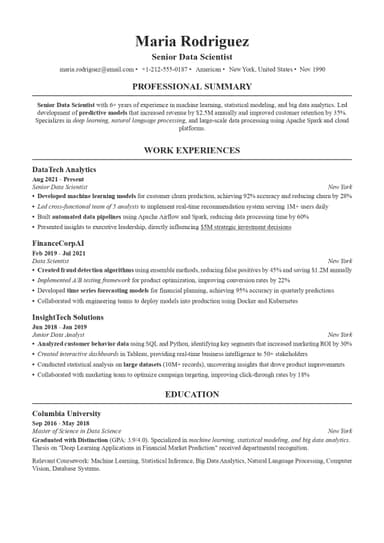
ResumeBuilder.so's AI-powered resume builder takes the essential information about your competencies and work history and turns them into a job-winning job application document. This way, you’ll get an ATS-friendly resume with relevant information and all your accomplishments in one place, ready for submission!
Every major board lets you save search criteria and receive alerts when new listings match. This is worth doing immediately since new postings attract the most applicants in their first 48 hours, and being among the first to apply meaningfully improves your response rate.
Set alerts on at least 2–3 boards simultaneously, using the same keyword combinations so you're not missing variations, and check them daily, not weekly.
Ten targeted, well-researched applications are better than fifty generic ones, so, before sending your resume, research the company on Glassdoor, check their LinkedIn page, and look at what the actual team looks like.
That context sharpens your application and gives you something specific to say; plus, quality over volume often makes the difference between multiple and zero interviews.
Recruiters look at what you submit, but they also search platforms independently, so your LinkedIn/Indeed profile and any portfolio you have are all fair game.
Add a professional photo, write a headline that mirrors your target job title, and make sure your summary reflects the same positioning as your resume. Inconsistency between platforms raises some questions you'd rather not have to answer.
How to Avoid Job Board Scams
You can avoid job board scams by knowing the common red flags: vague job descriptions, requests for personal financial information, and salaries that are far above market rate for the role described.
The volume of fake listings and job scams has grown in tandem with remote work. Because remote roles don't require in-person verification, fraudsters find them easier to fake convincingly. Here's what to watch for:
- No company name listed: legitimate employers almost never post anonymously
- Requests for your SSN, bank details, or payment before hiring: this never happens in a real hiring process
- Salaries that seem wildly high for the stated role and experience level
- Poor grammar or generic, copy-paste job descriptions with no specific responsibilities
- Unsolicited offers: if you didn't apply, be skeptical of anyone reaching out directly with an "opportunity"
Safer online job boards reduce (but don't eliminate) the risk. For example, Handshake vets its employer network specifically, LinkedIn has verified company pages, and GovernmentJobs.com covers public sector roles only, which are inherently accountable.
If you encounter a suspicious listing, don't just close the tab. You should report a job scam to the FTC directly; it takes two minutes and helps protect other job seekers from the same listing. You can also report it through the job board itself; most have a flagging mechanism built in.
Final Thoughts
The best job posting sites for you depend on your industry, experience level, and the type of role you're after. That said, the platform itself matters less than most people think; what actually moves applications forward is what you bring to it, which should be a tailored, ATS-optimized resume that speaks directly to each role you're applying for.
Don’t forget to have a look at everything ResumeBuilder.so can offer to help you achieve this, including ATS-friendly templates, amazing resume examples to refer to, and much more!
Job Boards FAQs

Ava Sinclair is the Founder of ResumeBuilder.so and a seasoned expert in HR and recruitment. As the driving force behind ResumeBuilder.so, Ava combines her expertise in recruitment and job-seeking strategies to empower job seekers with intuitive, high-impact resume-building tools.