Panel Interview: What It Is, How to Prepare & Tips to Ace It
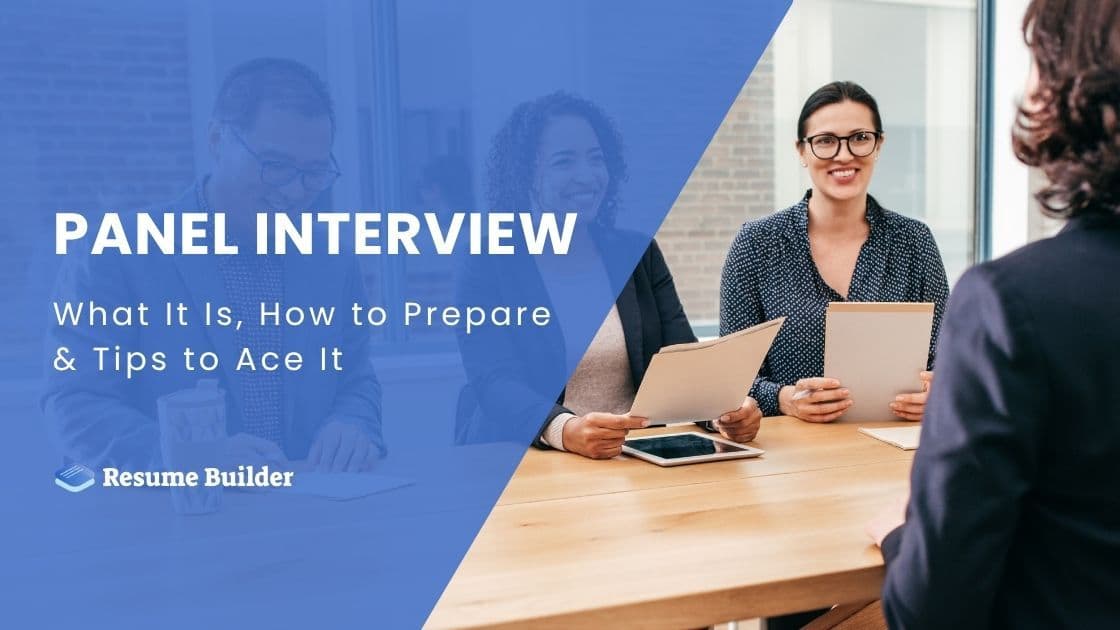

A panel interview is a structured job interview in which a candidate is evaluated by two or more interviewers at the same time, rather than meeting with each person separately.
With a little preparation, this type of interview can actually work in your favor. More decision-makers in the room means more potential advocates when the conversation wraps up, so every person you impress is another voice speaking for you.
This guide covers what the panel interview meaning is, why employers use it, how it differs from other interview formats, and (most importantly) exactly how to prepare and perform when the day arrives.
- A panel interview is a job interview where multiple interviewers evaluate one candidate at the same time, often bringing different priorities such as culture fit, technical ability, and team compatibility.
- Employers use panel interviews to save time, collect broader feedback, reduce individual bias, and see how candidates handle pressure and group dynamics in real time.
- Strong panel interview preparation includes researching each panelist and the company, building structured STAR examples, and practicing answers out loud in a mock group setting.
- To perform well, candidates should engage the full panel by using names, making balanced eye contact, staying calm under pressure, and treating the interview like a professional conversation rather than a Q&A drill.
- Sending a personalized thank-you email to each panelist after the interview helps reinforce interest in the role and leaves a stronger final impression.
What Is a Panel Interview?

A panel interview is a type of job interview where two or more interviewers assess one candidate simultaneously. Unlike a standard one-on-one meeting, you're speaking to a group where each person is evaluating you through a different lens at the same time.
The panel typically consists of HR representatives, the direct hiring manager, team members you'd work alongside, and sometimes department heads or senior leadership. Everyone brings a distinct perspective:
- HR is looking at culture fit and process
- The hiring manager cares about technical competence and delivery
- Peers on the team want to know how you'll actually function day-to-day
These interviews are particularly common in fields with complex hiring needs, such as healthcare, government, education, and senior corporate roles, where multiple stakeholders need to sign off on a hire.
Why Do Employers Use Panel Interviews?
Employers who choose the panel format usually do it to solve a few concrete problems at once. Leaders often lack confidence in their own hiring decisions, which makes gathering multiple perspectives an obvious safeguard.
Therefore, panel interviews:
- Save time: One panel session replaces three or four separate one-on-one rounds.
- Gather diverse perspectives: Each department evaluates what matters most to them.
- Test how the candidate handles stress, pressure, and group dynamics in real time.
- Reduce unconscious bias: With multiple evaluators in the room, no single person's blind spots dominate the outcome.
Panel Interview vs. One-on-One: Key Differences
Logically, the main difference between a panel interview and a one-on-one interview is the number of job interviewers evaluating a single candidate at the same time. That sounds simple, but the practical experience (how you manage your attention, your energy, and your answers) changes considerably.
One-on-one interviews build rapport quickly; you're talking to one person, and you can calibrate your tone to theirs and read the dynamic with ease. Panel interviews, meanwhile, demand broader engagement, as you're essentially managing multiple conversations simultaneously, which requires a different kind of awareness.
It's also worth clearing up a common point of confusion: a group interview is not the same as a panel interview. In a group interview, multiple candidates are evaluated together. On the other hand, in a panel interview, one candidate faces multiple interviewers; both create pressure, but for very different reasons.
How to Prepare for a Panel Interview
You can prepare for a panel interview by researching the company and panel members, tailoring your answers to the role, and practicing with the STAR method before the interview day. Panel interview preparation shares a lot with that for a standard interview, but a few extra steps make all the difference when you're performing for a group.
#1. Find Out Who Will Be on the Panel
Most candidates skip this step, which is exactly why doing it makes you stand out. It’s recommended to look each person up on LinkedIn and the company website, and:
- Note their role, specialization, and tenure at the company
- Look for any common ground, such as shared network connections, similar past employers, and published work
Knowing who's in the room lets you tailor both your answers and your questions to what each person actually cares about.
#2. Research the Company Thoroughly
Panelists from different departments will probe different angles. The HR person might ask about your values, while the technical lead will want specifics; thorough company research gives you ammunition for both. So, you should:
- Review the company's mission, values, recent news, product launches, and culture signals
- Align your talking points to the job description and stated company goals
- Prepare specific examples from your background that connect directly to their stated needs, which should frame your experience clearly
#3. Prepare Answers Using the STAR Method
You can use the STAR method in a panel interview, as it’s a storytelling framework that works especially well in panel settings due to its structure and simplicity.
According to USC's guide on panel interviews, candidates who use structured storytelling frameworks are perceived as more organized and confident under pressure. Therefore, prepare 5–7 STAR stories covering leadership moments, problem-solving, teamwork, conflict resolution, and a time you failed and recovered.
#4. Prepare Targeted Questions for Each Panelist
Every person on the panel has different priorities, and arriving with questions tailored to each of them signals preparation that most candidates don't bother with. For this purpose, you can prepare one or two tailored questions per panelist based on your research.
#5. Bring Extra Copies of Your Resume and Cover Letter
The rule of thumb: one printed copy per panelist, plus two or three extras. Panelists may not have received your application materials or may want to reference them during the conversation. Arriving prepared with physical copies (including a cover letter) signals professionalism before you've said a word.
#6. Practice Out Loud, Not Just in Your Head
There's a significant gap between knowing your answer and being able to deliver it calmly while three people are watching. To avoid confusion, make sure you:
- Run mock interviews with 2–3 friends or family members, each playing a different panelist
- Practice distributing your eye contact when responding to a single question
- Record yourself to review pacing, filler words, and whether your answers feel natural rather than rehearsed
- Focus especially on transitioning your attention between panelists, as shifting smoothly takes deliberate practice
What to Expect During a Panel Interview
During a panel interview, you can expect rapid-fire questions from multiple interviewers, a mix of behavioral and situational questions, and a structured format with one designated lead interviewer.
Walking in knowing the general rhythm helps you stay composed rather than reactive. Typically, one panelist (often the hiring manager or HR lead) manages the overall flow. Others take turns asking questions related to their area of interest, and some may ask follow-ups that build directly on your previous answers.
Not everyone will be equally animated: some panelists take notes quietly and say almost nothing, while others engage actively. Don't let the quiet ones unnerve you; they're often the most influential in the final decision.
Common Panel Interview Questions

The most common panel interview questions cover your background, behavioral examples, and situational judgment. Here's what you're likely to face, and what each question is actually testing:
| Question | What It Tests |
|---|---|
First impressions, communication style | |
Motivation, company fit | |
"Describe a time you handled a conflict at work." | Behavioral / STAR method |
"How do you prioritize tasks under pressure?" | |
"What's your biggest professional achievement?" | Accomplishments, impact |
"Where do you see yourself in five years?" | Ambition, long-term fit |
"How do you work within a team?" | Collaboration |
"What do you know about our company?" | Preparation, genuine interest |
"Describe a time you failed and what you learned | Self-awareness, growth mindset |
Engagement, preparation |
8 Impressive Panel Interview Preparation Tips
The panel interview tips you see here go beyond generic interview advice and are specific to the group dynamic you're walking into:
Memorize names before you walk in; write them on a notepad if it helps, and you can glance at it naturally as you set up. Using someone's name when you direct a point at them creates a personal connection that sets you apart from every other candidate who defaulted to talking to the ceiling or addressed only the most senior person.
Start your answer by looking at the person who asked the question, then sweep your gaze naturally across the other panelists as you continue. The goal is a few seconds with each person, which is enough to feel inclusive without turning the room into a slow-motion oscillating fan impression. The person who asked will still feel addressed, and everyone else will feel included rather than ignored.
Don't rush to fill silence; a brief pause before answering a difficult question reads as thoughtfulness, not hesitation. Take a breath, collect the key point you want to lead with, and begin. Setting a measured, conversational tone puts you in a more confident position than reacting too intensely to every question.
Resist the gravitational pull of the most senior or most talkative person in the room, and once you do so, direct relevant points toward the quieter panelists, too.
For example, if a technical question is being asked but the operations lead on the panel has stayed quiet, glance at them when you talk about execution. Inclusive engagement signals interpersonal awareness, which is a quality hiring teams genuinely value.
Reference earlier exchanges to show you've been actively listening. Ask a light follow-up question when something a panelist says genuinely connects to your experience, and pay attention to non-verbal cues. Leaning forward, nodding, or raised eyebrows all signal engagement or skepticism.
After all, strong communication skills are as much about reading the room as filling it with words. Candidates who mirror energy and demonstrate active listening are always rated more favorably, even when verbal answers are equivalent.
Some panelists ask curveballs deliberately because they want to see how you respond under pressure.
If you don't fully understand a question, ask for clarification. Something like "Just to make sure I'm answering what you're looking for, are you asking about X or Y?" shows critical thinking, not confusion. Also, stay composed; your calm is as informative to the panel as your answer.
Read the room before you calibrate your tone. A formal, structured panel in a boardroom may call for precision and professionalism, while a collaborative, conversational panel in a startup office could welcome a bit more warmth and personality.
Also, matching body language and energy naturally (not robotically) signals adaptability, which hiring managers increasingly treat as a key indicator of potential.
Within 24 hours of the interview, send an individual email to each panelist, not a single group message.
It also helps to reference something specific from their questions or comments to prove you were listening, then reiterate your enthusiasm for the role and tie in one relevant qualification that connects to what they discussed.
Final Thoughts
Panel interviews are intimidating before you understand them; however, once you do, they're actually turning from a threat into an opportunity. More people in the room means more potential advocates for you when you leave, and every person you genuinely connect with is another voice in the deliberation room speaking in your favor.
Still, what you need first before any interviews is a resume that will make prospective employers want to meet you and learn more about your competencies. For this purpose, you can use our AI-powered resume builder to tailor your job application to the specific role before you walk in.
For some additional guidance, you can also explore our resume examples across industries or review the complete guide on how to write a resume if you want to refine your document from the ground up.
Panel Interview FAQ

Jordan Lee is your guide to navigating the rapidly changing job market in the age of AI and automation. He dives into how AI is reshaping hiring, the skills of the future, and what job seekers need to do now to stay relevant. If you’re curious about how technology is transforming careers and want to future-proof your job, Jordan’s insights are a must-follow.