Job Interviewers: Who Are They, and What They Look For?

Job interviewers are the people responsible for evaluating candidates during the hiring process. Depending on the company and role, an interviewer might be a recruiter, hiring manager, team leader, HR representative, or even a future colleague.
Their job is not just to ask questions, but to assess whether a candidate has the right skills, experience, attitude, and communication style for the position. At the same time, they often represent the company, giving applicants a clearer sense of the role, workplace culture, and expectations.
This article explains what role these people play in the job interview process and why understanding their perspective can help you perform better in an interview. You’ll also learn about the different types of interviewers you may encounter, what they typically look for in candidates, and how to make a stronger, more confident impression.
- Job interviewers can include HR screeners, hiring managers, panel members, or senior leaders, and each type assesses different aspects of your fit for the role.
- Interviewers generally evaluate candidates across four main areas: qualifications, cultural fit, communication, and long-term potential.
- Strong interview answers are specific, evidence-based, and closely aligned with the job description, often using the STAR method.
- Good preparation means more than rehearsing answers; it also includes researching the company, tailoring your resume, planning logistics, and preparing thoughtful questions.
- Interviewers are quick to notice red flags such as vague responses, poor preparation, inconsistency with your resume, negativity about past employers, or early focus on salary.
Who Is a Job Interviewer?
A job interviewer is a hiring professional responsible for evaluating candidates and determining who is the best fit for an open role. You might face different people with different agendas depending on the position you’re applying for.
Here’s a quick overview of different types of job interviewers and what they evaluate:
| Interviewer Type | Focus Area | What They Evaluate | Interview Style |
|---|---|---|---|
HR Screener | Basic fit | Experience, salary expectations | Short, structured |
Hiring Manager | Job performance | Skills, problem-solving | Deep dive |
Panel Interviewers | Multiple perspectives | Technical + cultural fit | Multi-person |
Executives | Long-term fit | Vision, growth potential | Strategic |
#1. HR Screeners
HR screeners are your first point of contact, and they're not trying to trip you up. Their job is to confirm you meet the baseline requirements, such as the right experience level, a salary expectation in the ballpark, and enough cultural signals to justify moving you forward.
These are usually 15–30 minute video or phone interviews, so you should show up prepared and pleasant, as screeners have a significant influence over who advances.
#2. Hiring Managers
This is the person who'll be your direct supervisor, and they care most about whether you can actually do the job. To determine this, they'll dig into your past experience, ask follow-up questions when your answer is vague, and test how you think through problems.
#3. Panel Interviewers
Panel interviews involve 2–5 stakeholders simultaneously, which is mostly common in corporate, government, and academic settings. Each panelist typically evaluates a different dimension: one might assess technical fit, another cultural fit, another leadership potential, and so on.
#4. Executive or Senior Leadership
Final-round interviews with senior leadership are less about your day-to-day qualifications and more about the bigger picture.
These people want to know if your values match the company's direction, whether you're ambitious enough, and whether they can see you growing into greater responsibility. With them, you should be ready to talk about where you want to go, not just where you've been.
What Job Interviewers Look For and Evaluate

Job interviewers evaluate candidates across four core dimensions: qualifications, cultural fit, communication skills, and long-term potential. Every question they ask maps back to one of these categories, and once you recognize the pattern, preparing becomes a lot more systematic.
#1. Technical Skills and Qualifications
Interviewers aren't just going to take your word for it when you say you know how to do the job. They'll ask for specific examples that cross-check the claims on your resume.
Most trained interviewers expect answers structured around the STAR method (Situation, Task, Action, Result), even if they don't say so explicitly. So, vague answers like "I'm a team player" without supporting evidence tend to land flat.
Also, it’s recommended to align your answers to the exact language in the job description itself. For example, if the posting mentions "cross-functional collaboration," use that exact phrase while speaking to them, without paraphrasing it into something generic. Interviewers are often checking your responses against the job requirements in real time.
#2. Cultural Fit and Personality
Job interviewers also want to know if you are someone they'd actually want to work with.
This is harder to prepare for because it's more instinctive on the interviewer's end, but you can influence it. After all, interviewers watch how you communicate under mild pressure, whether you show genuine enthusiasm, and how you carry yourself when the conversation goes somewhere unexpected.
Therefore, research the company's stated values before any interview. If they talk publicly about being customer-obsessed or data-driven, reflect that language authentically, not in a scripted way, but woven naturally into your examples. It signals you've done your homework.
#3. Problem-Solving and Critical Thinking
Behavioral and situational questions are designed to reveal how you think, not just what you've done. Interviewers use these to see whether you can reason through uncertainty, adapt your approach, and learn from setbacks.
When you get a tricky one, it's fine to pause and think out loud. After all, employers generally prefer a candidate who's transparent about their reasoning over one who rushes to an answer that doesn't quite hold up.
#4. Motivation and Long-Term Potential
Hiring someone costs time and money, so job interviewers don't want to bring on someone who'll leave in six months. Therefore, questions like "Where do you see yourself in five years?" are retention-risk assessments.
The best answers show that you've thought about your own growth and that this role is a genuine step in a direction that makes sense for you, not just a paycheck you'll abandon when something better comes along.
6 Most Common Questions Job Interviewers Ask

The most common questions job interviewers ask fall into a mix of background, behavioral, and situational questions. Here's what they're really getting at and how to answer each one well.
#1. Tell Me About Yourself
What interviewers are really asking when starting with “Tell me about yourself” is to give them your 30-second professional pitch. This isn't an invitation to walk them through your life story, so you should keep it simple: start with what you do now, briefly connect it to how you got there, then explain why this role is the right next step.
Keep your response under two minutes and avoid overly rehearsed delivery; it’s always better to sound conversational than too polished.
#2. What Are Your Greatest Strengths and Weaknesses?
When asked about your strengths, pick ones directly relevant to the job description and back them up with evidence. Meanwhile, when it comes to weaknesses, interviewers see through fake answers, so you should choose a real one, preferably something you've actively worked to improve, and frame it as a growth narrative.
#3. Why Do You Want to Work Here?
This “Why do you want to work here?” question is a research test, so reference something specific, be it a product launch, a company initiative, or a piece of the mission statement that genuinely resonates with you.
Generic answers like "I've always admired your company" are forgettable. However, specific answers, such as "I read about your expansion into the healthcare sector, and it maps directly to my background in medical device sales" can be quite memorable and make a difference.
#4. Describe a Challenge You Overcame
When a job interviewer asks you about previous work challenges, use the STAR method to describe a notable one and be as specific as you can be. It also helps to quantify your results wherever possible, be it percentages, timeframes, dollar amounts, headcount, etc.
Vague answers leave interviewers with nothing concrete to evaluate, so make sure you give them something to write down.
#5. Where Do You See Yourself in Five Years?
With this question, job interviewers are checking for two things: ambition and realistic self-awareness. The best answers show a clear growth trajectory that includes this role as a meaningful step, not a placeholder. You don't have to have every detail mapped out, but you should be able to articulate the direction you're heading.
#6. Do You Have Any Questions for Us?
Candidates who don't ask questions send a clear signal; either they don't care, or they haven't thought seriously about the role.
Because of this, you should have at least 2–3 thoughtful questions ready. Good ones focus on team dynamics, what success looks like in the first 90 days, and what challenges the role typically presents. This is an important part of the work you do to understand the company, and that helps your application translate directly into interview readiness.
How to Prepare for a Job Interview: What Interviewers Expect
You can prepare for a job interview by researching the company, practicing your answers, and tailoring your resume and cover letter to the specific role. That sounds obvious, but most candidates do a surface-level version of each step, which ruins their chances of landing the job right away.
Here are are some thorough preparation interview tips you can follow:
While researching the company, you should go beyond the homepage. Review the job description line by line, as almost every question you'll face is hiding useful information in it.
Also, make sure you look up recent company news, check out the team on LinkedIn, and if you know the interviewer's name, review their background. Understanding what they work on helps you speak to what they care about.
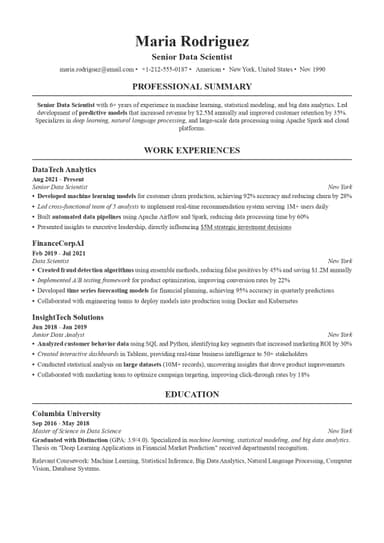
Interviewers often have your resume open during the interview. Every line should be relevant, so if something doesn't connect to this role, consider removing it or repositioning it.
Additionally, you should use keywords from the job posting. Many companies use applicant tracking systems, which remove resumes that don’t match a specific role. This means you can get eliminated before the interviewers even see your job application.
Run through the STAR method for 5–6 of the most common questions listed above and practice out loud. There's a meaningful difference between knowing what you want to say and actually being able to deliver it fluidly under mild pressure. It might be a good idea to record yourself if that helps, as the playback is usually illuminating.
Confirm the format (in-person or video), the exact address or meeting link, and how to spell the interviewer's name. You should also dress one level above the company's known dress code; it's always easier to dress down mentally than to feel underdressed during the actual conversation.
It’s best to arrive or log in 5–10 minutes early. Rushing in at the last second is usually stressful (and as such raises your cortisol) and also lowers your performance, neither of which you need.
8 Smart Questions to Ask Job Interviewers
Good questions to ask job interviewers include inquiries about team culture, role expectations, success and performance metrics, and opportunities for growth.
Asking smart questions isn't just polite but also actively shapes the interviewer's impression of you. Plus, candidates who ask thoughtful questions come across as more engaged, prepared, and genuinely interested.
That said, here are eight questions you can ask the interviewer to see if the role fits your career goals:
- "What does success look like in the first 90 days?"
- "What are the biggest challenges someone in this role typically faces?"
- "How would you describe the team dynamic?"
- "What do you enjoy most about working here?"
- "What does the career path look like for someone in this role?"
- "Is there an opportunity for skills development or continued education?"
- "What is the timeline for making a decision?"
- "Is there anything about my background that gives you pause?"
6 Red Flags Job Interviewers Watch Out For
Job interviewers watch for red flags like vague answers, speaking negatively about former employers, unpreparedness, and inconsistencies between the resume and interview responses. These signals, whether intentional or not, can undo an otherwise strong application.
Here are the six most common ones:
- Speaking badly about a former employer. Even if your last job was genuinely difficult, interviewers hear this as a preview of what you might say about them someday. Keep it professional.
- Inability to give specific examples. If you can't back up your claims with real situations, interviewers will assume the claims aren't quite true.
- No questions prepared. It signals low engagement or low preparation, and neither impression helps you.
- Inconsistencies with the resume. Dates, titles, and responsibilities that don't match what's on paper raise immediate red flags. Make sure your examples tell a consistent story before you walk in.
- Seeming disengaged or distracted. This is especially bad on video interviews. Eye contact, nodding, and active listening matter more than most candidates realize.
- Raising salary expectations too early. Bringing up compensation in the first round (unless asked) can signal that money is your primary motivation, which rarely reads well.
Final Thoughts
Getting familiar with the job interviewer's perspective is one of the most underused advantages in job searching. Most candidates prepare what to say, but fewer prepare how an interviewer will hear it. Shift your preparation mindset to theirs, and the whole process starts to feel less like a performance and more like a conversation.
Before your next interview, you should use ResumeBuilder.so to build an ATS-friendly resume that matches the job you're applying for. On our platform, you can browse professional resume templates and examples to find the right format and walk into that room knowing you can impress an interviewer right off the bat.
Job Interviewers FAQs

Ava Sinclair is the Founder of ResumeBuilder.so and a seasoned expert in HR and recruitment. As the driving force behind ResumeBuilder.so, Ava combines her expertise in recruitment and job-seeking strategies to empower job seekers with intuitive, high-impact resume-building tools.