40+ Cultural Fit Interview Questions and Sample Answers

Cultural fit interview questions are questions designed to evaluate whether a candidate's values, work style, and personality align with a company's culture, team dynamics, and overall mission. However, these catch plenty of candidates off guard, yet they're increasingly decisive in hiring decisions. Poor culture fit is one of the common reasons employees leave within their first year. That's a painful cycle for everyone: wasted time, disrupted teams, and a job search that starts all over again.
In this guide, we break down what cultural fit means, why companies ask these questions, how to answer them with confidence, and which questions you should ask the interviewer in return.
- Cultural fit means your values and work style align with a company's environment and mission.
- Companies ask cultural fit questions because poor culture fit is a leading driver of early employee turnover.
- Questions fall into five categories: values, work style, collaboration, growth mindset, and workplace preferences.
- Prepare strong, specific answers using the STAR method before any interview.
- The culture fit interview goes both ways; always have thoughtful questions ready to ask back.
What Are Cultural Fit Interview Questions?
Cultural fit interview questions are a specific type of common interview questions used to assess whether a candidate's values, personality, and preferred ways of working match a company's environment, team, and mission. Unlike assessments of hard skills that test technical know-how, these questions explore who you are at work, i.e. how you make decisions, handle conflict, collaborate with colleagues, and think about your career long-term.
Cultural fit matters for candidates just as much as it does for companies. Job satisfaction, career advancement, growth opportunities, and how much you actually enjoy showing up are all tied to whether your values match your employer's.
A study on workplace culture and retention showed that employee–organization misalignment leads to lower engagement and higher voluntary turnover; not just a rough few weeks, but a structural dissatisfaction that compounds over time.
Why Do Employers Ask Cultural Fit Interview Questions?
Employers ask cultural fit interview questions to determine whether a candidate's values and work style align with the company's environment before making a hiring decision.
It's not just about personality. Hiring is expensive, and onboarding takes time. So, when someone leaves within their first year because the environment wasn't right for them, the whole process starts over—with a demoralized team left absorbing the gap.
That said, let’s examine the three key reasons why employers ask cultural fit questions.
#1. To Reduce Employee Turnover
Bad culture fit consistently ranks among the top drivers of early attrition. When employees feel out of step with their organization's values or working norms, disengagement follows. According to Gallup’s State of the Global Workplace 2025, disengagement costs the world economy $438 billion.
Also, the cost of replacing an individual employee can range from one-half to two times the employee's annual salary. That's why companies now treat culture fit screening as a financial decision, not a formality.
#2. To Protect Team Dynamics
When a person who thrives in autonomous, independent, remote work gets dropped into a highly collaborative, consensus-driven environment, they won't just struggle; their presence can lower morale and slow productivity for everyone around them.
Interviewers use cultural fit questions to gauge how you'll actually interact with colleagues day to day, not just how you describe your communication and collaboration skills on a resume.
#3. To Gauge Long-Term Potential
Companies invest real resources in their people, e.g., training, mentorship, and career development paths. They want to know whether you'll still be engaged and motivated two or three years from now.
Cultural fit signals whether your growth trajectory is likely to run parallel with theirs, and whether the relationship will hold once novelty wears off.
How to Answer Cultural Fit Interview Questions
Answering cultural fit questions well starts with research. Before your interview, research the company— its mission, values, and work environment. Then, align your answers to reflect those qualities genuinely.
Use the STAR method (Situation, Task, Action, Result) to structure responses around real experiences. When asked about teamwork, communication style, or handling conflict, draw on specific examples that demonstrate adaptability and self-awareness.
Lastly, be authentic. Companies aren't just evaluating your hard and soft skills; they're assessing whether your personality and values naturally complement their team culture. Therefore, prepare questions to ask the interviewer. Asking smart questions during a culture fit interview signals self-awareness and shows you're thinking beyond just landing an offer.
5 Categories of Cultural Fit Interview Questions
Cultural fit questions can be grouped into five key categories. Understanding which category a question falls into helps you identify what the interviewer is really trying to learn. Consequently, this shapes how you frame your answer.
Values and Ethics Cultural Fit Interview Questions
Values and ethics cultural fit questions are designed to determine whether a candidate's personal principles align with the company's mission and standards.
These questions are looking for authenticity and self-awareness. A company that values transparency will listen to whether you've ever pushed back on something you disagreed with, and whether you did it professionally and constructively.
Here are eight values and ethics cultural fit questions and sample answers:
#1. What does a company's ideal work culture look like to you?
In my last role, the culture was built around transparency and open feedback. (Situation) My team was encouraged to flag issues early rather than wait for formal reviews. (Task) I took that seriously by speaking up when a project timeline was unrealistic. (Action) The result was a revised plan we actually hit—and a manager who trusted me significantly more afterward. (Result) That kind of environment is where I do my best work.
#2. What are the core values you bring to every job?
At my previous company, we were under pressure to meet a tight client deadline. I was responsible for delivering a key report that multiple teams depended on. I prioritized transparency and accountability—communicating progress daily and flagging delays early rather than overpromising. We delivered on time, and the client renewed their contract largely based on our reliability. Accountability, honesty, and follow-through are values I bring to every role, regardless of the pressure involved.
#3. How do you handle situations where you disagree with a company policy?
At a previous job, a new policy required all client communication to go through one senior manager, slowing response times significantly. As the main client contact, I noticed satisfaction scores dropping. I documented specific examples and requested a one-on-one with my manager to propose a tiered communication model. The policy was partially revised, cutting response time in half. I believe disagreement, handled respectfully and with evidence, can actually strengthen a company's processes.
At a previous job, a new policy required all client communication to go through one senior manager, slowing response times significantly. As the main client contact, I noticed satisfaction scores dropping. I documented specific examples and requested a one-on-one with my manager to propose a tiered communication model. The policy was partially revised, cutting response time in half. I believe disagreement, handled respectfully and with evidence, can actually strengthen a company's processes.
#4. What kind of leadership style brings out the best in you?
In one role, I was paired with a manager who gave clear goals but let the team own the execution entirely. I was tasked with redesigning our onboarding process from scratch. With that autonomy, I interviewed new hires, identified friction points, and built a revised workflow independently. Onboarding time dropped by 30%, and the process became a company-wide standard. I perform best under leaders who set clear expectations, then trust me to deliver.
#5. Describe a time you had to make a decision that conflicted with your personal values.
My company once asked me to present data in a way that technically wasn't false but omitted context that clients needed. As the lead on that client account, the decision ultimately fell to me. I pushed back internally and proposed an alternative format that was still compelling but fully transparent. Leadership agreed, the client appreciated our honesty, and we retained the account long-term. Compromising integrity for short-term wins isn't something I'm willing to do — and I've found most good leaders respect that.
#6. What does integrity in the workplace mean to you?
During a product launch, I discovered a miscalculation in our pricing model the night before going live. Flagging it meant delaying the launch and disappointing the sales team. I reported it immediately to my manager, even knowing the pushback it would cause. We delayed by two days, corrected the model, and avoided what would have been a costly billing error affecting hundreds of customers. To me, integrity means doing the right thing even when it's inconvenient—especially then.
#7. How important is work-life balance to you, and how do you maintain it?
During a particularly intense product cycle, I found myself regularly working past 10 p.m. and burning out quickly. As a team lead, I also knew my habits were setting an unhealthy precedent for others. I introduced structured end-of-day check-outs for my team and started blocking focused recovery time on my own calendar. Productivity actually increased in the following sprint, and team morale noticeably improved. Balance isn't about working less—it's about working sustainably, and I actively protect that for myself and my team.
#8. Tell me about a company culture you thrived in — what made it work?
At a mid-sized tech startup, the culture was built on radical candor—everyone, regardless of title, was expected to give and receive direct feedback. As a junior analyst, I was encouraged to challenge assumptions in leadership meetings. I leaned into that by preparing data-backed counterpoints whenever I disagreed with a proposed direction. My contributions were taken seriously, I grew faster than in any previous role, and I was promoted within 14 months. A culture where people are genuinely heard—at every level—is where I consistently do my best work.
Work Style and Environment Cultural Fit Interview Questions
Work style cultural fit questions help interviewers understand how a candidate prefers to work and whether their habits match the team's day-to-day environment.
These questions seem straightforward, but they're not quite. Saying "I'm flexible" to every variation won't land; it's too vague to mean anything. The stronger move is being specific about when you do your best work, what conditions help you thrive, and where you've seen yourself struggle.
That said, let’s examine eight work style and environment questions and sample answers:
#1. Do you prefer working independently or as part of a team?
When I joined my previous company, the scope of a major project shifted three times in the first month. (Situation) I was responsible for keeping the deliverable on track despite unclear requirements. (Task) I created a flexible milestone document that let us adjust without losing momentum. (Action) The project launched on time, and that system became a team-wide template afterward. (Result) I've learned to build flexibility into planning from the very start.
#2. How do you stay motivated when working on long-term projects?
I was once assigned a six-month data migration project with no clear milestones or check-ins built in. As the sole analyst, I had to keep myself accountable and engaged over the entire timeline. I broke the project into monthly goals, tracked weekly progress visually, and celebrated small wins with my manager along the way. The migration completed ahead of schedule with zero data loss—and I never hit a motivational wall. Breaking big goals into visible progress markers is how I stay energized on long hauls.
#3. Describe your ideal workday from start to finish.
At my last role, I noticed my most productive hours were in the morning, but meetings were scattered throughout the day. I was struggling to produce deep-focus work consistently. I spoke with my manager and proposed blocking mornings for independent work and afternoons for collaboration and meetings. My output quality improved noticeably, and my team adopted a similar structure. My ideal workday protects focused time in the morning, stays collaborative in the afternoon, and ends with a clear plan for the next day.
#4. How do you prioritize your tasks when everything feels urgent?
At a previous job, I was simultaneously managing three client accounts, each requesting deliverables on the same day. All three considered their request the highest priority, and I had one afternoon to sort it out. I ranked tasks by business impact and deadline rigidity, communicated realistic timelines to each client, and delegated one component to a colleague. All three deliverables were completed that day—two on time, one an hour late with prior notice. When everything feels urgent, I rely on impact-first prioritization and proactive communication rather than panic.
#5. How do you handle feedback or constructive criticism?
Early in my career, my manager told me my written reports were thorough but too lengthy for executive audiences. I was responsible for producing weekly summaries that senior leadership reviewed. Rather than getting defensive, I asked for examples of reports they found effective and completely restructured my format. Within two weeks, my reports were being shared beyond my immediate team as a model for others. I've come to see feedback as one of the fastest ways to grow—the key is listening without ego.
#6. Are you comfortable with ambiguity, or do you prefer clear structure?
I joined a startup where job descriptions were loose and processes barely existed yet. Within my first week, I was asked to "own marketing"—with no budget, no strategy, and no precedent. I built structure myself—defining goals, identifying channels, and drafting a 90-day plan for leadership to approve. Within a quarter, inbound leads increased by 40% and we had a repeatable marketing framework in place. I'm comfortable with ambiguity because I've learned to create my own structure when none exists.
#7. How do you approach deadlines when unexpected problems arise?
Two days before a major product demo, a key integration broke due to a third-party API update. I was responsible for ensuring the demo environment was fully functional for a high-stakes client presentation. I immediately flagged the issue, coordinated with our engineering lead, and prepared a manual workaround in parallel in case the fix didn't land in time. The fix came through the morning of the demo—and the backup plan meant we never panicked. When problems arise near deadlines, I focus on solutions and parallel planning rather than stress.
#8. What does "work-life balance" look like to you in practice?
During a particularly demanding product launch, I was working 12-hour days for three consecutive weeks. I noticed my decision-making quality was slipping and I was becoming short with teammates. I set firm boundaries—no emails after 8 p.m., a hard stop on weekends unless truly critical—and communicated that openly with my team. My performance sharpened, and two teammates told me my boundaries gave them permission to set their own. Work-life balance, to me, means protecting recovery time consistently—not just when burnout has already set in.
Collaboration and Team Cultural Fit Interview Questions
Collaboration cultural fit questions assess how a candidate works with others and whether they will contribute positively to existing team dynamics.
Notice that these questions are almost always behavioral; they begin with "Tell me about a time…" and that's intentional. Anyone can claim to be a great team player. Interviewers want evidence, not assertions, and the STAR method is your best tool for delivering it cleanly, just as for behavioral interview questions.
Here are the eight most common collaboration and team fit questions, along with sample answers:
#1. Tell me about a time you had a conflict with a coworker — how did you resolve it?
A colleague and I disagreed about how to present findings to a client—I preferred visuals, they wanted raw data tables. (Situation) We both had the same deadline, and neither wanted a standoff. (Task) We scheduled 30 minutes, each shared our reasoning, and ended up combining both approaches. (Action) The client called it one of the clearest reports they'd received. (Result) That experience taught me to default to curiosity instead of defensiveness.
#2. How do you typically contribute to a group project?
Our team was tasked with launching a new internal tool across four departments in six weeks. Everyone was eager, but roles were undefined, and early meetings were going in circles. I volunteered to map out responsibilities, set up a shared tracker, and run our weekly syncs. The tool launched on time, and three team members specifically mentioned that the structure made the difference. I tend to be the person who turns good intentions into clear next steps—that's where I add the most value in group settings.
#3. Describe a time you helped a colleague who was struggling.
A newer teammate was consistently missing deadlines and visibly stressed, but hadn't said anything to management. I noticed the pattern and pulled them aside for an informal chat over coffee. They admitted they were overwhelmed by a part of the workflow they didn't fully understand. I walked them through it over two lunch breaks and helped them build a personal checklist they could rely on. Their next three deadlines were all hit on time. Sometimes the most useful thing you can do for a team is notice what isn't being said.
#4. What does effective teamwork look like to you?
At my last company, we had a cross-functional team where design, engineering, and marketing rarely agreed on priorities. Tension was slowing everything down. I suggested we start each sprint with a 15-minute alignment call where each function stated its top concern out loud. Within a month, blockers were surfacing earlier, and the blame-shifting largely stopped. To me, effective teamwork isn't about everyone getting along naturally — it's about building small habits that make honest communication the default.
#5. Have you ever had to work with someone whose style was very different from yours?
I'm a planner by nature—I like agendas, timelines, and decisions made early. My co-lead on a rebranding project was the opposite—highly creative, spontaneous, and resistant to rigid structure. At first, we frustrated each other constantly. I suggested we split ownership: I handled timelines and client communication, they led creative direction without interference from me. The campaign launched on schedule and won an internal award for creative excellence. Working with someone different taught me that complementary styles, when respected, often produce better outcomes than two people who think alike.
#6. How do you give feedback to peers without damaging the relationship?
A peer on my team was submitting work that consistently needed heavy revision before it could go to the client—but no one had told them directly. I asked if I could share some observations after our next project wrapped. I focused on specific patterns rather than general judgments, acknowledged what they were doing well, and framed suggestions around client expectations rather than personal preference. They thanked me afterward and said it was the most useful feedback they'd received in months. I've found that timing, specificity, and genuine respect make the difference between feedback that lands and feedback that stings.
#7. Tell me about a team success you're most proud of and your specific role in it.
Our team was given 30 days to build and present a go-to-market strategy for a new product line—the shortest timeline the company had ever attempted for something that scale. I led competitive research, synthesized insights from four departments, and built the narrative framework the team presented to leadership. The strategy was approved in the first review—no revisions requested, which was almost unheard of. What made me proudest wasn't just the outcome but knowing that the clarity of the story we told came directly from the groundwork I laid. Good research, presented well, changes decisions.
#8. What's one thing you've learned from a coworker that changed how you work?
A senior colleague I worked alongside early in my career had a habit of ending every meeting by asking "What's the one thing we're each walking away responsible for?" It seemed almost too simple. But I noticed decisions from her meetings actually got executed, while others stalled. I adopted the habit immediately and have used it ever since—in team settings, client calls, even one-on-ones. That single question eliminated more dropped balls than any project management tool I've ever used. The best professional lessons often come wrapped in something that looks obvious until you see it in action.
Growth and Adaptability Cultural Fit Interview Questions
Growth mindset cultural fit questions reveal whether a candidate is open to learning, change, and professional development within the company's environment.
Teams get restructured, tools change, and strategies pivot. These questions test whether you can handle that kind of flux, or whether you tend to freeze when things don't go as planned. The best answers here combine honesty with a clear narrative arc: here's what went wrong, here's what I did, here's what I'm different because of it.
That said, let’s see eight common growth and adaptability questions with sample answers:
#1. How do you respond when a project's direction changes significantly mid-way?
Early in my career, I underestimated the complexity of a client migration and overpromised on timelines. (Situation) The client was frustrated, and I had to own that directly rather than make excuses. (Task) I sent a detailed revised plan within 24 hours and communicated weekly updates from that point forward. We delivered late, but with full transparency at every stage. (Action) We kept the client — and I have never overpromised a timeline without building in a realistic buffer. (Result)
#2. Tell me about a time you had to learn a new skill quickly.
Three weeks before a major client presentation, our lead data analyst resigned, and I was asked to step in—despite having only surface-level experience with the reporting tools we used. I spent the first weekend going through tutorials, reached out to a former colleague who knew the platform well, and practiced by rebuilding old reports from scratch. By presentation day, I wasn't an expert, but I was competent enough to deliver clean, accurate analysis with confidence. The client signed a contract extension that afternoon. I've stopped seeing skill gaps as obstacles—they're just problems with a learning curve attached.
#3. What has been your biggest professional failure, and what did you learn from it?
Early in a management role, I assumed a high-performing team member was fine because they never complained. I didn't check in regularly, didn't ask about workload, and didn't notice the warning signs. They resigned suddenly, citing feeling invisible and undervalued. It hit hard because, in hindsight, every signal was there—I just wasn't looking. After that, I built structured one-on-ones into my weekly routine and made a habit of asking direct questions rather than waiting for people to volunteer concerns. Losing a great employee taught me that good management is proactive, not reactive.
#4. How do you keep your skills current in a fast-changing industry?
A few years ago, I realized I was consistently the least informed person in strategy meetings about emerging tools my industry was adopting. I wasn't behind yet, but I could see the gap forming. I committed to one hour every Friday for reading industry publications, set up alerts for key topics, and joined a peer group of professionals in adjacent roles who shared resources regularly. Within six months, I was the person teammates came to for context on new developments. Staying current isn't about consuming everything—it's about building consistent habits before the gap becomes a problem.
#5. Describe a time you stepped outside your comfort zone at work.
I was asked to represent my department at a company-wide leadership summit and present our team's quarterly strategy to an audience of 200 people—including the executive team. Public speaking at that scale was something I had actively avoided my entire career. I hired a speaking coach for three sessions, rehearsed in front of small groups first, and rewrote my talking points until I knew them cold. The presentation landed well and led directly to our team receiving additional budget for the following quarter. Discomfort, I've learned, is usually just the feeling of being on the edge of something worth doing.
#6. How do you handle situations where there's no clear right answer?
We once had to decide whether to delay a product launch due to minor unresolved bugs or ship on schedule for a high-visibility industry event. Both paths carried real risk and leadership was divided. I gathered input from engineering on severity, spoke with a key client about their actual priorities, and mapped out the downstream consequences of each option clearly. I recommended launching with a transparent known-issues disclosure and a committed patch timeline. Leadership agreed, the launch went smoothly, and the client appreciated the honesty. When there's no clearly right answer, I focus on making the most informed decision possible—then owning it fully.
#7. If you could change one thing about how you've managed your career, what would it be?
For the first several years of my career, I said yes to almost everything — extra projects, cross-functional favors, last-minute requests—because I wanted to be seen as reliable and easy to work with. What I didn't realize was that spreading myself thin was actually limiting the depth of impact I could have in any one area. I eventually turned down a high-visibility opportunity because I was already overcommitted, and that stung. Since then, I've been far more intentional about where I direct my energy. I wish I had learned earlier that strategic focus builds a stronger reputation than constant availability ever could.
#8. What does career growth mean to you, and how do you actively pursue it?
A few years into my career, I realized I was getting comfortable in ways that felt good short-term but weren't moving me forward. I was executing well but not building anything new. I requested a development conversation with my manager, identified two skills I wanted to build over the next year, and asked to be assigned to projects that would stretch those specifically—even if it meant slower output initially. Both skills became genuine strengths within 18 months and directly contributed to my next promotion. To me, career growth means consistently closing the gap between where I am and where I want to be—deliberately, not accidentally.
Company-Specific Cultural Fit Interview Questions
Company-specific cultural fit questions test whether a candidate has done their homework and genuinely understands what makes the organization unique. This is where preparation separates average candidates from memorable ones.
If you can't speak specifically to a company's culture, you're not yet a competitive applicant. Generic enthusiasm doesn't land. Informed, specific enthusiasm does.
Research company culture before the interview. Use LinkedIn (employee posts, leadership commentary), career sites and job boards (ratings and candid reviews), and the company's own careers page (mission statements, team spotlights, stated values). Look for patterns across multiple sources, not just the official line. Recent news matters too, e.g., leadership changes, expansions, and layoffs all shape the current culture.
With that in mind, here are eight company-specific questions and the way to answer them:
#1. What do you know about our company culture, and what appeals to you?
I've followed your company for about a year—specifically your emphasis on employee-led initiatives. (Context) At my current company, I launched a peer mentorship program that's still running 18 months later. (Action) When I read that your culture actively encourages that kind of ownership, it felt like a genuine match rather than just another job opening. (Fit)
#2. Why do you want to work here specifically — beyond the job description?
I've been tracking how your company has approached product development over the past two years—specifically the way you've prioritized user feedback loops over feature speed. At my current role, I've been pushing for exactly that philosophy but working against a culture that defaults to shipping fast. When I saw how your team publicly credited customer interviews for your last major pivot, I recognized the kind of environment where my instincts would be supported rather than argued against. This isn't about the role fitting my resume—it's about finally working somewhere that builds products the way I believe they should be built.
#3. How do our company values align with your personal values?
Your value around radical transparency stood out to me immediately—not because it sounds good on a website, but because I've actually tried to live it professionally. At my last company, I pushed for open salary banding conversations on my team, which was uncomfortable at first but significantly reduced tension around promotions and raises. When I read how your leadership team shares company financials openly with all employees, I recognized a place where that instinct would be welcomed rather than tolerated. The alignment isn't surface-level for me—it's the specific values I've had to fight for elsewhere that seem to be defaults here.
#4. What do you know about our mission, and how does your background support it?
Your mission to make financial tools genuinely accessible to underserved communities isn't just a positioning statement—I've watched how it shows up in your product decisions, your pricing model, and who you've chosen as partners. My last five years were spent building simplified UX flows for users with low digital literacy, specifically because I believed that good design shouldn't be a privilege. The work I'm most proud of reduced drop-off rates among first-time users by 45%. I'm not looking to apply generic experience to your mission—I've been working toward it from a different angle and I'm ready to go further.
#5. Have you read any of our company reviews — what stood out?
I spent time on Glassdoor and Blind before applying. What stood out most was how consistently employees mentioned feeling trusted to own their work without micromanagement—that came up across reviews spanning three years, which told me it's structural rather than dependent on one good manager. I also noticed a recurring theme around growth opportunities being real rather than promised. What I paid attention to just as closely were the critical reviews—a few mentioned communication gaps during periods of rapid growth. That's something I've navigated before, and honestly, it's the kind of challenge I find more interesting than a company where everything is already figured out.
#6. If you were going to improve one thing about our company culture, what would it be?
Based on my research—including employee reviews and a few conversations with people in your network—onboarding seems to be an area where the experience varies significantly depending on which team you land on. Some people described hitting the ground running with full context, others felt they were figuring things out alone for the first month. I've built standardized onboarding frameworks before specifically because I've seen how much early clarity affects long-term retention and performance. I'd want to understand the current gaps more deeply before prescribing anything—but that's the area I'd want to explore first if given the opportunity.
#7. What excites you most about the direction your company is heading?
The move you're making into enterprise without abandoning the simplicity that made your product successful in the mid-market—that's genuinely difficult to execute and most companies get it wrong by over-engineering. I've watched competitors in this space lose their core users the moment they started chasing larger contracts. The fact that your last two product updates were still clearly built around the same user principles you started with tells me leadership understands that risk and is managing it deliberately. That's the kind of strategic discipline I want to be part of—and contribute to—at this stage of my career.
#8. Why are you leaving your current company — and what are you looking for that they couldn't offer?
My current company gave me a strong foundation, and I'm genuinely grateful for what I've built there. But over the past year, it's become clear that the ceiling is structural rather than performance-based—decisions that should take days take quarters, and the appetite for the kind of initiatives I want to lead simply isn't there at this stage of their growth. I'm not leaving because something went wrong. I'm leaving because I've outgrown the pace, and I want to do the best work of my career somewhere that has both the ambition and the infrastructure to support it. Everything I've seen about where your company is heading tells me this is that place.
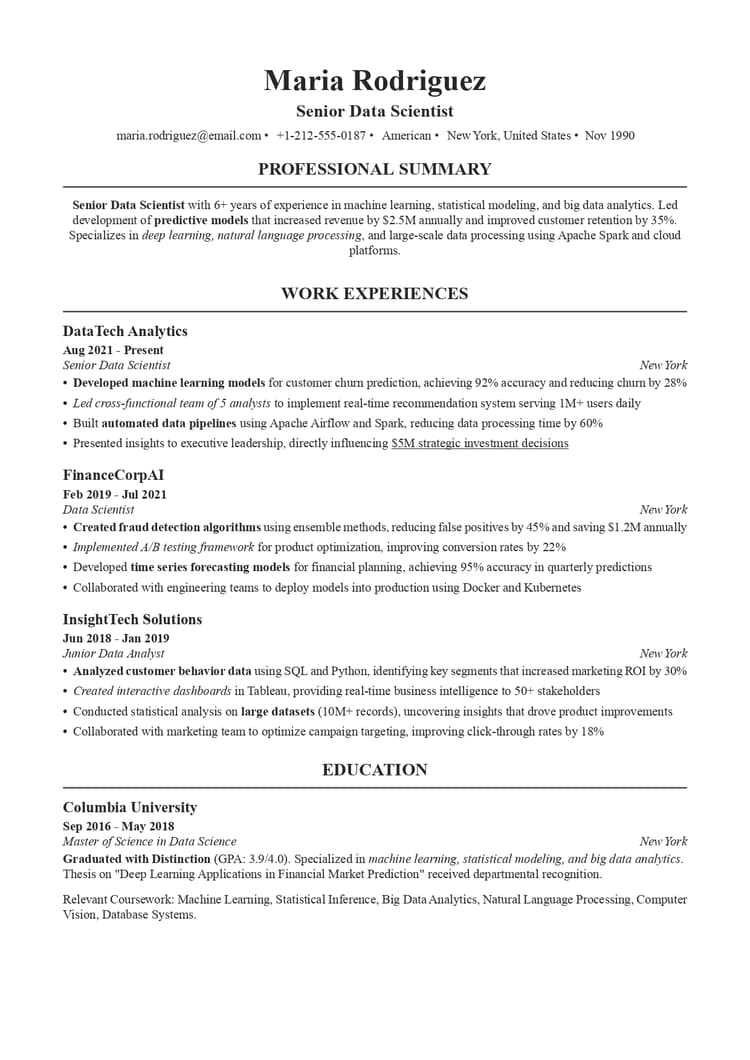
Make Sure Your Resume Already Tells the Right Story Before the Culture Fit Interview.
Use our AI-powered resume builder to highlight the values and skills that matter most to employers.Questions to Ask the Interviewer About Culture Fit
You can ask the interviewer about culture fit by focusing on team dynamics, growth opportunities, and how the company lives its stated values day to day.
These questions are one of the interview tips you should follow. They help you assess whether this company is genuinely right for you. Also, they signal to the interviewer that you're thoughtful, curious, and prepared. That said, here’s a quick list of questions to ask the interviewer:
- How would you describe the team's working style?
- What does success look like in this role after 90 days?
- How does the company handle disagreements or conflicting priorities between teams?
- What's one thing about the company culture that you wish more candidates asked about?
- How does leadership support employee development and growth here?
- How has the culture evolved over the last two or three years?
- What do people who thrive here tend to have in common?
- What's the biggest challenge the team is currently facing?
Listen carefully to the answers you get, and the ones you don't. This can help you decide whether to accept or decline a job offer afterwards. If a company says it values work-life balance but the hiring manager casually mentions 60-hour weeks as the norm, that's telling. Also, the interview is the right moment to start thinking about your transition timeline.
When you're ready to exit a role, a well-written resignation letter can help you leave gracefully and maintain the professional relationships that matter.
Red Flags to Watch for in Cultural Fit Interviews
Red flags in a cultural fit interview include vague answers about company values, pressure to sacrifice work-life balance, and resistance to questions about team dynamics.
Here are five warning signs worth taking seriously before you accept a job offer:
- Interviewers can't articulate the company's values beyond buzzwords. "We're like a family here," or "we work hard and play hard" aren't values; they're deflections. If no one can tell you specifically what the company stands for, that absence is meaningful.
- The "culture" seems centered entirely on overwork or hustle. Passion for the work is admirable. A culture that glorifies exhaustion as a virtue and frames burnout as dedication is a different thing entirely, and worth examining closely.
- Questions feel intrusive or discriminatory. Cultural fit questions shouldn't veer into your personal beliefs, religion, relationship status, or lifestyle choices. If they do, that's a legal and ethical concern, not a cultural quirk.
- HR and the hiring manager contradict each other. If the recruiter describes a collaborative, transparent culture but the hiring manager is evasive or dismissive during your conversation, trust the pattern, not the polished pitch.
- No one you spoke to seems genuinely enthusiastic. Energy is contagious, and so is quiet disengagement. If everyone you meet during the process seems checked out, ask yourself why that might be.
Final Thoughts
Cultural fit interview questions aren't a formality; they're a two-way evaluation that matters as much for you as it does for the employer. Prepare by researching the company thoroughly, reflecting honestly on your own values and working preferences, and using the STAR method to build specific, credible answers.
Don't try to mirror exactly what you think they want to hear; authenticity is what actually builds trust in the room. And if your values genuinely don't align with a company's, it's far better to discover that now than six months into a role that quietly drains you.
A polished, well-written resume is the first step to landing any interview. To make one that stands out, use a professional resume template and browse different resume examples for inspiration.
Cultural Fit Interview Questions FAQs

Chris Nolan is the go-to expert for turning cold connections into career-changing opportunities. He doesn’t just talk about networking—he teaches you how to actually do it without feeling awkward or spammy. From crafting the perfect LinkedIn message to leveraging your existing network for job referrals, Chris makes networking simple and strategic.