Mock Interview: Meaning, Tips, and Practice Questions for 2026

A mock interview might be the most underused tool in job prep. You've updated your resume, researched the company, and rehearsed a few answers to the most common interview questions. However, none of that replaces the real experience of sitting across from someone firing questions at you, and that's where things fall apart.
This kind of interview preparation gives you a controlled, low-stakes space to work through nerves, tighten your answers, and catch the small things that trip people up on the day it counts. In this guide, we cover everything you need to know, including what a mock interview is, the types available, how to prepare step by step, common questions to practice, and tips that actually move the needle.
- A mock interview is a simulated practice interview that mirrors real interview conditions.
- You can do a mock interview with a friend, career coach, or AI tool.
- There are multiple types of mock interviews, including behavioral, technical, panel, phone, video, and AI.
- The STAR method helps structure compelling, focused answers.
What Is a Mock Interview?
A mock interview is a practice interview that simulates the conditions of a real job interview, giving you a safe space to refine your answers, body language, and overall presentation. The key difference between a mock interview and simply reviewing questions alone is the live performance element.
Reading a list of common interview questions in your head doesn't prepare your voice, posture, or pacing for the moment someone's watching you closely. However, saying your answers out loud and receiving feedback on them is what actually moves the needle.
Mock interviews can happen in person, over a video call, by phone, or through an AI platform. Each format serves a purpose. What they share is the practice of both verbal and non-verbal communication skills in real time, which is where most candidates discover their blind spots.
Why Mock Interviews Matter: 4 Key Benefits

Mock interviews matter because they are one of the most effective ways to reduce anxiety. According to research, interview anxiety is a common occurrence and directly affects how clearly people communicate under pressure. That said, let’s see which benefits a mock interview actually offers.
- Building confidence. Rehearsing answers out loud differs from going over them in your head. Your voice, tone, and pacing are completely different the first time you speak something aloud. Confidence compounds because each session lowers the baseline anxiety for the next one.
- Identifying weak points. Feedback reveals blind spots you simply can't catch on your own. Filler words, vague non-answers, and poor posture are nearly invisible until someone points them out. Practicing with a partner who asks follow-up questions exposes gaps in your storytelling or knowledge you might not have known existed.
- Sharpening non-verbal communication. Body language, eye contact, and tone of voice account for a significant portion of first impressions. Recording a mock session lets you review and adjust these cues deliberately.
- Providing practice for different interview formats. Different roles and companies use different interview formats, e.g., behavioral, technical, panel, and case study. A mock interview lets you prepare for whichever format you'll actually face, rather than walking in blind to a style you've never experienced before.
Types of Mock Interviews
There are different types of mock interviews. Here’s a quick overview of different types of mock interviews, their best use cases, and key focus:
| Type | Best For | Key Focus |
|---|---|---|
Behavioral Interview | All roles | STAR-format story answers |
Technical Interview | Engineering, IT, finance, data | Problem-solving, case studies |
Panel Interview | Corporate, senior roles | Directing answers to multiple people |
Phone Interview | Screening rounds | Tone, pacing, concise answers |
Video Interview | Remote-first roles | Camera eye contact, tech setup |
AI Interview | Any role, on-demand practice | Fast reps, instant feedback |
Now, let’s examine how to choose the right type depending on the role you're applying for and how much time you have before the real interview.
#1. Behavioral Mock Interview
Behavioral interviews focus on past experiences to predict future performance. You'll hear questions like "Tell me about a time when..."
Your answers should follow the STAR method (Situation, Task, Action, Result). These sessions pair well with reviewing your hard skills beforehand, since many behavioral prompts target how you've applied specific competencies in real situations.
#2. Technical Mock Interview
Common in engineering, IT, finance, and data roles, technical interviews involve problem-solving, case studies, or live coding exercises. They require a knowledgeable job interviewer.
This implies someone who can catch logical gaps in your reasoning, not just evaluate whether your answer sounds polished.
#3. Panel Mock Interview
Panel simulations prepare you to face multiple interviewers simultaneously. Practicing how to direct answers to different people naturally, such as making eye contact around the "room," not just with one person, is something you can only really learn by doing.
#4. Phone Mock Interview
Phone interviews strip away all visual cues, which changes everything. Practice pacing, tone, and keeping answers concise. Use an actual phone call for these sessions, not a face-to-face chat.
#5. Video Mock Interview
Video has become standard, especially for remote work-from-home jobs. Practice eye contact with the camera (not the screen), your lighting setup, and your background. Tools like Zoom or dedicated AI platforms work well here.
#6. AI Mock Interview
AI mock interviews provide instant feedback on answers, tone, and body language, identify weaknesses, and suggest improvements. This makes them ideal for building repetitions quickly before a first-round interview.
This way, you can easily build confidence, reduce anxiety, and prepare for a wide range of interview scenarios.
How to Prepare for a Mock Interview: A Step-by-Step Guide

You can prepare for a mock interview by researching the company and target role, selecting a qualified practice interviewer, and treating the session exactly like a real interview. The more realistic the conditions, the more useful the preparation.
Here’s a quick step-by-step breakdown:
Step 1: Research the Role and Company
Study the job description closely and map your skills and qualifications to each requirement. Research the company, i.e., its mission, recent news, culture, values, and any public updates. Generate five to ten specific talking points you can weave naturally into answers. Vague answers like "I'm a fast learner" rarely land. Specific, prepared ones do.
Step 2: Update and Polish Your Resume
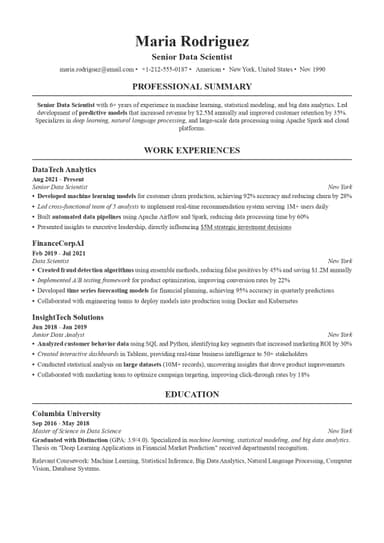
Your resume is the foundation of every interview answer. You'll walk your mock interviewer through it as you'd walk a real hiring manager through it. Anything unclear, inconsistent, or weak becomes a question you'll have to answer under pressure. Learning how to write a resume is all about following the best practices. In this case, studying different resume examples can help you make yours solid before you sit down.
ResumeBuilder.so's AI-powered resume builder helps you create an ATS-optimized resume with clear, compelling talking points in minutes, giving you a stronger foundation for every mock and real interview.
Step 3: Choose Your Mock Interviewer
Options include a career coach, mentor, former manager, peer, or AI platform. The most important quality isn't subject-matter expertise—it's honest, objective feedback.
Someone who tells you "it was great!" after every answer isn't helping you improve. Give them the job description ahead of time so they can ask targeted questions.
Step 4: Prepare Your Answers Using the STAR Method
The STAR method is the most reliable framework for behavioral interview questions. Prepare five to seven STAR-format stories covering leadership, conflict, failure, teamwork, and problem-solving.
However, avoid memorizing word-for-word; aim for flexible talking points you can adapt. Reviewing your work experience on your resume is a great way to surface concrete examples you may have forgotten.
Step 5: Dress the Part and Set the Scene
Wear your actual interview outfit. Sit at a desk, remove distractions, and treat the session with the same seriousness as the real thing.
For video mock interviews, test your camera, microphone, and lighting setup beforehand. This doesn't mean five minutes before you start.
Step 6: Record and Review the Session
Recording is one of the highest-value steps most candidates skip. Watching yourself on video is uncomfortable, but that discomfort is information.
Watch for filler words ("um," "like"), posture, eye contact, and response length. Take written notes on specific improvements for your next session.
Step 7: Repeat—Multiple Sessions Are Better
One mock interview is a warm-up. Two to three sessions produce real results.
Vary the questions and, where possible, the interviewers each time. Each session should build on the feedback from the last.
30 Common Mock Interview Questions to Practice
While you won't know every question in advance, a core set appears across most industries. Practicing these in mock sessions covers the majority of real-interview scenarios.
Here’s a quick overview of 30 common mock interview questions to practice, divided by category:
| Category | Mock Interview Questions to Practice |
|---|---|
General / Background | 1. Tell me about yourself. |
Behavioral | 1.Tell me about a time you handled a difficult coworker. |
1. What is your greatest professional strength? | |
Situational | 1. If you disagreed with your manager on a key decision, what would you do |
1. What kind of work environment do you thrive in? | |
1. What does success look like in this role in the first 90 days? |
4 Mock Interview Tips That Actually Work
Here are four mock interview tips you should follow to make the most out of it:
- Simulate real conditions as closely as possible. The closer your mock session mirrors reality, the more useful the practice. Professional attire, a desk setup, the same camera or room you'd use for the real interview, and a specific start time you treat like an actual appointment.
- Use the STAR method for every behavioral question. Unstructured answers feel rambling and lose the interviewer's attention quickly. The STAR method gives every answer a clear beginning, middle, and end. It sounds straightforward, but delivering it naturally under pressure takes repetition.
- Ask your interviewer for specific, hard feedback. Ask: "What was the weakest answer I gave?" and "What would you have wanted more of?" Vague encouragement doesn't help you improve. Push for specifics, even if it's a little uncomfortable.
- Focus on one improvement per session. Trying to fix everything at once is overwhelming and counterproductive. Pick the single most impactful change— let’s say, reducing filler words—and drill that specifically in your next session.
How to Do a Mock Interview Online or With AI
You don't need a career coach or a free afternoon to practice a mock interview. Online tools and AI platforms have made interview preparation accessible on demand.
Your options span a wide range. AI interview platforms offer instant feedback, work around the clock, and carry zero social pressure. On the other hand, career coaching services bring a human element—nuance, spontaneous follow-ups, emotional reading—that AI still struggles to fully replicate. A video call with a peer sits somewhere between the two.
Use AI for volume practice—many reps, fast feedback, low pressure. Use a human mock interviewer at least once before your real interview, ideally as your final session. The combination gives you both breadth and depth.
Final Thoughts
Mock interviews are one of the highest-ROI investments a job seeker can make before the real interview. However, it's worth being clear on what they're actually building—not memorized answers, but the confidence and self-awareness to adapt when things go off-script. That adaptability comes from repetition and real feedback, not from reading lists of questions.
Your preparation doesn't start in the interview room. It starts with a strong resume that earns you the interview in the first place. Therefore, it’s important to explore different resume templates to see which ones work best for your industry and learn how to write a cover letter to build a complete job application package.
Mock Interview FAQs

Maya Brooks believes that a fulfilling career shouldn’t come at the cost of your mental health. Having worked in corporate HR, she’s seen firsthand how burnout culture can wreck careers. Now, she shares real-world strategies for setting work boundaries, avoiding toxic workplaces, and finding joy in your job.