Startup Interview: Questions & Answering Tips to Land the Job

A startup interview is a job interview for a role at a startup, which is typically a younger company built around growth, speed, and constant change.
Unlike interviews at larger, more established businesses, startup interviews often go beyond checking whether you meet the formal requirements of the role. Employers also want to see how you think, how you solve problems, how comfortable you are with uncertainty, and whether you can adapt quickly when priorities shift.
Today, you will learn what makes startup interviews different from traditional ones, what founders and hiring managers are really looking for, and how to prepare answers that match the fast-moving nature of startup environments. We also offer some common interview questions and practical tips for making a strong startup job application!
- Startup interviews focus more on adaptability, problem-solving, and potential than on credentials alone, being usually more conversational than corporate interviews.
- Most startup interview questions fall into general, behavioral, cultural-fit, and role-specific categories.
- Strong preparation includes researching the company and product, tailoring your resume for impact, practicing STAR-based stories out loud, and sending a thoughtful follow-up email after the interview.
- Asking smart questions about the role, company challenges, funding stage, and growth opportunities helps you make a stronger impression.
- Candidates should also watch for red flags such as vague role expectations, evasive answers about funding, disorganized interviews, and signs of high turnover.
What Makes a Startup Interview Different?
A startup interview differs from a corporate interview in that the focus shifts almost entirely from credentials to potential. During the startup hiring process, the interviewers look for candidates based on what they can do, often across multiple functions and under conditions nobody's mapped out yet.
The practical differences matter. Where a large company might run you through four to six interview rounds spanning several weeks, most startups wrap the process in two or three conversations. Decision-making is faster, timelines are shorter, and you're usually talking directly with a founder or a very early team member.
The interview format itself tends to feel more like a conversation than a test. Questions come from genuine curiosity about who you are, and founders want to know if you'll thrive in uncertainty or be able to build things when there's no manual, rather than waiting for one to appear.
13 Most Common Startup Interview Questions
Most startup interview questions and answers fall into four categories: general and introductory, behavioral, cultural fit, and role-specific. What ties them all together is that startups want honest, specific, self-aware answers, as they don’t want to see only the polished corporate version of you.
Here's what to expect across each category.
General & Introductory Questions
These come first and set the tone; the three you'll almost certainly hear include:
#1. “Tell me about yourself.”
The "Tell me about yourself" interview question isn't a prompt for your resume highlights. Founders use it to understand your arc: why you're here, what drives you, and whether you think in terms of impact.
Lead with what you care about professionally, connect it to the startup's mission, and keep it to about 90 seconds. For example:
I'm a product-focused operator who's spent five years building at the intersection of growth and user experience. I thrive in ambiguous environments where I can own outcomes end-to-end. Your mission to simplify B2B payments genuinely resonates—it's a problem I've watched slow down teams firsthand.
#2. "Why do you want to work at a startup?"
Vague answers kill candidacies here. Don't say "I want a fast-paced environment." Say why this startup, at this stage, with this problem, interests you, and reference the product or founding story if you can.
Here’s a good example:
I want to work here specifically because you're attacking a fragmented market with a lean team and a clear thesis. At this stage, every decision matters and I can see my direct impact. That's the environment where I do my best work and grow the fastest.
#3. "What do you know about our product?"
Use the product before your interview. Founders notice this, and they're quietly evaluating whether you care enough to have done that step. Have a genuine take ready, even if it's brief. For example:
I spent time with the product this week. The onboarding is remarkably smooth, but I noticed the dashboard buries a key workflow two clicks too deep. That kind of tension—strong core, rough edges—is exactly the stage I enjoy most, where thoughtful iteration creates real leverage.
Startup Behavioral Interview Questions
Behavioral questions are the backbone of startup interviews, and they should be answered and structured using the STAR method. Time each answer to 90–120 seconds and practice out loud; that distinction matters more than most people realize.
Additionally, knowing which hard and soft skills matter most in startup environments can help you choose which behavioral stories to lead with.
That said, let’s examine three most common behavioral questions you should be ready for.
#1. "Tell me about a time you had to adapt quickly to change."
Startups want concrete proof you can pivot. Use a story where the situation genuinely shifted, and you responded. Let’s see a good example:
Our lead enterprise client pulled out two weeks before launch, cutting projected revenue by 40%. I immediately re-segmented our pipeline, prioritized three mid-market prospects, and personally led outreach. Within ten days we'd signed two replacements. The crisis actually improved our go-to-market targeting long-term.
#2. "Describe a project where things went wrong. What did you do?"
This one tests self-awareness. Founders love candidates who can own a failure, explain their thinking, and land on what they learned. That said, here’s how to answer this question properly:
I launched a feature without adequate user testing, and adoption was near zero. I owned the miss publicly with the team, ran rapid user interviews, and rebuilt the onboarding flow within three weeks. Adoption hit 60% the following month. I now treat user validation as non-negotiable before any launch.
#3. "When have you had to do something outside your job description?"
If you've never stepped outside your lane, find the closest example you have.
Our only data analyst left suddenly mid-quarter. Though I'm in marketing, I taught myself SQL basics, rebuilt our reporting dashboards, and presented metrics to leadership for six weeks. It wasn't perfect, but it kept us moving. It also permanently changed how I think about cross-functional ownership.
Motivation & Startup Culture Fit Questions
Cultural fit questions feel softer, but they're often where decisions get made. Let’s see which ones you can expect.
#1. "What are you most passionate about outside of work?"
This isn't small talk. Founders are checking whether you're a curious, driven person, not just someone looking for a paycheck. Here’s how you frame your answer:
I'm obsessed with endurance cycling — specifically the mental side of pushing past perceived limits. It's taught me that discomfort is usually just information, not a signal to stop. That mindset bleeds directly into how I approach difficult problems or slow quarters at work.
#2. "Do you prefer to ask for permission or forgiveness?"
There's no universally right answer. Read the room: some early-stage startups want people who move fast; others have had painful lessons and want someone more deliberate. Show you've thought about it, for example:
Depends on the stakes and reversibility. For low-cost experiments I move fast and report back. For decisions that affect other teams or create technical debt, I align first. I've learned that unsolicited autonomy builds trust when it works and destroys it when it doesn't—so I'm intentional about the distinction.
#3. "Where do you see yourself in two years?"
Be honest and specific. Founders are often thinking about whether the career path you want is one they can support. Try this sample answer:
I want to be leading a small team, having gone deep on one core function while developing enough cross-functional fluency to collaborate effectively across the company. Ideally here, if this role grows the way I think it could. I'm not chasing a title—I'm chasing ownership and impact.
#4. "What does your ideal work environment look like?"
This is where authenticity really matters. If you need a rigid work environment to thrive, a pre-Series A startup stage is probably going to be a rough fit, so you need to say something real. For example:
High context, low bureaucracy. I want to know why decisions are being made, have direct access to the people making them, and feel the weight of my own contributions. I don't need hand-holding, but I do value candid feedback. A team that debates ideas hard and then commits fully is my sweet spot.
Role-Specific & Problem-Solving Questions
These vary by function but share a common goal: can you think on your feet when the answer isn't obvious? Here, interviewers are watching how you approach the problem.
You should structure your response with a hypothesis, the steps you'd take, and a metric you'd use to measure success. That framing alone puts you ahead of most candidates.
Let’s see three solid examples of questions you can expect here:
#1. “How would you approach improving a product or process that seems to be underperforming?”
It tests how you diagnose problems when the cause is not immediately clear. Interviewers want to see whether you can form a reasonable hypothesis, investigate the right factors, and define success with something measurable rather than guessing.
Here’s how you can answer this question:
I'd start by separating symptoms from cause—looking at the full funnel before assuming where the break is. Then I'd form a hypothesis, talk to users or stakeholders directly, and design a small test. Success would be defined upfront with a specific metric, not a general sense of "better."
#2. “What would you do if you were given a project with unclear instructions and a tight deadline?”
This is meant to assess how you handle ambiguity, prioritize under pressure, and move forward without freezing. A strong answer shows that you can clarify what matters, make sensible assumptions when needed, and keep progress tied to a concrete outcome.
I'd spend the first 20 minutes clarifying the one or two decisions that would most change my approach, then move. I'd document my assumptions explicitly so others can course-correct if needed. Progress with transparency beats paralysis. Deadlines rarely extend, but scope almost always can flex if you surface it early.
#3. “If you noticed a sudden drop in performance, sales, or engagement, how would you figure out what went wrong?”
This question evaluates your problem-solving process in a real-world situation where multiple things could be causing the issue. Employers are listening for a structured approach: what you would check first, how you would narrow the cause, and which metric you would use to confirm improvement.
Here’s how you can frame your answer:
I'd resist jumping to conclusions and instead work backwards from the data. First I'd check for external changes — platform issues, market events, recent deployments. Then segment the drop to find where it concentrated. From there I'd test the leading hypothesis with a specific fix and one measurable success metric.
9 Smart Questions to Ask in a Startup Interview
The best questions to ask in a startup interview are ones that show you've done your research and thought seriously about the role. At this type of company, asking sharp questions matters even more than it does in a corporate setting, because initiative and critical thinking are practically job requirements.
Let’s see some of the questions you can pick for this occasion:
- "What does success look like in the first 90 days?" This tells you whether they've thought carefully about the role and gives you a clear target to plan against. A 30-60-90 day plan for a new role becomes much easier to draft when you know the answer to this question.
- "How has this role evolved since you opened the position?" Startups often redefine roles mid-search as the company's needs shift. The answer reveals a lot about their current priorities.
- "What is the company's current funding stage?" Knowing whether they're pre-seed, Series A, or beyond tells you a lot about stability, resources, and trajectory. You should already know this from your research, but asking confirms they're willing to be transparent.
- "What's the biggest challenge the team is facing right now?" Founders respect this question. It signals you're thinking about how to contribute, not just how to get hired.
- "How do you describe your company culture?" Compare the answer to what you've picked up in the conversation; if there's a gap, that's worth noting.
- "Are there opportunities to take on more responsibility over time?" At an early-stage company, titles matter less than scope, so this question surfaces whether you'll have room to grow.
- "What's the company's 12-month roadmap?" It’s a broad question, but it gives you a window into how clearly leadership is thinking about the future.
- "How do the founders see this company in three years?" The question shows potential alignment between your career goals and the company’s plans.
How to Prepare for a Startup Interview in 4 Simple Steps
You can prepare for a startup interview by researching the company deeply, practicing your answers using the STAR method, and tailoring your resume to highlight adaptability and impact. It's less about memorizing answers and more about showing up with enough context to have a real conversation.
Step 1: Research the Company and Its Product
It’s recommended to actually use the product before you go in. What's the core differentiator? Who's the target customer, and why does the product serve them better than the alternative? Researching a startup's funding history before your interview can make a difference and position you as an interested candidate.
Step 2: Tailor Your Resume to Startup Culture
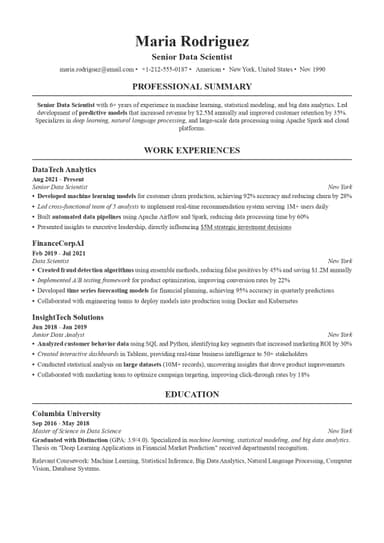
Your resume does the first job of getting you into the room. At startups, that means leading with impact over titles, using numbers wherever you can, and highlighting cross-functional work or times you showed initiative. Definitely avoid corporate jargon because it reads as a mismatch before you've said a word.
If you don’t know how to write a resume for applying to a startup company, you should check out our resume builder. ResumeBuilder.so allows you to pick a convenient resume template, quickly customize it to a specific startup job description, and save a professional, submission-ready document that will impress recruiters!
Step 3: Practice with the STAR Method
Choose five or six personal stories that demonstrate adaptability, problem-solving, and leadership. These become your answer library, and most behavioral questions can be addressed with one of them, just framed differently.
Practice out loud, and time yourself by setting 90–120 seconds per answer. The difference between reading STAR answers in your head and speaking them aloud is bigger than most people expect, so you need to make sure you’re prepared.
Step 4: Follow Up After the Interview
Send a thank-you email within 24 hours, but don’t use a template; write something specific that references a moment from your conversation. For example, you can reiterate your enthusiasm for the mission and the role; this extra step matters at startups, where every hire feels personal.
5 Startup Interview Red Flags to Watch For
Common red flags in a startup interview include vague answers about compensation, unclear role definitions, and a dismissive attitude toward work-life balance. Most interview prep focuses on what you need to prove, but the interview is also your chance to evaluate whether this is a company you actually want to join.
Here are five things worth paying attention to:
- Founders can't clearly articulate the product's value prop. If they can't explain what they're building and why it matters in plain language, that confusion often runs deeper than the interview room.
- No defined onboarding plan or structure for the first 90 days. Startups move fast, but the good ones have thought about how to bring people up to speed. "You'll just figure it out" is rarely a promising sign.
- Evasive answers about funding runway. You're allowed to ask how long the company is funded and whether they're currently raising. Founders who deflect or get defensive about this are worth approaching with caution.
- A chaotic or disrespectful interview process. If the experience is disorganized (late starts, rescheduled interviews, interviewers who clearly haven't read your resume), that often reflects how the team operates day to day.
- High turnover mentioned casually. "We've had a few people in this role" deserves a follow-up. Some turnover is normal, but repeated turnover in the same position is a signal you should reconsider joining the company.
Final Thoughts
Startup interviews are fast-moving, culture-first, and designed to surface how you think and what you've done. They're also genuinely two-sided; you're evaluating the company just as much as they're evaluating you, and the candidates who bring that perspective tend to stand out.
The more clearly you understand what startup employers value, the easier it becomes to prepare answers that feel relevant and convincing. With the right preparation, you can walk into the interview ready to show not only your skills and experience, but also the mindset that startups are often looking for.
Startup Interview FAQs

Ava Sinclair is the Founder of ResumeBuilder.so and a seasoned expert in HR and recruitment. As the driving force behind ResumeBuilder.so, Ava combines her expertise in recruitment and job-seeking strategies to empower job seekers with intuitive, high-impact resume-building tools.