13+ Most Common Cover Letter Mistakes and How to Fix Them

You're the perfect candidate; however, somehow your application never makes it past the first screening—all because of a single cover letter mistake. Despite some claiming cover letters are obsolete, multiple online sources claim that over 80% of hiring managers still consider them important. One typo, one generic phrase, or one tone-deaf sentence can cost you the interview before you even get started.
In this guide, we reveal the most common cover letter mistakes and exactly how to avoid them. Whether you're a recent graduate writing your first application or a seasoned professional switching careers, understanding these cover letter errors will improve your chances of landing interviews.
- Cover letters remain critical for standing out in competitive job markets—they're not going anywhere.
- Generic, non-personalized cover letters are the #1 mistake job seekers make and instantly signal a lack of genuine interest.
- Typos and grammatical errors can eliminate qualified candidates from consideration within seconds.
- Repeating your resume content wastes valuable space and hiring manager time.
- The wrong tone can signal a poor cultural fit before you even interview.
- Focusing on what you want (instead of what you offer) is a major red flag that screams "wrong priorities".
- Following specific application instructions demonstrates attention to detail that employers value.
- Using AI-powered tools like ResumeBuilder.so can help you avoid common formatting and content mistakes.
What Is a Cover Letter?
A cover letter is a one-page document that accompanies your resume when applying for jobs. While your resume lists your work experience, skills and qualifications, your cover letter tells your professional story and explains why you're the perfect fit for the specific position and company.
Cover letters serve several critical purposes that resumes can't accomplish alone:
- Introducing yourself and making a strong first impression
- Demonstrating genuine interest in the company and role
- Explaining employment gaps or career changes
- Highlighting relevant achievements not fully captured on your resume
- Showcasing your communication skills and personality
- Making a compelling case for why the employer should interview you
Despite claims that cover letters are dying, a strong letter can be the deciding factor when choosing between similarly qualified candidates. That's why knowing how to write a cover letter that stands out is crucial for avoiding the most common mistakes.
Cover Letter Structure
A well-organized cover letter uses a clear, professional format that guides hiring managers through your qualifications. Here’s a structure to follow:
- Your contact information
- Date
- Employer's details
- Opening paragraph
- Body paragraphs
- Strong conclusion
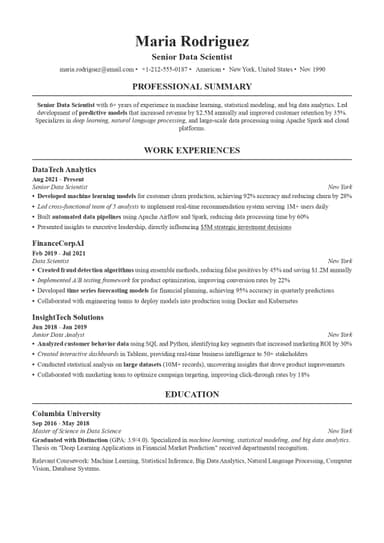
This structure ensures your cover letter is scannable, compelling, and professional. Here’s a good cover letter example that shows this in practice:

15 Common Cover Letter Mistakes That Kill Your Chances
Now that you know what a good letter implies, let’s examine the 15 most common cover letter mistakes, and how to avoid them.
#1. Using a Generic, One-Size-Fits-All Template
Generic cover letters fail to address the employer's unique needs, company culture, or job requirements. They make you appear lazy and uninterested—two qualities that won't get you hired.
To address this, research the company thoroughly before writing. Reference specific details about:
- The company's mission, values, or recent achievements
- How your skills match their exact requirements
- Why you're excited about this particular role
- Specific projects or initiatives you'd like to contribute to
Use the job description as your roadmap—address the key qualifications they're seeking and explain how you meet or exceed them.
#2. Starting with a Weak or Generic Opening
Hiring managers read dozens or hundreds of cover letters. "I am writing to express my interest in..." or "To Whom It May Concern" are instant turn-offs. These weak openings fail to grab attention and waste precious first-impression opportunities.
Here’s how to start a cover letter properly:
- Address a specific person by name whenever possible (check LinkedIn, company website, or call to ask)
- Start with a compelling statement about your qualifications
- Reference a mutual connection or recent company news
- Lead with enthusiasm that feels genuine, not forced
Let’s see how weak and strong cover letter openings compare:
Your recent campaign for sustainable packaging demonstrated exactly the kind of innovative thinking I've built my career around, and I'm eager to bring similar results to your team.
Weak Example
I'm applying for the marketing manager position, …
#3. Repeating Your Resume Word-for-Word
One of the most common cover letter mistakes is treating it as a prose version of your resume. Repetition wastes space and bores the reader.
Here’s how your cover letter should complement your resume:
- Use the cover letter to tell stories behind your resume bullet points
- Explain the "why" and "how" behind your achievements
- Provide context for career changes or gaps
- Highlight 2-3 key accomplishments with more detail than your resume allows
- Show your personality and communication style
Practically, if your resume says "Increased sales by 45%," your cover letter should explain this bullet point. For example:
I developed a new client outreach strategy that increased sales by 45% in six months by identifying and targeting an underserved market segment that competitors had overlooked.
#4. Focusing on What YOU Want Instead of What THEY Need
Employers want to know what value you'll bring to their organization, not how they can serve your career goals.
To achieve this, you should:
- Flip your perspective—write from the employer's viewpoint
- Focus on how you'll solve their problems or contribute to their success
- Use phrases like "I can help you..." or "I will bring..."
- Save discussions about what you're seeking for the interview stage
Let’s compare "me-focused" vs. "employer-focused" examples:
| Me-Focused (Wrong) | Employer-Focused (Right) |
|---|---|
This role would help me advance my career | I bring 5 years of proven sales growth expertise to help you expand into new markets |
I'm looking for a company with good benefits | My background in healthcare compliance will ensure your facility maintains 100% regulatory standards |
I want to learn new skills | I'll apply my data analytics expertise to help you reduce customer churn by 25% |
This seems like a great opportunity for me | My experience scaling startups from 10 to 100+ employees matches your current growth phase perfectly |
#5. Typos, Grammatical Errors, or Formatting Issues
Errors signal carelessness, poor attention to detail, and lack of professionalism—qualities no employer wants. Here’s what you can do to fix this:
- Write your cover letter in a word processor with spell-check or use an online cover letter maker, such as ResumeBuilder.so
- Read it aloud to catch awkward phrasing
- Ask a trusted friend or mentor to review it
- Print it out and proofread on paper (you'll catch different errors)
- Wait 24 hours and review with fresh eyes
Make sure to verify the spelling of the hiring manager's name, company name, job title, your contact information, and consistent formatting throughout.
#6. Writing Too Long or Too Short
A cover letter that's too long won't get read completely. One that's too short suggests you're not taking the opportunity seriously or can't communicate effectively. The goal is to fit everything onto one page:
- Aim for 3-4 concise paragraphs
- Target 250-400 words total
- Use roughly half a page to three-quarters of a page
- Keep paragraphs to 3-5 sentences maximum
- Use white space effectively to improve readability
Here’s a quick infographic showing which structure to follow:

#7. Using the Wrong Tone for the Company Culture
Your tone signals whether you'll fit the company culture. Mismatched tone suggests you haven't researched the organization or won't mesh well with the team.
For example, sending an overly formal, stiff cover letter to a creative startup or a casual, emoji-filled one to a traditional law firm demonstrates poor judgment.
Here’s how to avoid this cover letter mistake:
- Research the company culture through their website, social media, and employee reviews
- Match your tone to theirs while maintaining professionalism
- For formal industries (finance, law, healthcare), use traditional business language
- For creative/startup environments, show personality while staying professional
- When in doubt, lean slightly more formal
#8. Ignoring Specific Application Instructions
Many employers include specific instructions in job postings: "Include salary requirements," "Answer this question in your cover letter," or "Submit as a PDF." Ignoring these is a critical cover letter mistake.
If you can't follow simple application instructions, employers assume you won't follow workplace procedures either. To avoid this, make sure to:
- Read the job posting thoroughly—twice
- Highlight any specific requirements or instructions
- Create a checklist to ensure you've addressed everything
- Use the exact file format requested
- Include any requested information (salary expectations, answers to specific questions)
- Submit through the specified channel
If they ask a specific question in the job posting, answering it thoughtfully can set you apart from candidates who skip this step.
#9. Using Clichés, Buzzwords, and Empty Phrases
Phrases like "I'm a hard-working team player," "I think outside the box," or "I'm a detail-oriented self-starter" are overused phrases that add zero value.
These clichés are meaningless without evidence. Every candidate claims these qualities, making them ineffective differentiators.
Therefore, it’s important to:
- Replace buzzwords with specific examples and achievements
- Show, don't tell—use concrete evidence
- Quantify your accomplishments whenever possible
- Use action verbs to describe what you actually did
Here are a few weak vs. strong examples:
- I collaborated with five departments to launch a product that exceeded first-year revenue targets by 50%
- I implemented a new quality control process that reduced errors by 35%
Weak Example
- I'm a team player
- Detail-oriented professional
#10. Discussing Salary, Benefits, or What's In It For You
Mentioning salary expectations, vacation time, benefits, or what you hope to gain from the job (unless specifically requested) signals wrong priorities.
This cover letter mistake makes you appear more interested in what you'll get rather than what you'll contribute. Here’s how to avoid it:
- Focus entirely on your value proposition
- Avoid any mention of compensation unless the job posting specifically requires it
- Never discuss benefits, work-life balance, or perks in your cover letter
- Save questions about compensation and benefits for the appropriate interview stage
If the job posting explicitly asks for salary requirements, include a researched range and briefly explain your flexibility.
#11. Underselling or Overselling Yourself
Two opposite but equally damaging cover letter mistakes. Underselling makes hiring managers wonder why they should interview you. Overselling comes across as arrogant and difficult to work with.
If you tend to undersell:
- Remember that confidence isn't arrogance
- State your accomplishments directly without minimizing them
- Use strong action verbs: "I achieved," "I led," "I created"
- Let your results speak for themselves
If you tend to oversell:
- Replace superlatives with facts: Instead of "I'm the best," use "I ranked #1 out of 50 sales representatives"
- Acknowledge team contributions when appropriate
- Focus on results rather than self-promotion
- Stay humble while being confident
If you have no experience, focus on transferable skills and potential rather than apologizing for what you lack.
#12. Explaining Why You're Unqualified
Why would you highlight your weaknesses? If you believe you're not qualified, the hiring manager will too.
To avoid this common cover letter mistake, you should:
- Focus on what you DO have, not what you lack
- Reframe gaps as transferable skills
- If you're changing careers, emphasize relevant competencies
- Show enthusiasm for learning if there's a skills gap
- Explain how your unique background brings a fresh perspective
Compare the two examples below:
My five years in sales gave me deep insight into customer psychology, which I've leveraged to create campaigns that convert prospects to clients.
Weak Example
Although I don't have formal marketing experience, …
#13. Making It All About Your Resume
Phrases like "As you can see on my resume..." or "My attached resume shows..." waste the cover letter's potential to add new information and context that your resume can't convey.
Therefore, make sure to:
- Never reference your resume directly
- Assume the hiring manager has your resume in front of them
- Use the cover letter to provide context, tell stories, and explain connections
- Answer the question: "Why should this employer interview me?"
- Show your personality, writing skills, and communication style
- Explain the "why" behind your career choices
#14. Using Poor Formatting or Unprofessional Design
Fancy fonts, colored text, graphics, or inconsistent formatting distract from your message. Your cover letter should be easily readable by both humans and Applicant Tracking Systems (ATS).
Here’s what to keep in mind:
- Use standard, professional fonts (Arial, Calibri, Times New Roman, or similar)
- Stick to 10-12 point font size
- Use 1-inch margins
- Left-align your text
- Include proper business letter formatting (your contact info, date, employer's contact info)
- Save as PDF to preserve formatting (unless instructions specify otherwise)

#15. Ending Weakly or Without a Call to Action
Your closing should be as strong as your opening, reinforcing your enthusiasm and prompting next steps. That said, here’s how to end a cover letter the right way:
- Express genuine enthusiasm for the opportunity
- Restate your key value proposition in one sentence
- Include a confident call to action
- Mention your availability for an interview
- Thank them for their time and consideration
- Use a professional sign-off
Here’s a strong closing example:
I'm excited about the possibility of bringing my data analytics expertise to Acme Corp's marketing team. I'm confident my experience driving 40% increases in campaign ROI aligns perfectly with your goals.
I'd welcome the opportunity to discuss how I can contribute to your Q3 initiatives. I'm available for an interview at your convenience.
Sincerely,
Ben Johnson
How to Write an Error-Free Cover Letter in 5 Simple Steps

Here's how to write a compelling, error-free cover letter in 5 steps:
- Research thoroughly before writing. Visit the company website, read recent news, review their social media, check employee reviews on Glassdoor, and examine the job description carefully. This research will inform every aspect of your cover letter and help you avoid the generic mistake.
- Create a custom outline for each application. Based on your research, outline your cover letter structure. Identify which of your experiences align with their needs, which achievements are most relevant, and which aspects of the company culture resonate with you.
- Write a compelling draft. Using your outline, write your first draft without worrying about perfection. Focus on getting your ideas down. Tell your story authentically, connect your background to their needs, and let your enthusiasm show. You'll refine it in the next steps.
- Edit ruthlessly. Cut unnecessary words, eliminate clichés, tighten sentences, and ensure every word adds value. Remove anything that doesn't directly support why you're the perfect candidate. Check that you've avoided all cover letter mistakes outlined above.
- Proofread multiple times. Use spell-check, read aloud, ask someone else to review it, print and proofread on paper, and wait 24 hours to review with fresh eyes. Verify all names, companies, and contact information are correct.
Create Your Perfect Cover Letter With ResumeBuilder.so

Tired of making costly cover letter mistakes? ResumeBuilder.so takes the guesswork out of application writing with professional tools designed to help you land interviews faster.
Our intuitive cover letter builder guides you through each section with expert tips, ensuring you avoid common pitfalls like generic openings, poor formatting, and weak conclusions. Choose from dozens of ATS-friendly cover letter templates tailored to different industries and experience levels—no design skills required.
However, we don't stop at cover letters. Our AI-powered resume builder helps you create a matching, professional resume. Both tools work together to present a cohesive, polished application package.
With built-in spell-check, formatting optimization, and industry-specific cover letter and resume examples, ResumeBuilder.so eliminates typos, structural errors, and tone mismatches before you hit submit.
Final Thoughts
Cover letter mistakes can cost you opportunities with companies you're genuinely excited about. However, these are completely avoidable with preparation, research, and attention to detail.
Remember that your cover letter is often your first impression, and you never get a second chance at a first impression. Take the time to craft a customized, error-free letter that showcases your qualifications, demonstrates genuine interest, and makes a compelling case for why the employer should interview you.
The most successful job seekers understand that a great cover letter doesn't just avoid mistakes—it tells a story, makes connections, and shows personality while maintaining professionalism. When combined with a well-written resume, it becomes a powerful tool in landing your dream job.
Cover Letter Mistakes FAQs

Maya Brooks believes that a fulfilling career shouldn’t come at the cost of your mental health. Having worked in corporate HR, she’s seen firsthand how burnout culture can wreck careers. Now, she shares real-world strategies for setting work boundaries, avoiding toxic workplaces, and finding joy in your job.