How to Negotiate Salary: Expert Strategies for Getting Paid Fairly

Knowing how to negotiate a salary is one of the most valuable career skills; however, many leave thousands of dollars on the table by accepting initial offers without negotiation. Whether you're starting a new job, seeking a raise, or transitioning careers, salary negotiation can make a substantial difference in your financial future. The anxiety around asking for more money is real—nobody wants to seem greedy or risk losing an opportunity. Nevertheless, employers expect negotiation.
This comprehensive guide will walk you through proven strategies, provide actionable scripts, and help you confidently navigate compensation discussions to secure the pay you deserve. By the end, you'll have the tools and confidence to approach your next salary discussion strategically rather than emotionally.
- Salary negotiation is expected by most employers and rarely results in rescinded offers.
- Proper timing matters; negotiate after receiving a formal offer, not during initial interviews.
- Research is critical; knowing market rates gives you negotiating power and credibility.
- Multiple compensation factors beyond base salary can be negotiated, including benefits and bonuses.
- Preparation and practice significantly increase your chances of successful negotiation.
- Understanding your value and articulating it clearly is essential for negotiation success.
Why Salary Negotiation Matters
Negotiating your salary matters because it creates a compounding effect throughout your career. Your starting salary serves as the baseline for future raises, bonuses, and retirement contributions. According to a survey from Pew Research Center, around 60% of U.S. workers didn’t attempt to negotiate higher pay when receiving a job offer.
Not negotiating and stating your salary expectations is unfortunate for several reasons, including:
- Financial impact. A higher base salary means larger percentage-based raises, higher 401(k) matching contributions, and potentially better severance packages if things don't work out. Even a modest 10-15% increase through negotiation can translate to significant wealth accumulation over decades.
- Professional respect. Employers often expect candidates to negotiate and may view it as a sign of confidence and business acumen. Also, by not negotiating, you may inadvertently signal that you undervalue yourself or lack the confidence needed for the role. Conversely, thoughtful negotiation demonstrates communication skills and decision-making skills that employers value.
- Career precedent. How you handle your initial salary negotiation sets the tone for your professional relationship. It demonstrates your ability to advocate for yourself, handle difficult conversations, and find mutually beneficial solutions—all qualities that translate directly to job performance. Starting from a position of respect and fair compensation creates healthier long-term employment relationships.
When to Negotiate Your Salary
Timing is crucial in salary negotiations. The table below outlines when it’s best to negotiate your salary:
| Situation | Why This Is a Good Time to Negotiate |
|---|---|
After Receiving a Formal Job Offer | The employer has committed to you, invested time/resources, and expects negotiation as part of standard business practice. You have maximum leverage. |
During Annual Performance Reviews | Many companies review compensation on set cycles, making this a natural and structured time to discuss pay. |
When Taking on Additional Responsibilities | Your role has expanded beyond the original scope, often matching higher-level positions. |
During Internal Transfers or Promotions | Compensation is often flexible, and the company already knows your value and wants to retain you. |
How to Prepare for Salary Negotiation: 4 Expert Tips
Preparation is the foundation of successful salary negotiation. The more prepared you are, the more confident and effective you'll be during actual discussions. Let’s examine a few salary negotiation tips that you can use to prepare yourself.
#1. Document Your Value Proposition
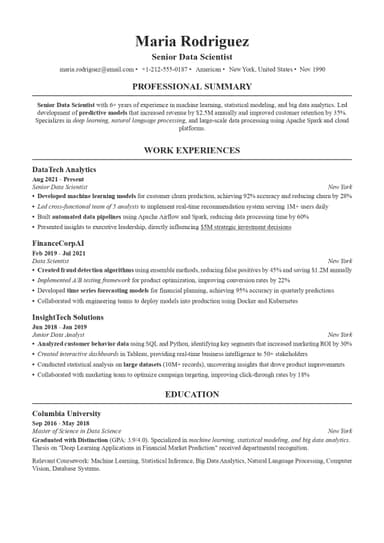
Create a comprehensive list of your skills and qualifications, accomplishments, and the specific value you bring to the organization. Quantify your achievements whenever possible—percentage improvements, revenue generated, costs saved, projects completed, or team members managed. Numbers provide concrete evidence that's difficult to dispute.
For new hires, research the company and focus on how your background directly addresses their needs and challenges. Review the job description carefully and identify where your experience exceeds the requirements. For current employees seeking raises, document contributions since your last compensation review.
#2. Determine Your Target Salary Range
Based on your research, establish three numbers:
- Ideal salary (ambitious but realistic)
- Target salary (fair market value)
- Walkaway number (minimum acceptable offer)
Your target should typically be 10-20% above the initial offer, as employers expect some negotiation and often make conservative initial offers. However, justify this range with research rather than arbitrary percentages. If market data shows the position typically pays $80,000-$95,000 and they've offered $75,000, you have solid ground to request something in the established market range.
#3. Practice Your Negotiation Conversation
Rehearse your negotiation discussion with a trusted friend, mentor, or career coach who can provide honest feedback. Practice articulating your value, responding to common objections, and maintaining composure under pressure. The more you practice, the more natural and confident you'll sound during the actual conversation.
Record yourself or practice in front of a mirror to improve your delivery and body language. Pay attention to filler words ("um," "like," "you know") that can undermine your message. Also, prepare for uncomfortable silences—they're common in negotiations. After stating your counteroffer, resist the urge to fill silence with explanations or justifications. Let your request stand on its own.
#4. Prepare for Different Scenarios
Anticipate various responses from the employer—immediate acceptance, firm rejection, requests for justification, or counteroffers. Prepare responses for each scenario so you're not caught off guard. Think through what you'll say:
- If they accept immediately (don't show disappointment that you didn't ask for more)
- If they firmly decline (what alternatives might work)
- If they ask you to justify your request (refer to your research and value documentation)
Having these alternatives ready shows flexibility and genuine interest in finding mutually beneficial solutions rather than simply demanding more money.
How to Negotiate a Salary: Complete Process Overview
Follow this proven process to negotiate your salary professionally and effectively:
Step 1: Express Enthusiasm for the Position
Begin any salary negotiation by reaffirming your interest in the role and the company. This establishes a collaborative tone and reassures the employer that you're negotiating in good faith, not simply seeking the highest bidder. A positive opening sets the stage for productive discussion and reminds everyone that you're on the same team.
Here’s a good script:
I'm very excited about this opportunity and can see myself making significant contributions to [company name]. Thank you for extending this offer. I'm genuinely thrilled about the possibility of joining your team.
This approach immediately disarms potential defensiveness and frames the negotiation as two parties working together toward a mutual goal rather than adversaries trying to extract maximum value from each other.
Step 2: Ask for Time to Review the Offer
Never accept or negotiate an offer immediately, even if it exceeds your expectations. Request 24-48 hours to review the complete compensation package carefully. This demonstrates professionalism, gives you time to analyze the offer objectively, and prevents pressure-based decisions you might regret.
You can phrase it like this:
I'd like to take some time to thoroughly review the complete offer. Would it be possible to discuss this in detail tomorrow afternoon? I want to give this the consideration it deserves.
This pause also allows you to consult with mentors, compare the offer against your research, and prepare your counteroffer thoughtfully. Employers expect this request and will respect your deliberative approach.
Step 3: Analyze the Complete Package
Evaluate all compensation components—base salary, bonuses, equity, health insurance, retirement contributions, vacation time, flexible work options, and professional development opportunities. Calculate the total compensation value, not just base salary.
Sometimes, a lower base salary with excellent benefits and equity may be more valuable than a higher salary alone. Consider your priorities and what matters most for your situation. If work-life balance is crucial, additional vacation time might be worth more than extra salary. If you're early in your career with limited or no experience, professional development opportunities and mentorship might provide more long-term value than immediate compensation.
Step 4: Make Your Counteroffer
Present your counteroffer confidently with data-driven justification. Reference your research, highlight your relevant qualifications, and explain how you'll add value to the organization. Keep your tone collaborative and professional—you're working toward a mutual agreement, not making demands.
Let’s see how you can play this out:
Based on my research of comparable positions in this market and considering my [specific qualifications/experience], I was hoping we could discuss a salary in the range of $[X-Y]. I believe this reflects both the market rate and the value I'll bring to the team through [specific contributions]. For example, in my current role, I [specific quantifiable achievement], and I'm confident I can deliver similar results for your team.
Notice how this script combines enthusiasm, research-based reasoning, specific qualifications, and quantifiable achievements. It's neither aggressive nor apologetic—just professional and clear about expectations based on objective standards.
Step 5: Listen and Respond Professionally
After presenting your counteroffer, listen carefully to the employer's response without interrupting. They may accept, decline, make a counteroffer, or need time to consider. Respond professionally to any scenario, maintaining the relationship regardless of the outcome.
If they can't meet your salary request, ask what they can offer or explore alternative benefits:
I understand there may be constraints on the base salary. Are there other aspects of the compensation package we might adjust? For example, would it be possible to discuss [signing bonus/additional vacation/flexible work arrangements/earlier performance review]?
This flexibility demonstrates that you're reasonable and focused on problem-solving rather than simply demanding your way. It also opens doors to compensation elements that may be easier for them to approve than base salary increases.
Step 6: Get Everything in Writing
Once you've reached an agreement, request a revised written offer that includes all negotiated terms before formally accepting. Verbal agreements can be misunderstood or forgotten, and written documentation protects both parties. Review the written offer carefully to ensure it accurately reflects your understanding before signing.
However, don't feel pressured to sign immediately—take time to read every detail. If something doesn't match what was discussed, point it out immediately:
I noticed the written offer shows [X], but my understanding from our conversation was [Y]. Could we clarify this before I sign?
3 Effective Salary Negotiation Scripts
One of proven salary negotiation strategies is having prepared scripts. Similar to resume templates, these scripts provide starting points, but you need to adapt them to your voice and situation.
Thank you so much for this offer—I'm truly excited about joining [company name] and contributing to [specific project/goal]. I've given this careful thought, and I'd like to discuss the compensation package.
Based on my research of comparable positions in [location/industry] and considering my [X years of experience/specific qualifications], I was expecting a salary closer to $[target amount]. This range reflects both current market rates and the value I'll bring through [specific contributions/skills].
I'm confident I can make significant contributions to the team, particularly in [specific areas that align with company needs]. Is there flexibility to adjust the base salary to $[target amount]?
I understand the salary for this position is fixed at $[amount]. While I was hoping for compensation closer to $[target], I'm still very interested in this role. Are there other aspects of the compensation package we might adjust? For example, would it be possible to:
- Start with an additional week of vacation time
- Include a signing bonus to help with relocation/transition costs
- Guarantee a performance review and salary adjustment at [6 months] rather than waiting a full year
- Provide professional development or certification funding for [specific certification]
- Offer flexible work arrangements, such as [specific arrangement]
I'm committed to finding a package that works for both of us while recognizing the value I'll bring to the team. Which of these alternatives might be possible?
Common Salary Negotiation Mistakes to Avoid
Understanding common mistakes helps you navigate negotiations more successfully and avoid damaging either your compensation or relationships. Let’s take a look at the table below:
| Mistake | Why It Hurts You | What to Say Instead (Script) |
|---|---|---|
Accepting the First Offer Without Discussion | Accepting immediately can cost you money and signal weak business judgment. | Thank you for the offer—I’m excited about the role. I’d like a day or two to review the details and discuss whether there’s flexibility in the compensation. |
Revealing Your Current Salary Too Early | Anchors your pay to past compensation instead of market value. | I’d prefer to focus on the value I can bring to this role. Based on my research, similar positions are typically in the $X–$Y range. |
Making It Personal Rather Than Professional | Personal expenses don’t justify higher pay and weaken your case. | Given my experience in X and Y and the results I’ve delivered, a salary in the $X range aligns with the market and the value I’ll provide. |
Being Aggressive or Making Ultimatums | Creates confrontation and risks losing the offer entirely. | I’m very interested in this opportunity. To make it work long term, I’d need to be closer to $X. Is there flexibility in the budget? |
Negotiating Too Many Times | Repeated counteroffers make you appear difficult or indecisive. | I appreciate your flexibility—this revised offer works for me, and I’m happy to move forward. |
How to Handle Different Salary Negotiation Responses
Employers may respond to your negotiation in various ways. Here's how to handle each scenario professionally while protecting your interests:
When They Accept Your Counteroffer
Express genuine appreciation and enthusiasm. Confirm all details in writing and clarify your start date and next steps. This is the ideal outcome—acknowledge it graciously:
Thank you so much for working with me on this. I'm excited to join the team and start contributing to [specific goals]. Could you send me an updated offer letter reflecting these terms?
Also, don't show disappointment that you didn't ask for more. Even if you realize you could have asked for a higher number, express satisfaction with the agreement and move forward positively. Your relationship with this employer is just beginning, and starting with mutual satisfaction creates a better foundation than starting with regret or tension.
When They Meet You Halfway
If the counteroffer falls between their initial offer and your request, evaluate whether it meets your minimum requirements. If it does, express appreciation and accept the job offer. If you'd like to push slightly higher one more time, do so carefully and be prepared to accept their response.
Here’s how you can phrase it:
I appreciate your flexibility in moving closer to my target. Would it be possible to reach $[slightly higher amount]? If not, I'm prepared to accept $[their counteroffer], and I'm excited to get started.
This shows you're reasonable and willing to compromise while still advocating for yourself. However, use this approach only when the gap between their counteroffer and your walkaway number is significant.
When They Can't Increase the Base Salary
If the base salary is fixed, negotiate other compensation elements. Many employers have more flexibility with benefits than with base salary due to budget structures and pay band policies. Ask about signing bonuses, performance bonuses, additional vacation time, flexible work arrangements, professional development budgets, earlier performance reviews, or stock options.
For example:
I understand the base salary is fixed due to [pay band/budget constraints]. Would there be flexibility in other areas, such as [specific alternative benefits]? I'm committed to making this work and finding a package that reflects the value I'll bring.
This demonstrates you understand business constraints and that you're flexible and solution-oriented rather than rigid about one specific number.
When They Decline to Negotiate
Some employers, particularly government agencies or organizations with strict pay bands, genuinely cannot negotiate. In this case, you must decide whether to accept its as-is or decline the job offer. If you really want the role, consider accepting with a plan to prove your value quickly and request a salary review within 6-12 months.
If you choose this path, get the commitment for an early review in writing:
I understand the starting salary is fixed. Would it be possible to schedule a performance review at six months rather than waiting a full year? I'm confident I can demonstrate significant value quickly, and I'd appreciate the opportunity to discuss compensation adjustment at that point based on my contributions.
However, only accept significantly below-market offers if the role provides other substantial value, such as exceptional learning opportunities, career advancement potential, or mission alignment.
When They Seem Offended or Withdraw the Offer
This is extremely rare, but it can happen with unreasonable employers or when negotiations are handled unprofessionally. If an employer rescinds an offer because you attempted reasonable negotiation, this may be a red flag about the company culture and their approach to employee relations.
However, if you sense tension, immediately reassure them:
I apologize if my approach seemed off-putting. I'm very interested in this position and want to find terms that work for both of us. The last thing I want is to create any tension. Can we discuss what would work from your perspective?
This de-escalation script often reveals whether the issue is with your approach or with an employer who has unreasonable expectations. If they remain hostile to reasonable negotiation attempts, reconsider whether you want to work for an organization that reacts this way to standard business practices.
How to Negotiate Benefits Beyond Salary
Comprehensive compensation extends far beyond base salary. When salary negotiation reaches its limit, turn attention to these valuable benefits that impact your quality of life and long-term financial position.
Additional Vacation Time
Extra vacation days provide immediate quality-of-life improvements and don't significantly impact company budgets the way salary increases do. Request one additional week of vacation, particularly if you're joining with significant experience or if their standard offering falls below market norms.
Frame this as a way to maintain work-life balance and sustainable performance:
I understand the base salary may be fixed. Would it be possible to start with three weeks of vacation rather than two? I've found that adequate time to recharge helps me maintain the high performance level you're hiring me for.
Flexible Work Arrangements
Remote work options, flexible hours, or compressed work weeks offer substantial value without direct costs to employers. If hybrid work isn't standard, negotiate for specific remote days. If they offer two remote days, ask for three.
Emphasize how flexibility will improve your productivity and work-life balance, benefiting both you and the organization:
Would it be possible to work remotely three days per week rather than two? I'm most productive in a quiet environment, and this arrangement would allow me to deliver better results while maintaining strong team collaboration on in-office days.
Professional Development and Education
Negotiate for conference attendance, funding for certifications that you can list on your resume, or tuition reimbursement for advanced degrees. Many companies have education budgets separate from compensation budgets, making this easier to approve than salary increases.
Specify the programs or certifications you're interested in pursuing:
Would the company support my pursuing [specific certification] within the first year? This certification would directly enhance my ability to [specific job function] and provide additional value to the team.
Earlier Performance Review
If you must accept a lower-than-desired salary, negotiate for an accelerated performance review at 6 months instead of 12 months. Get this commitment in writing with specific performance metrics that, when met, will trigger a compensation adjustment.
You can phrase it like this:
I'm willing to start at $[offered amount] with the understanding that we'll conduct a performance review in six months. If I achieve [specific measurable goals], we can adjust my compensation to $[target amount]. Does that work?
This creates a structured path to your target salary while demonstrating confidence in your abilities. It also gives you clear benchmarks to work toward and ensures the salary discussion doesn't disappear once you've accepted the offer.
Final Thoughts
Knowing how to negotiate salary is a critical career skill that impacts your financial security, professional trajectory, and sense of self-worth. While the prospect may seem uncomfortable, remember that employers expect negotiation and respect candidates who advocate for themselves professionally.
Whether you're accepting your first job offer, seeking a raise, or changing careers, thoughtful preparation and professional communication can significantly increase your earning potential. The investment you make in developing negotiation skills pays dividends throughout your career, compounding into substantial lifetime earnings differences.
Before you begin your next salary negotiation, ensure your application materials effectively communicate your value. With ResumeBuilder.so, it’s easy to write a resume that highlights your quantifiable achievements, positioning you as a high-value candidate worthy of competitive compensation.
How to Negotiate Salary FAQs

Emily Foster knows how nerve-wracking it can be to land your first job—she’s been there. As a mentor for young professionals, she shares exactly what hiring managers want from entry-level candidates. From internship hacks to interview confidence tips, Emily helps students and recent grads navigate the job search with ease.