Personal Branding: Meaning, Importance & How to Build Yours

Personal branding is the difference between an employer Googling your name and finding nothing vs. finding exactly the person they've been looking for. The job market is crowded. Hundreds of people apply for the same roles, with the same qualifications, from the same universities. If you're not intentionally shaping how you come across, someone else is winning that interview.
In this guide, we explain exactly what personal branding is, why it's worth your attention, and a seven-step process to build one that works whether you're just starting out or ten years into your career.
- Personal branding is the intentional practice of defining and communicating your unique professional value to the right audience.
- It goes well beyond social media; your resume, cover letter, LinkedIn profile, and how you show up in person are all part of it.
- A consistent personal brand builds credibility, attracts inbound opportunities, and sets you apart during hiring.
- Anyone can build a personal brand regardless of industry, experience level, or follower count.
- Your resume is often the first tangible expression of your personal brand that a hiring manager sees.
What Is Personal Branding?
Personal branding is the intentional, strategic process of defining and communicating your unique value to your target audience. In simple terms, it's the story people tell about you when you're not in the room, and the one you actively shape so they get it right.
While company branding is about products and logos, personal branding centers on your skills and qualifications, your values, your story, and the professional reputation you've built (or are building). However, this happens whether you plan it or not. Every LinkedIn post, every email, every conversation at a conference adds a brushstroke to the picture. The only question is whether you're the one holding the brush.
The channels are wider than most people think. LinkedIn is the most obvious one, but your resume, personal website, social profiles, speaking engagements, articles you've written, and even how you conduct yourself in meetings all contribute to your brand. Controlling that narrative means being consistent across all of them.

Why Is Personal Branding Important for Your Career?
Personal branding is important because it helps employers and clients find, trust, and remember you even before you meet them.
In a hiring process that increasingly starts with a Google search, your digital presence is your first impression. For instance, 73% of decision-makers say thought leadership content makes them trust a brand or individual more than traditional marketing.
Benefits of Personal Branding
However, beyond the numbers, the practical benefits are real, including:
- Career advancement. A strong personal brand accelerates career progression. People reach out to you with opportunities instead of you chasing every open role.
- Increased visibility. A strong personal brand ensures you show up where decisions are made, such as search results, LinkedIn feeds, and industry conversations. This way the right people find you before you even apply.
- Trust before the first meeting. Consistently sharing your expertise builds credibility with hiring managers and peers in advance, making introductions warmer and negotiations easier.
- Opportunities come to you. When your reputation precedes you, recruiters, collaborators, and clients reach out proactively, reducing the time and energy spent chasing roles or contracts.
- Control over your narrative. Whether you're explaining a career pivot, an employment gap, or an unconventional path, your personal brand lets you shape the story on your own terms.
- Long-term career resilience. A recognizable professional identity gives you a foundation that travels with you across roles, industries, and economic shifts.
How to Build a Personal Brand in 7 Steps
Building a personal brand doesn't require thousands of followers or a fancy website. It doesn't even require much time upfront. Here's a step-by-step process anyone can follow.

#1. Define Your Values, Skills, and Goals
Start with honest self-reflection. This implies identifying your core strengths and weaknesses:
- Skills you're genuinely excellent at
- Problems you solve naturally
- Value you bring to a team or client.
Then map those strengths against the needs of your target audience. That intersection is your value proposition—the foundation on which everything else is built.
#2. Identify Your Target Audience
A brand without a target audience is just noise. Before you craft any messaging, get clear on who you're actually trying to reach. Knowing your audience determines the tone you use, the platforms you show up on, and the topics you talk about.
A software engineer targeting fintech hiring managers will communicate very differently from a freelance illustrator building a client base. A useful exercise is to write a single sentence describing your ideal audience before you build anything else. For example: "I want to be the first name a marketing director at a mid-sized e-commerce company thinks of when they need a paid acquisition specialist."
#3. Craft Your Personal Brand Statement
Your personal brand statement is a one- to two-sentence elevator pitch of who you are, what you do, and the value you bring. It should be specific enough to be memorable, short enough to work as a LinkedIn headline or resume summary.
You can use the following formula: [Your Role/Title] + [What You Do] + [Who You Help] + [The Outcome You Deliver].
That said, here are three examples across different career stages:
- Full-stack engineer who builds accessible, high-performance web apps for early-stage SaaS companies.
- Marketing manager with a track record of turning underperforming paid channels into a consistent pipeline for B2B brands.
- Recent communications graduate helping nonprofits tell clearer stories through social media and content strategy.
Once you've written your statement, it belongs in your resume summary, your LinkedIn headline, and any bio you use online. For example, with ResumeBuilder.so you can auto-generate a professional summary that doubles as a personal brand statement. This way, your resume is always consistent with your brand.
#4. Audit and Clean Up Your Online Presence
Before you build anything new, figure out what's already out there. Google your name and see what comes up, and what's missing. Go through every platform relevant to your field—LinkedIn profile, Twitter/X, GitHub, a personal site—and update anything outdated or inconsistent.
That means removing content that contradicts the brand you're building, updating outdated job titles or skills, and filling in gaps that leave recruiters wondering.
#5. Create Consistent, Value-Driven Content
You don't need to post every day. Consistency matters far more than volume; even one thoughtful LinkedIn post per week builds visibility over time. What you do need are content pillars. This means three to five topics you'll consistently write or talk about, directly tied to your expertise and your audience's interests.
Consider the following formats:
- LinkedIn posts and articles
- Newsletters
- Short videos
- Podcast appearances
- Conference talks
The best content shares what you've learned, not just what you've achieved.
#6. Network Strategically
Networking is personal branding in action. Every interaction you have with a colleague, a recruiter, or someone at an industry event either reinforces or chips away at the brand you're building.
The most effective networking tip is to give before you ask. Comment on other people's content. Share resources without expecting anything in return. Show up at industry events—online and offline—and engage genuinely.
When you do eventually ask for a referral or introduction, you'll be doing it as someone who's already added value, not a cold stranger.
#7. Keep Your Resume and Cover Letter Aligned with Your Brand
This is the one step most people miss. You can have a perfectly polished LinkedIn presence and still lose the job because your resume tells a different, weaker story.
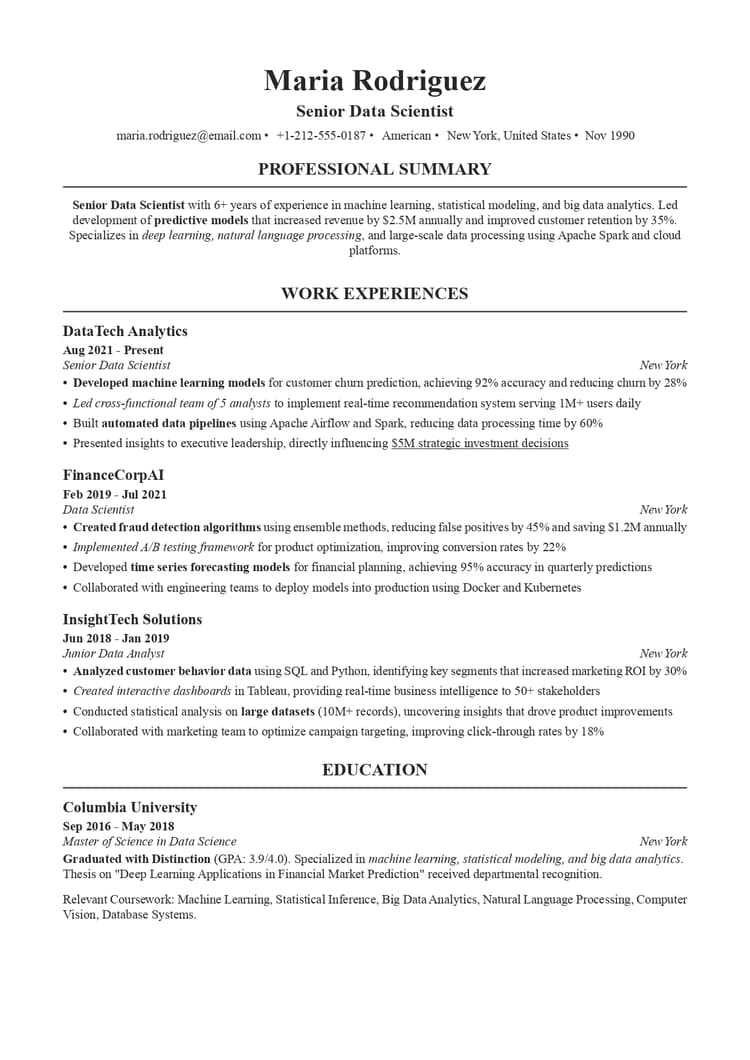
A well-written resume is the most direct, tangible expression of your personal brand to a prospective employer. Your professional summary, achievements, and skills section should all reflect the brand statement you've crafted. This is where a resume template tailored to your industry makes this much easier.
On the other hand, a branded cover letter reinforces that story and sets you apart from candidates who send the same generic template to every role. Use a cover letter template that visually reflects the tone of your brand; clean and corporate for finance, slightly more creative for design or marketing.
Ready to Bring Your Personal Brand to Life on Paper?
Build a professional, ATS-ready resume in minutes with ResumeBuilder.so.Personal Brand Statement Examples to Inspire You
The best personal brand statements are specific, authentic, and audience-focused. Here are five examples across different roles and experience levels:
Marketing graduate with hands-on experience in social media strategy, helping brands grow engaged communities from the ground up.
Full-stack engineer passionate about building accessible, high-performance web apps that solve real user problems.
Former teacher turned UX designer, bringing deep empathy for learners to every product I build.
Operations director with 15+ years helping manufacturing companies cut costs by streamlining supply chains.
Copywriter for B2B SaaS brands who turns complex products into clear, conversion-driven stories.
5 Personal Branding Mistakes to Avoid
Here are five common mistakes that actively undermine the brand you're trying to build.
- Being too generic. Be concrete, and name the industries you've worked in, the metrics you've moved, the specific skills that make you the right fit.
- Inconsistency across platforms. Pick a consistent title and message, and use it across your resume, LinkedIn, and personal site.
- Focusing only on social media. LinkedIn is important, but it's not everything. Your resume, portfolio, the way you write emails, and how you present yourself in interviews are equally important expressions of your brand.
- Trying to appeal to everyone. A niche brand is a strong brand. The more specific you are about the audience you serve and the problem you solve, the more memorable you become.
- Neglecting your resume. A polished online presence undercut by a weak resume loses you opportunities at the final hurdle. If you're not sure what's holding your resume back, check out different resume examples before you apply to another role.
Final Thoughts
Personal branding isn't about self-promotion. It's about making it easy for the right opportunities to find you. When your LinkedIn, your resume, your online presence, and how you talk about your work all tell the same clear, specific story, hiring managers and clients can picture exactly where you fit.
Start small. Define your value proposition today; even a rough draft is better than nothing. Update your LinkedIn headline to match. Then open your resume and ask whether the professional summary sounds like the same person. If it doesn't, that's the gap to close first.
Personal Branding FAQs

Emily Foster knows how nerve-wracking it can be to land your first job—she’s been there. As a mentor for young professionals, she shares exactly what hiring managers want from entry-level candidates. From internship hacks to interview confidence tips, Emily helps students and recent grads navigate the job search with ease.