11+ Essential Graphic Design Skills to Put on Your Resume

Graphic design skills are in higher demand than ever, however, a lot of talented designers are losing out on interviews because they haven't clearly communicated their skills—on their resume, in their portfolio, or both. If your graphic design hard skills and soft skills aren't immediately visible, your application moves to the bottom of the pile.
In this guide, we cover the 12 most sought-after graphic design skills, from Adobe Creative Suite and Figma to typography, color theory, and the soft skills that actually get you hired. You'll also learn exactly how to list these skills on your resume in a way that clears ATS filters and catches a recruiter's eye.
- Graphic design skills fall into two categories: hard (technical) and soft (interpersonal), and employers expect a mix of both.
- Proficiency in tools like Adobe Illustrator, Photoshop, and Figma is a baseline requirement in most design job postings.
- Soft skills, particularly communication, attention to detail, and creativity, are weighted just as heavily as technical ability.
- Freelancers and in-house designers share core skills but emphasize different competencies depending on their environment.
- Knowing how to present graphic design skills on a resume, including ATS optimization, is what separates weak from strong candidates.
- A strong portfolio supported by a well-structured resume is the combination that consistently lands design interviews.
What Are Graphic Design Skills?
Graphic design skills are the technical and creative abilities that allow graphic designers to communicate ideas visually. This includes design principles, software tools, and the interpersonal capabilities that make professional collaboration actually work.
These skills generally fall into two categories:
- Hard skills. These are teachable, technical abilities, such as Adobe Illustrator, typography, color theory, layout composition, etc.
- Soft skills. These shape how you work and how effectively you translate a client's vision into a finished product, such as communication, creativity, time management, etc.
Employers nowadays expect both, and with about 20,000 openings for graphic designers projected each year, on average, by 2034, you need to present them properly on your resume. That said, it's worth distinguishing graphic design skills from general artistic talent.
A painter develops a deeply personal visual voice. A graphic designer works within constraints, such as brand guidelines, budgets, deadlines, and audience expectations. Your artistic ability is a foundation; your graphic design skills are the professional tools and frameworks you've built on top of it.

7 Essential Hard Skills for Graphic Designers
Hard skills are the technical competencies you can demonstrate through software proficiency tests, portfolio, or certifications. They're also what ATS systems scan for first.
That said, let’s explore the seven top hard skills for graphic designers that frequently appear in job postings. Therefore, if you're deciding what to learn or what to prioritize when writing a resume, start at the top.
#1. Adobe Creative Suite (Illustrator, Photoshop, InDesign)
Adobe products are the undisputed industry standard for both print and digital design. That’s why nearly every graphic design job posting lists Adobe proficiency as a hard requirement, not a nice-to-have.
Each application serves a distinct purpose:
- Illustrator handles vector graphics and logo creation
- Photoshop manages photo editing, compositing, and digital art
- InDesign drives layout design for publications, brochures, and multi-page documents
If you're building your graphic design skills from scratch, Adobe Certified Professional certification program is worth looking into. It provides structured learning paths and a credential that holds real weight with hiring managers.
#2. Figma and UI/UX Design Tools
Figma has taken over as the go-to tool for digital product design, largely because it's browser-based, real-time collaborative, and genuinely fast for prototyping.
If you're working on apps, websites, or digital ads, Figma proficiency is now expected even for roles that aren't strictly UX-focused. Alternatives like Sketch and Adobe XD still appear in job postings, but Figma has the clearest momentum.
Tying UX design skills to your graphic design toolkit significantly expands your career options. You don't need to become a full UX researcher, but understanding user flows, wireframing, and basic usability principles makes you a more versatile candidate.
#3. Typography
Typography is one of the most foundational graphic design skills. Also, it’s the one that separates genuinely skilled designers from those who can just operate the software.
However, typography covers far more than font selection, such as:
- Pairing typefaces that complement each other
- Establishing hierarchy through size and weight
- Managing line spacing for readability
- Maintaining brand consistency across every touchpoint
Poor typography can undermine a visually strong concept. For example, a beautifully composed layout with clashing or illegible fonts reads as unprofessional.
If you want to sharpen this skill, Google Fonts is a solid free resource for experimentation, and platforms like Skillshare and Coursera offer dedicated typography courses that go well beyond the basics.
#4. Color Theory
Color theory is applied psychology. The hues you choose communicate mood, trust, urgency, and brand identity before a viewer reads a single word.
What separates deliberate design from guesswork is understanding complementary and analogous color palettes, contrast ratios for accessibility, and the emotional associations different colors carry across cultures.
Practically, color theory shows up in brand identity work, marketing materials, social media content, and web design.
#5. Layout and Composition
Layout and composition govern how viewers move through a design, i.e. what they see first, what they linger on, and what they do next. Core principles include:
- Rule of Thirds
- Grid systems (especially the 12-column grid used in web design)
- Strategic whitespace
- Visual hierarchy that guides the eye intentionally
Print and digital layouts have distinct considerations:
- Print design demands precision in bleed, margin, and resolution;
- Digital layout must account for responsive breakpoints and screen sizes.
Strong composition skills translate across both, and they make a resume portfolio look immediately polished and professional rather than assembled.
#6. Branding and Visual Identity
Branding work sits at the intersection of strategy and craft. As a graphic designer working on visual identity, you're building or maintaining the complete visual language of a brand.
This includes logos, color systems, typography standards, iconography, and the style guides that keep everything consistent across every platform and campaign.
Demand for brand identity skills is strong across agencies, in-house creative teams, and freelance markets. It's also one of the skills that grows in value at senior levels, being important for career advancement.
#7. Motion Graphics and Video Editing
Static design is still core, but designers who can produce animated content are filling a genuine gap in most creative teams. Social media platforms have pushed demand for short-form video, animated ads, and motion graphics through the roof.
Tools like After Effects and Premiere Pro are the industry standards; Canva Pro is increasingly used for quick social content at smaller companies.
Motion graphics proficiency is a differentiating skill. It expands your career opportunities and makes you a more complete creative hire. If you already have a solid foundation in Adobe CC, After Effects is a logical next step and the learning curve is shorter than most designers expect.
5 Key Soft Skills Every Graphic Designer Needs
Soft skills for graphic designers are just as essential as technical proficiency. They determine how effectively you collaborate, communicate, and grow in your role.
You might have mastered every tool on the list above, but if you can't navigate client feedback or manage competing deadlines, that technical ability doesn't travel as far as it should.
Now, let’s examine five key soft skills every designer should possess.
#1. Communication and Presentation
Design is a collaborative discipline, and strong communication skills enable effective collaboration. Designers pitch concepts to clients and stakeholders, interpret briefs that are often vague or contradictory, and present finished work in a way that connects visual choices to strategic goals. The ability to explain why you made a design decision—not just what it looks like—is what builds client trust and earns creative buy-in.
Receiving and responding to feedback professionally matters just as much. Great designers know how to separate personal attachment from professional judgment, incorporate critique constructively, and push back thoughtfully when a requested change would genuinely hurt the work.
#2. Attention to Detail
In graphic design, details are the standard. Alignment off by a few pixels, inconsistent line spacing, or a color value that drifts from the brand guide can all undermine work that's otherwise strong.
Demonstrating attention to detail on a resume means actually showing it, not just stating it. Your resume design itself should be pixel-perfect, e.g. consistent spacing, aligned margins, no widows or orphans in text. Your portfolio should follow brand standards meticulously. Those signals reinforce the claim before an interviewer even asks about it.
#3. Creativity and Conceptual Thinking
Creativity in a professional design context is more structured than the word usually implies. It's the systematic process of interpreting a brief, generating multiple viable solutions, evaluating them against constraints, and selecting the most effective approach. That's a skill, and it can be developed deliberately.
As for conceptual thinking, the design thinking methodology provides a useful framework for this process: empathize, define, ideate, prototype, test. Even if you don't follow the steps rigidly, having a structured approach to creative problem-solving is exactly what employers want to see, and it's something you can demonstrate clearly in portfolio case studies.
#4. Time Management and Meeting Deadlines
Graphic designers typically juggle multiple projects with overlapping timelines. A logo refresh, a social campaign, and a product brochure don't pause for each other.
Therefore, good time management skills, i.e., the ability to prioritize, estimate time accurately, and communicate proactively when timelines shift is genuinely career-defining, especially at senior levels. For freelancers, time management becomes even more critical — your reputation (and income) depends on it.
Also, project management skills and tools like Asana and Trello are worth knowing, both because they help you stay organized and because many in-house teams already use them.
#5. Adaptability and Continuous Learning
Design tools evolve quickly, and the expectations placed on designers evolve with them. Figma barely existed a decade ago; AI-assisted design tools are reshaping workflows right now.
Designers who commit to ongoing education—through Skillshare, Coursera, or LinkedIn Learning—consistently stay ahead of the curve. Those who don't often find their skill set quietly aging out of demand.
Adaptability is especially valued for designers who move between project types, e.g., print, web, social media, and environmental design. Each context has different technical requirements and visual conventions, and the ability to shift between them without losing quality is a skill employers mention repeatedly in job descriptions.
Graphic Design Skills: Freelance vs. In-House Designers
The core graphic design skills list applies across freelance and in-house work environments. However, knowing which skills and qualifications matter most in your target role helps you prioritize on the resume and in your actual development.
The table below compares freelance vs. in-house designer skills:
| Freelance Designer Skills | In-House Designer Skills |
|---|---|
|
|
Overall, freelance designers need stronger client communication and self-marketing abilities. You're not just delivering designs — you're running a business. That means writing proposals, managing contracts and invoicing, and consistently bringing in new work.
On the other hand, in-house designers spend more time on brand guideline adherence and cross-departmental collaboration. This implies working with marketing, product, and executive teams who all have strong opinions about the creative output.
How to List Graphic Design Skills on Your Resume
You can list graphic design skills on your resume in a dedicated skills section, your professional summary, and throughout your work experience. The best approach would be to use all three placements.
Let’s see how to do it properly.
Professional Summary
Your professional summary is prime real estate at the top of your resume—use it to immediately showcase your strongest design skills and specializations. The key is to be specific rather than generic.
This 2-4 sentence section should weave together your years of experience, key technical proficiencies, and design focus areas. For example:
Creative graphic designer with 5+ years of experience crafting compelling brand identities and marketing materials. Proficient in Adobe Creative Suite, Figma, and motion graphics, with a strong foundation in typography and color theory. Specialized in transforming complex concepts into clean, user-focused visual solutions for tech and healthcare clients.
Skills Section
A dedicated skills section provides a scannable snapshot of your technical and creative capabilities. Organize your skills strategically, grouping related competencies together to make them easy to digest for both hiring managers and Applicant Tracking Systems (ATS).
Here’s a good example format for the skills section on a resume:
- Design Software: Adobe Photoshop, Illustrator, InDesign, After Effects, Figma, Sketch, Canva
- Technical Skills: Print production, web design, UI/UX design, motion graphics, photo editing, vector illustration
- Design Principles: Typography, color theory, layout composition, brand identity, visual hierarchy
- Additional: HTML/CSS basics, project management, client presentation, social media graphics
Use a tiered approach if you have varying proficiency levels—list advanced skills first and separate beginner skills or those you're currently learning. Avoid inflating your abilities; honesty prevents awkward situations during interviews or on the job.
Work Experience
This is where you prove your skills in action. Rather than simply listing tasks, demonstrate your graphic design skills with specific achievements. Use specific examples, metrics when possible, and action verbs that convey your creative impact.
Here’s how this might look like on a graphic design resume:
Graphic Designer | Bright Marketing Agency | June 2021 - Present
- Designed 50+ social media campaigns using Adobe Creative Suite, increasing client engagement by an average of 35%
- Developed comprehensive brand identity packages including logos, style guides, and marketing collateral for 12 new clients
- Collaborated with UX team in Figma to create wireframes and mockups for 3 mobile app projects
- Utilized typography and color theory principles to redesign company website, improving user experience and reducing bounce rate by 22%
Graphic Designer | Bright Marketing Agency | June 2021 - Present
Job-Winning Graphic Design Resume Example
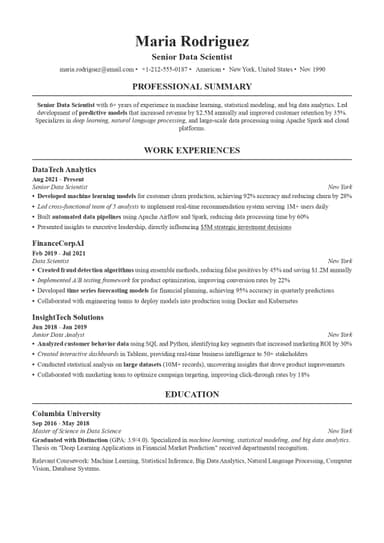
Now that we’ve covered key graphic design skills, let’s see a resume example that incorporates all these elements together:

Showcase Your Graphic Design Skills on a Resume Easily
Save time with ResumeBuilder.so and build a professional, ATS-optimized resume in minutes, using modern resume templates. Our AI-powered resume builder formats your skills section easily, optimizes your language for ATS, and gives you a professional document that matches the quality of your design work.
Once your resume is polished, don't stop there. Build a strong cover letter that speaks directly to the studio or company's design aesthetic. A well-structured cover letter template can be the detail that tips a close decision in your favor.
Final Thoughts
Mastering a blend of hard and soft graphic design skills is what separates candidates who collect rejections from those who land the roles they're after. The technical foundation matters—Adobe Creative Suite, Figma, typography, color theory—but the soft skills are what make you someone people actually want to work with and hire again.
However, the final differentiator is how clearly you present those skills. A portfolio without a polished resume leaves half the story untold. A resume without a portfolio is a set of unverified claims. You need both, and you need both to work together.
Graphic Design Skills FAQs

Ava Sinclair is the Founder of ResumeBuilder.so and a seasoned expert in HR and recruitment. As the driving force behind ResumeBuilder.so, Ava combines her expertise in recruitment and job-seeking strategies to empower job seekers with intuitive, high-impact resume-building tools.