How to Write a Graphic Design Cover Letter (+ Examples)
This complete guide with expert tips and real examples will teach you how to write a compelling cover letter — fast and stress-free!
Edit this cover letter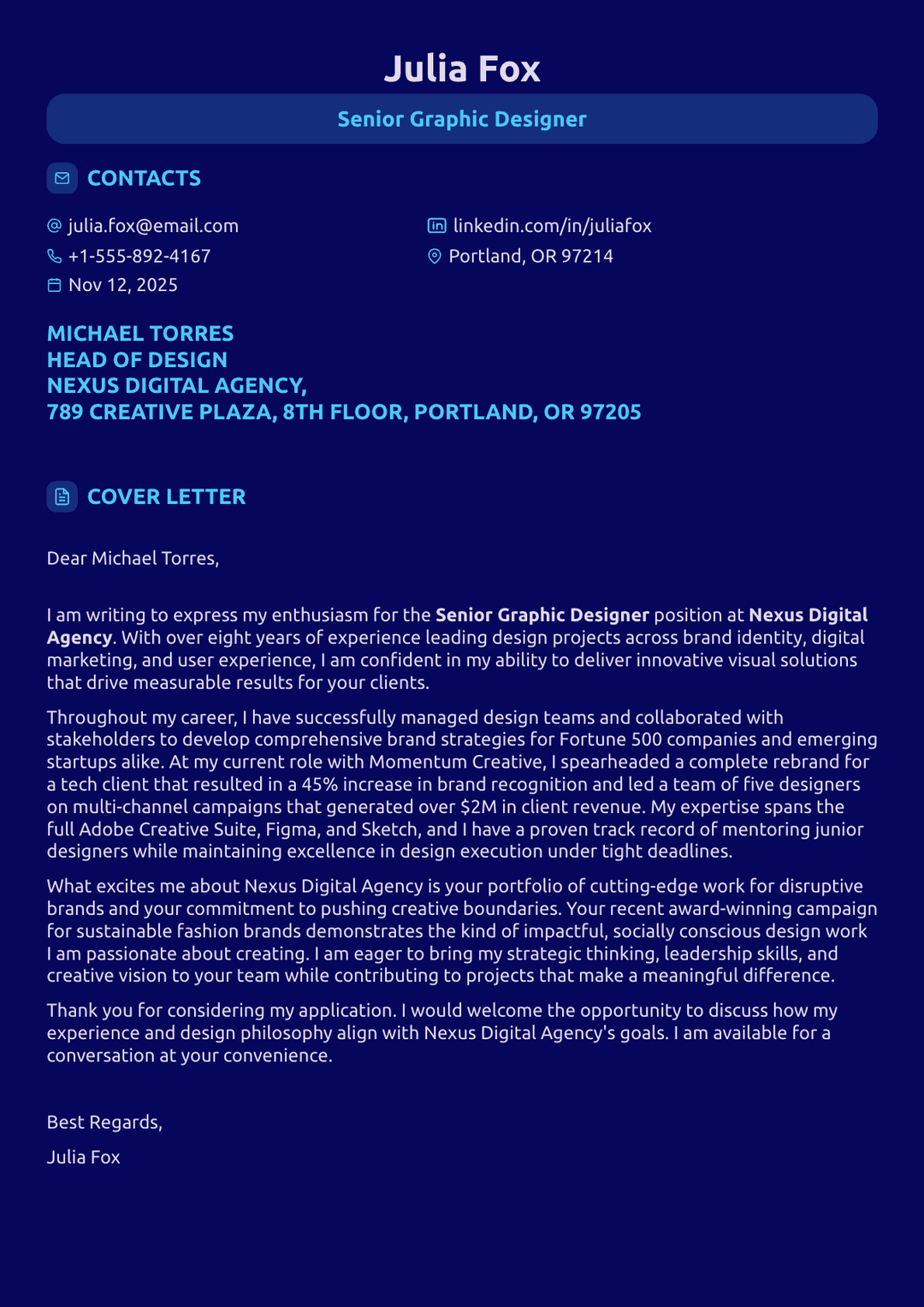
The creative industry is fiercely competitive, and your graphic design cover letter might be the deciding factor between landing an interview or getting lost in the pile. However, most graphic designers struggle with cover letters. You communicate through visuals, not paragraphs. The challenge is translating your creativity into compelling written content that captures attention.
Whether you're an entry-level designer fresh out of school or a seasoned creative looking to make your next career move, we will help you craft a cover letter that gets results with this guide, expert tips, and real-world examples. Read on and get your dream job in design!
- Graphic design cover letters combine creative expression with professional communication through thoughtful typography, strategic white space, and visual elements that enhance readability.
- Essential graphic design cover letter components include: professional headers, attention-grabbing openings, strong body paragraphs, and closings with clear calls to action.
- Effective letters require researching the company, using strategic design elements, quantifying design impact with business metrics, and maintaining ATS compatibility through standard formatting.
- Common mistakes include over-designing layouts, spelling and grammar errors, same letters across multiple applications, and ATS incompatibility.
What Makes a Graphic Design Cover Letter Different?
A graphic design cover letter is unique because it blends creative expression and professional communication. On average, 20,000 openings for graphic designers are projected each year in the U.S., and a well-written cover letter helps you beat the competition. While traditional cover letters focus purely on text-based persuasion, design-focused letters have the opportunity—and expectation—to demonstrate visual thinking and design sensibilities.
According to the American Institute of Graphic Arts (AIGA), successful design requires a balance of intellectual, emotional, and practical aspects. The same can be applied to writing a cover letter, however, you're not just telling an employer about your design skills. You're subtly showing them through thoughtful typography, strategic use of white space, and perhaps minimal visual elements that enhance readability rather than distract from your message.
For example, a well-designed header that matches your graphic design resume creates visual cohesion across your application materials. Consider using the same font pairing, color scheme, or logo treatment that appears in your portfolio. Also, choosing fonts that reflect the company's brand aesthetic shows research and attention to detail. However, stick to professional, highly legible typefaces for the body text, reserving more distinctive choices for headers if appropriate.
Despite the creative nature of design work, your cover letter must still function as a professional business document. This means maintaining proper formatting, using formal language structures, and following traditional letter conventions like proper salutations and closings. You should remain focused on your qualifications, experience, and enthusiasm for the specific role. Creative elements should enhance these messages, not replace them.
5 Essential Elements of a Graphic Design Cover Letter
Every successful graphic design cover letter contains specific elements that work together to create a compelling narrative about your professional capabilities and cultural fit. Let’s examine each of these elements in more detail.
#1. Header and Contact Information
Your cover letter header serves as the first impression and should immediately establish visual consistency with your other application materials. Make sure to include:
- Full name
- Phone number
- Email address
- Portfolio website
- LinkedIn profile
If you have a personal logo or distinctive typographic treatment of your name, this is where it belongs. However, ensure all information remains easily readable and ATS-compatible by avoiding complex graphics or unusual fonts for contact details.
#2. Opening Paragraph That Hooks
Your opening paragraph needs to accomplish several tasks simultaneously:
- Grab attention
- Mention the specific position
- Establish your credibility as a designer
Start with a strong statement about your design philosophy or a notable achievement that relates directly to the role. This approach immediately demonstrates both your skills and your impact. Here’s a good example:
As a designer who increased client engagement by 40% through strategic visual storytelling, I'm excited about the opportunity to bring fresh perspectives to [Company's] creative team.
#3. Body Paragraphs That Showcase Skills
The body of your cover letter should tell a cohesive story about your design journey while highlighting specific skills from your resume relevant to the target role. Structure this section around 2-3 key themes that align with the job requirements.
Focus on projects that demonstrate problem-solving abilities, client collaboration, and measurable results. Instead of simply listing software proficiencies, describe how you've used these tools to solve real design challenges. Mention specific campaigns, projects, or initiatives where your design work contributed to business goals.
Don't forget to address both technical skills and soft skills. Design work involves significant collaboration, so highlighting your communication abilities, project management experience, and ability to accept and implement feedback shows you understand the collaborative nature of professional design work.
#4. Portfolio Integration
Your portfolio is your most powerful asset as a designer, and your cover letter should strategically reference it. Rather than simply saying "please see my portfolio," create specific connections between portfolio pieces and the role you're seeking.
Reference particular projects by name and briefly explain their relevance. For instance:
My rebranding project for TechStart demonstrates the kind of startup-focused design thinking that would benefit [Company's] emerging client base. You can view this case study and others at [portfolio URL].
#5. Professional Closing
End your cover letter with confidence and a clear call to action. Express genuine enthusiasm for the opportunity to discuss how your design skills can contribute to the company's goals. Provide a specific timeframe for follow-up when possible. Also, it’s important to match the overall tone you've established throughout the letter.
Let’s see a good example:
I look forward to discussing how my design expertise can contribute to Bloom Studios' continued success. Thank you for your time and consideration.
Graphic Design Cover Letter Examples by Experience Level
Now that we’ve seen which essential elements to include in your graphic design cover letter, these real-world examples demonstrate how to adapt your approach based on your career stage.
Entry-Level Graphic Designer Cover Letter Example

Mid-Level Graphic Designer Cover Letter Example

Senior Graphic Designer Cover Letter Example

Freelance Graphic Designer Cover Letter Example

How to Write a Graphic Design Cover Letter: 7 Expert Tips
Writing a graphic design cover letter is much easier with these seven expert tips. Follow along to write a compelling application that will help you land a job in design.
#1. Research the Company's Design Style
Before writing a single word, spend time researching the company and its existing design work, brand guidelines, and visual identity. This research should inform not only what you write about but also how you present your letter visually.
If the company favors clean, minimalist design, your cover letter should reflect those aesthetic values through generous white space and simple typography. For companies with more playful, colorful branding, you might incorporate subtle color accents or more expressive typography choices.
This research also helps you identify which portfolio pieces to highlight and which skills to emphasize. A company known for bold, experimental design work will be more interested in your creative risk-taking than your ability to follow strict brand guidelines.
#2. Use Strategic Visual Elements
Visual elements in your graphic design cover letter should enhance communication, not distract from it. Consider using subtle design touches like a thin rule or border, consistent spacing that creates visual rhythm, or a small color accent that ties to your personal brand.
However, avoid the temptation to over-design. Your cover letter isn't a portfolio piece—it's a professional document that happens to be created by a designer. The visual elements should feel natural and purposeful, not forced or attention-seeking.
#3. Highlight Relevant Software Skills
While your portfolio demonstrates your creative abilities, your cover letter should address the technical skills that enable that creativity. Mention specific software proficiencies in context, not as a simple list—similar to how you'd present them in your resume.
For example:
I used advanced Photoshop techniques to create photorealistic product mockups that increased client approval rates by 30%.
This approach shows not just what tools you know, but how effectively you use them to achieve business results.
#4. Tell Your Design Story
Every designer has a unique journey that shapes their creative perspective. Use your cover letter to share the experiences, influences, or challenges that have shaped your approach to design work.
This might be a career transition that brought fresh perspectives to your design thinking, educational experiences that expanded your creative horizons, or personal projects that demonstrate your passion for the field. The key is connecting these experiences to the value you can bring to the prospective employer.
#5. Quantify Your Design Impact
Numbers tell a powerful story that creative descriptions alone cannot match. Whenever possible, quantify the impact of your design work using metrics that matter to businesses, such as:
- Increased engagement rates
- Improved conversion percentages
- Cost savings through efficient design processes
- Client retention improvements
Even if you don't have exact figures, provide context that helps hiring managers understand the scope and impact of your work. For example:
- Designed promotional materials for a campaign that reached over 50,000 potential customers
The same as in your resume, these quantified achievements demonstrate that you understand design as a business tool, not just an artistic endeavor. This business-minded approach is exactly what most employers want to see from their creative team members.
#6. Address the Hiring Manager by Name
Personalizing your greeting shows initiative and attention to detail—qualities highly valued in design work. Research the company's website, LinkedIn profiles, or even call the company directly to identify the appropriate person to address.
When you can't find a specific name, use functional titles like "Dear Creative Director" or "Dear Hiring Manager" rather than generic greetings. This shows you understand the company structure and are directing your application appropriately.
#7. Maintain ATS Compatibility
Many companies use applicant tracking systems to filter applications before human review. Ensure your creative cover letter doesn't get filtered out by following ATS-friendly formatting guidelines, such as:
- Using standard cover letter fonts
- Avoiding images or graphics that contain text
- Structuring your document with clear sections and headings
- Saving your file as both a Word document and PDF to accommodate different system requirements
- Including relevant keywords from the job posting naturally throughout your letter
4 Common Mistakes to Avoid in Graphic Design Cover Letters
Understanding what not to do can be just as valuable as knowing what to include. These common cover letter mistakes can undermine even the most qualified candidates, such as:
- Over-designing the layout. The biggest mistake many graphic designers make is treating their cover letter like a design showcase rather than a professional communication tool. If your design choices slow down this process or distract from your message, they're counterproductive.
- Forgetting to proofread. Spelling errors, grammatical mistakes, or formatting inconsistencies can instantly undermine your credibility. Have someone else review your letter before sending, and use spell-check tools. Read it aloud to catch awkward phrasing or run-on sentences.
- Using the same letter for multiple applications. Your cover letter should feel personal and tailored, not like a form letter with names swapped out. Customize not just the content but also the visual approach for each application.
- Neglecting ATS optimization. If your beautifully designed cover letter can't be read by the company's ATS, it may never reach human eyes. Use standard fonts, avoid text embedded in images, and ensure your document can be converted to plain text while maintaining readability.
Create a Perfect Graphic Design Cover Letter With ResumeBuilder.so
Modern technology can streamline the writing process. ResumeBuilder.so's AI-powered cover letter builder combines the efficiency of automation with customization options.
The platform's smart suggestions help you identify the most compelling aspects of your experience while ensuring your letter maintains ATS compatibility.
What sets this approach apart is the ability to maintain visual consistency between your resume and cover letter. ResumeBuilder.so provides design-appropriate templates that balance creativity with professionalism, giving you a solid foundation to build upon with your own personal touches.
Final Thoughts
Writing an effective graphic design cover letter requires balancing creative expression with professional communication standards. Your letter should demonstrate design thinking through thoughtful presentation of your qualifications and enthusiasm for the role.
Remember that your cover letter works in tandem with your resume and portfolio to create a complete picture of your professional capabilities. Each element should reinforce the others while serving its specific purpose in your application strategy.
The key to success lies in thorough research, thoughtful customization, and careful attention to both visual and written communication. With these elements in place, your graphic design cover letter becomes a powerful tool that leads you to your next career opportunity.
Graphic Design Cover Letter FAQ
#1. Should graphic design cover letters include visual elements?
Yes, graphic design cover letters can include subtle visual elements that enhance professionalism and demonstrate design sensibility. However, keep these elements minimal and ensure they don't interfere with ATS readability or distract from your core message.
#2. How long should a graphic design cover letter be?
A graphic design cover letter should be one page, typically 250-400 words. This length allows you to cover essential points while respecting hiring managers' time constraints.
#3. What file format should I use for my graphic design cover letter?
Submit your graphic design cover letter as a PDF to preserve formatting across different systems. However, also prepare a Word document version since some companies specifically request this format for ATS compatibility.
#4. How do I make my cover letter ATS-friendly while keeping it creative?
Balance creativity with ATS compatibility by using standard fonts, avoiding text in images, and maintaining clear document structure. Add subtle creative elements through typography choices, spacing, and minimal color accents rather than complex graphics.
#5. Should I mention my design software skills in my cover letter?
Yes, mention relevant design software skills within the context of specific achievements or projects rather than as a simple list. This approach demonstrates both technical proficiency and practical application of these tools, similar to how you'd present skills on your resume.
#6. How do I address gaps in my design experience?
Address experience gaps by focusing on transferable skills, relevant coursework, personal projects, or volunteer design work. Emphasize your learning ability and passion for design rather than dwelling on what you lack—strategies that work well in entry-level applications.
#7. Can I use the same cover letter for different graphic design jobs?
No, each graphic design cover letter should be customized for the specific role and company. Different design positions require different skill emphases, and companies appreciate seeing that you've researched their specific needs and culture.
#8. How do I showcase my portfolio in my cover letter?
Reference specific portfolio pieces by name and connect them directly to the job requirements. Instead of generic portfolio mentions, create clear links between your past work and the prospective employer's needs while providing your portfolio URL.

Ava Sinclair is the Founder of ResumeBuilder.so and a seasoned expert in HR and recruitment. As the driving force behind ResumeBuilder.so, Ava combines her expertise in recruitment and job-seeking strategies to empower job seekers with intuitive, high-impact resume-building tools.