200+ Resume Action Verbs to Strengthen Every Bullet Point

Action verbs for a resume are powerful, specific words that open your bullet points and immediately show what you accomplished, not just what you were assigned to do. However, most resumes are packed with passive language, which says almost nothing about what you actually did. With recruiters spending around seven seconds scanning each resume, vague, weak verbs waste that window completely.
The fix is simpler than you'd expect. Replace tired phrases with sharp, specific resume action verbs, and every bullet point gets clearer, more credible, and harder to ignore. In this guide, we give you 200+ to choose from, organized by category and role type.
- Resume action verbs are dynamic words that open bullet points and communicate what you did, not what you were given responsibility for.
- Strong verbs improve your chances with both ATS software and human recruiters by making your experience scannable and results-focused.
- Weak verbs like "helped," "assisted," and "worked on" drain your resume of impact; strong replacements communicate ownership and scale.
- Certain overused words and phrases actively hurt your resume, such as "responsible for", "tasked with", "worked on", etc.
What Are Resume Action Verbs?
Resume action verbs are dynamic, descriptive words that begin each bullet point and communicate directly what you did in a role. These verbs cut to the point; they signal initiative, ownership, and results.
This matters on two levels:
- ATS systems scan for keyword-rich, action-driven language, and strong verbs often match the exact terms employers use in job descriptions.
- Human readers process action-first sentences faster.
Also, verb choice signals seniority. Entry-level candidates might "supported" or "contributed," while executives "directed," "championed," or "orchestrated." Picking the right verb for your level is part of writing a resume that reads as professionally credible.
That said, here’s a quick before vs. after comparison between weak and strong bullet points:
Weak Verb / Phrase
Responsible for managing the team
Helped with customer complaints
Worked on marketing campaigns
Assisted with budget planning
Led a 10-person team to deliver the project two weeks ahead of schedule
Resolved 95% of customer complaints within 24 hours, improving CSAT by 18 points
Launched email campaigns that drove a 28% lift in monthly conversions
Managed a $1.2M departmental budget with zero overruns across three fiscal quarters
Why Resume Action Verbs Matter: 3 Key Reasons

Resume action verbs matter because they affect the impression your resume makes. Let’s see how they influence your application in more detail.
#1. They Help You Pass ATS Filters
Around 98% of Fortune 500 companies run applications through Applicant Tracking Systems (ATS). These systems scan resumes for keyword-rich, action-driven language, and action verbs are central to what they flag.
When your verbs mirror the language in the job description, your match score climbs. A resume that reads "Engineered scalable backend infrastructure" is going to outperform one that says "Worked on backend systems."
#2. They Create Immediate Impact With Recruiters
On average, recruiters spend 7.4 seconds on an initial scan before deciding to move forward or pass. Action verbs front-load the most important information—what you did and how well you did it. That seven-second window doesn't give you time for preamble.
#3. They Quantify and Contextualize Accomplishments
Action verbs become most powerful when paired with specific achievements. "Managed a team" is fine, but "Led a 12-person cross-functional team that delivered the product three weeks ahead of schedule" is memorable. Pairing a strong verb with a metric transforms a job duty into a genuine accomplishment.
Strong vs. Weak Resume Verbs: What's the Difference?
The difference between a strong and a weak resume verb isn't subtle. Weak verbs and phrases are vague. They tell the reader you were present but say nothing about what you contributed, at what scale, or with what outcome. They also bury your impact under unnecessary words.
On the other hand, strong verbs communicate ownership, scale, and results, which helps ATS systems and human readers grasp exactly what you did.
The table below provides a clear distinction between strong and weak resume verbs:
Weak Verb / Phrase
Responsible for
Tasked with
Worked on
Assisted
Handled
Was in charge of
Did / Made
Got
Tried to improve
Participated in
Directed / Managed / Oversaw
Executed / Delivered / Completed
Developed / Built / Executed
Partnered / Collaborated
Processed / Resolved / Administered
Led / Supervised / Championed
Created / Produced / Delivered
Secured / Earned / Obtained
Achieved / Optimized / Elevated
Contributed to / Drove / Played key role in
200+ Resume Action Verbs by Category
Finding the right resume action verb is faster when you're not scrolling through one long alphabetical list. That said, here’s an action verbs list organized by skill and function, just jump to the category that fits your role and pull directly from there.
#1. Leadership & Management
Best for managers, team leads, directors, and anyone who moved a project or team forward:
- Administered
- Championed
- Chaired
- Commanded
- Consolidated
- Coordinated
- Cultivated
- Delegated
- Directed
- Established
- Galvanized
- Governed
- Guided
- Headed
- Inspired
- Mentored
- Mobilized
- Orchestrated
- Oversaw
- Pioneered
- Prioritized
- Recruited
- Spearheaded
- Steered
- Supervised
#2. Communication & Collaboration
Strong for PR, marketing, HR, account management, project management, or any role involving stakeholders:
- Addressed
- Advised
- Articulated
- Authored
- Briefed
- Collaborated
- Communicated
- Consulted
- Convinced
- Corresponded
- Documented
- Facilitated
- Influenced
- Informed
- Liaised
- Mediated
- Moderated
- Negotiated
- Persuaded
- Pitched
- Presented
- Publicized
- Reported
- Shared
- Translated
#3. Problem-Solving & Analysis
Use these to highlight your problem-solving skills, i.e. when you solved challenges, improved processes, or made decisions based on data:
- Analyzed
- Appraised
- Assessed
- Audited
- Clarified
- Diagnosed
- Evaluated
- Examined
- Forecasted
- Identified
- Investigated
- Mapped
- Modeled
- Optimized
- Overhauled
- Pinpointed
- Redesigned
- Resolved
- Restructured
- Reviewed
- Simplified
- Streamlined
- Synthesized
- Troubleshot
- Validated
#4. Achievement & Results
Ideal for quantifiable wins, e.g. sales figures, growth metrics, performance milestones:
- Accelerated
- Achieved
- Attained
- Boosted
- Captured
- Delivered
- Drove
- Elevated
- Exceeded
- Expanded
- Generated
- Grew
- Increased
- Launched
- Maximized
- Outperformed
- Produced
- Ranked
- Secured
- Surpassed
- Sustained
- Won
#5. Creative & Design
For designers, brand strategists, writers, content creators, and UX professionals:
- Conceptualized
- Crafted
- Created
- Curated
- Designed
- Developed
- Illustrated
- Produced
- Prototyped
- Rebranded
- Reimagined
- Revamped
- Shaped
- Storyboarded
- Styled
- Visualized
- Wrote
#6. Technical & IT
With precise, role-specific verbs, you match the language of the tech stack or methodology listed in the job posting and highlight your technical skills. These are essential for engineers, developers, data professionals, and IT specialists:
- Architected
- Automated
- Built
- Coded
- Configured
- Debugged
- Deployed
- Designed
- Developed
- Engineered
- Executed
- Implemented
- Integrated
- Maintained
- Migrated
- Monitored
- Optimized
- Programmed
- Secured
- Tested
- Updated
- Upgraded
#7. Finance & Operations
For finance, accounting, supply chain, and operations professionals:
- Administered
- Allocated
- Audited
- Balanced
- Budgeted
- Controlled
- Executed
- Filed
- Forecasted
- Improved
- Managed
- Minimized
- Monitored
- Processed
- Projected
- Reconciled
- Reduced
- Regulated
- Reported
- Streamlined
#8. Sales & Marketing
These verbs emphasize growth, customer relationships, and revenue impact:
- Acquired
- Boosted
- Campaigned
- Converted
- Cultivated
- Developed
- Drove
- Generated
- Grew
- Influenced
- Launched
- Marketed
- Pitched
- Positioned
- Promoted
- Prospected
- Retained
- Targeted
- Tracked
- Upsold
#9. Education & Training
For teachers, trainers, coaches, learning and development professionals, and anyone who built capability in others:
- Administered
- Assessed
- Coached
- Designed
- Developed
- Educated
- Evaluated
- Facilitated
- Guided
- Informed
- Instructed
- Led
- Lectured
- Mentored
- Motivated
- Supervised
- Taught
- Trained
- Tutored
#10. Research & Science
Strong for academic roles, research positions, scientific fields, and data-driven analysis work:
- Analyzed
- Catalogued
- Compiled
- Conducted
- Documented
- Examined
- Formulated
- Gathered
- Hypothesized
- Identified
- Interpreted
- Investigated
- Measured
- Modeled
- Monitored
- Published
- Researched
- Reviewed
- Surveyed
- Synthesized
- Tested
- Validated
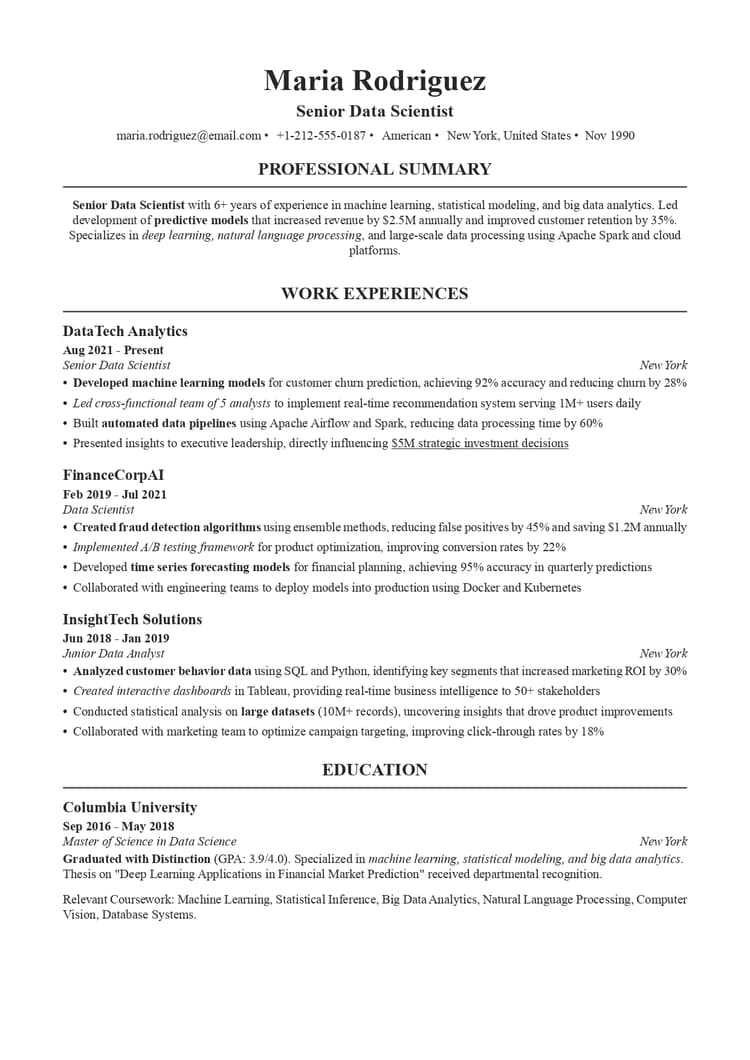
Apply Resume Action Verbs Easily with ResumeBuilder.so
Use our AI-powered builder to build or refresh your resume.How to Use Resume Action Verbs Effectively
Knowing how to use resume action verbs determines whether your bullet points actually land you an interview. Here are five resume tips you should follow to make the most of these power words.
#1. Lead Every Bullet Point With an Action Verb
Every bullet on your resume should open with a strong verb, never with "I," a noun, or a passive phrase. The structure is: Action Verb + Task or Project + Result or Impact. This tells the recruiter what you did, what it served, and why it mattered. For example:
- Launched a loyalty program that increased repeat purchases by 22%.
#2. Match Verbs to the Job Description
ATS software is calibrated to the language in the job posting. If the listing says "coordinate cross-functional teams," use "coordinated" — not "managed" or "organized." This isn't about gaming the system; it's about speaking the employer's language. Hiring managers also notice when candidates use the same terminology they do because it signals cultural fit.
#3. Vary Your Verbs — Don't Repeat
Using "managed" five times across the same resume signals a limited range. A resume that uses varied, precise verbs reads as more experienced and thoughtful.
Let’s compare repetitive (wrong) vs. varied (good) examples:
Repetitive
Managed social media
Managed content calendar
Managed vendor relationships
Managed campaign budgets
Oversaw social media strategy
Coordinated the content calendar
Negotiated vendor contracts
Administered $80K in campaign budgets
#4. Pair Verbs With Numbers Whenever Possible
The verb carries the action; the number carries the proof. Without one or the other, the bullet is weaker. Without both, it's generic. For example:
- Reduced customer churn by 18% through a targeted retention program
#5. Adjust Verb Tense Correctly
Current roles use present tense (manage, lead, develop). On the other hand, past roles use past tense (managed, led, developed). Mixing tenses within the same job entry looks careless and will catch a recruiter's eye for the wrong reason.
Resume Words and Phrases to Avoid
Some words are so overused that they actively work against you. Cutting them is often just as important as adding strong verbs. Here’s a quick overview of which resume words and phrases to avoid and how to replace them:
Repetitive
Responsible for
Tasked with
Worked on
Helped with
Duties included
Assisted in the process of
Hardworking
Detail-oriented
Team player
Passionate about
Managed / Directed / Led
Executed / Delivered / Completed
Developed / Built / Contributed to
Facilitated / Coordinated
[Remove entirely — lead directly with the verb]
[Cut it — just start with what you did]
[Show it — use results instead of adjectives]
[Demonstrate it — let specific metrics prove it]
Collaborated / Partnered / Co-led
[Remove — let accomplishments speak instead]
If a word or phrase doesn't add specificity, show results, or communicate ownership, it probably doesn't belong. Every line on your resume is competing for a recruiter's attention, so make sure each one earns its place.
Final Thoughts
Action verbs are one of the highest-impact, lowest-effort upgrades you can make to any resume. The right resume action verb at the start of every bullet point signals competence, ownership, and results—exactly what both ATS systems and recruiters are scanning for.
Strong verbs work even better when they're inside a clean, well-structured, ATS-compatible resume layout. A great bullet point buried in a cluttered template is still going to lose to a decent bullet point in a professional one.
That’s why we specifically made a library of professional resume templates you can browse to find a layout that fits your industry and experience level.
Resume Action Verbs FAQs

Emily Foster knows how nerve-wracking it can be to land your first job—she’s been there. As a mentor for young professionals, she shares exactly what hiring managers want from entry-level candidates. From internship hacks to interview confidence tips, Emily helps students and recent grads navigate the job search with ease.